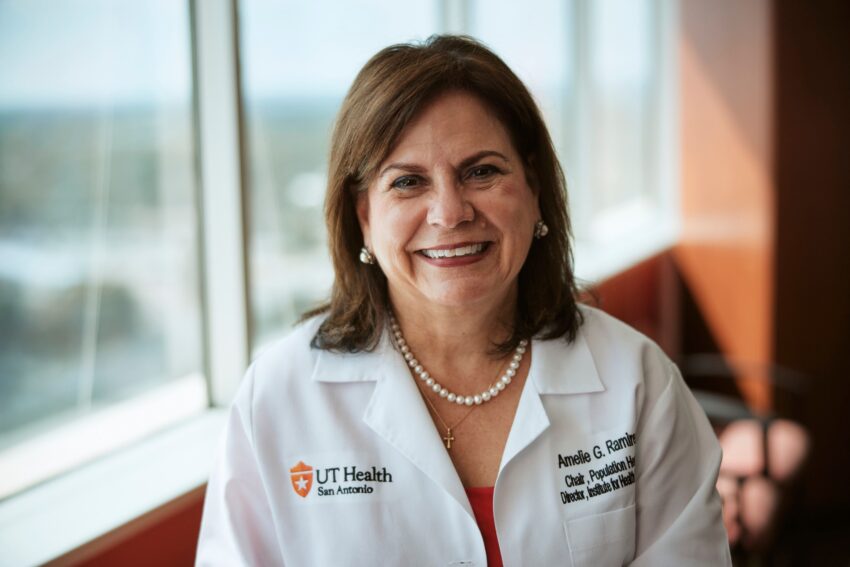
Latinos are expected to comprise well over 25% of the U.S. population by 2050. But they face health disparities in eye health, diabetes, obesity, cancer, and more, endangering the future health of the nation. Dr. Amelie G. Ramirez, director of Salud America! at UT Health San Antonio, will explore the causes of these disparities in a virtual presentation, "A New Vision for Reaching Latinos for Systemic and Behavioral Change," at 2:45 p.m. ET, July 14, 2022, at the 11th Annual Focus on Eye Health National Summit led by Prevent Blindness. The overall event, which is free, is set for July 13-14, 2022. "Our efforts must address structural inequities — from a lack of healthcare access to unaffordable housing to experiences of discrimination to a lack of diversity among health care ...
Many vaccines, including the current vaccines for COVID-19, come in small bottles with more than one dose inside. These are known as multiple-dose, or “multi-dose” vials, and can be used to vaccinate more than one patient.
Multi-Dose Vials and Infection Control
Multi-dose vials are more likely to become contaminated compared to single-dose vials, and therefore require important injection safety actions. “Multi-dose vials are more likely to get dirty because you’re putting a needle into that bottle many times to pull out each dose for each separate vaccine,” said Dr. Abigail Carlson, an infectious diseases physician with the Centers for Disease Control & Prevention (CDC), as part of CDC Project Firstline’s Inside Infection Control video series. If the vial gets ...
More than 16,000 concerned Americans sent public comments to the National Highway Traffic Safety Administration (NHTSA) urging them to make changes to their vehicle safety rating system, known as the New Car Assessment Program. Many organizations, such as the National Association of City Transportation Officials (NACTO), America Walks, and Families for Safe Streets enabled their members to submit comments. Our team at Salud America! also developed a model comment asking NHTSA for a vehicle rating system that accurately reflects the dangers vehicles pose to pedestrians, bikers, and others outside the vehicle. After all, more Americans died in motor vehicle crashes in 2021 than any other year since 2005, and the growing size and weight of vehicles is a contributor. “Driving ...
The National Academies of Sciences, Engineering, and Medicine (NASEM) has nominated an ad hoc committee to review federal policies that contribute to racial/ethnic health inequities, and recommend the most effective, promising approaches to equitably change policies. NASEM is seeking public comment on its nominees for the committee through June 20, 2022. The nominees are strong, diverse health equity experts. But none have experience in urban planning, housing, or transportation – some of the most critical social determinants of health. Use the following Salud America! model comment to tell NASEM to add committee members who are scholars in the intersection between urban planning and social determinants of health to improve their ability to make equitable policy ...
Sascha Ellington, PhD
Epidemiologist, Centers for Disease Control and Prevention (CDC) CDC is encouraging people who are pregnant, trying to get pregnant now, or may become pregnant in the future to stay up to date on COVID-19 vaccinations. Latinas have been disproportionately affected by COVID-19 with the second-highest rate of cases reaching over 65,000. Learn how COVID-19 vaccinations can provide additional peace of mind for you and your family during pregnancy.
Navigating COVID-19 and Pregnancy
Did you know people who are pregnant or were recently pregnant are more likely to get very sick from COVID-19 than people who are not pregnant? If you become sick with COVID-19 during pregnancy, you are more likely to experience preterm birth and stillbirth and might be at ...
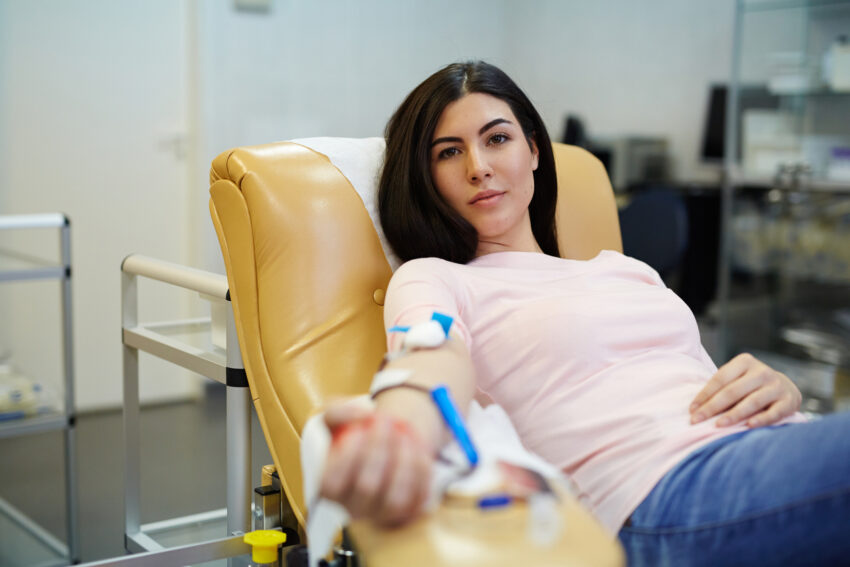
Ever heard of donating biospecimens for research? When a person donates biospecimens—blood, fluid, or tissue samples—it gives researchers the opportunity to better understand, treat, and prevent medical conditions from cancer to Alzheimer's. Biospecimens are especially needed from Latinos, who suffer health disparities. Let’s use #SaludTues on Tuesday, July 5, 2022, to tweet about the need for biospecimen donations, how researchers use the donations, and how you can donate to improve health for all people! WHAT: #SaludTues: What Is Biospecimen Donation and Should You Donate?
TIME/DATE: 1-2 p.m. EST (Noon-1 p.m. CST), Tuesday, July 5, 2022
WHERE: On Twitter with hashtag #SaludTues
HOST: @SaludAmerica
CO-HOSTS: Melissa Simon, Health Equity Researcher, ...
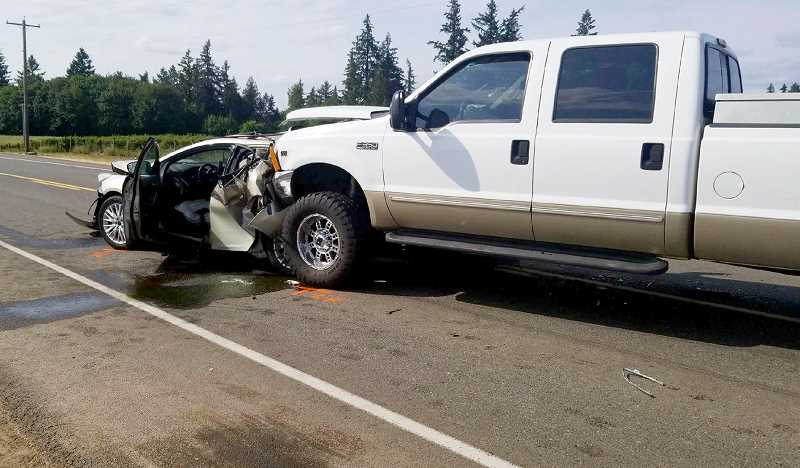
Driving is a daily danger to American life. And it is getting more dangerous. More Americans died in motor vehicle traffic crashes in 2021 than any other year since 2005, according to the National Highway Traffic Safety Administration. Additionally, pedestrian fatalities are up 13% and bicyclist fatalities are up 5% compared to 2020. These are lower rates than the European Union, which has seen traffic fatalities decrease since 2019. What is happening on American roads? Are drivers becoming worse? Are the sizing size of SUVs and passenger trucks – “megacars” – responsible? What about vehicle and road safety? Let’s explore the facts to find an answer.
Drivers and Traffic Fatalities
U.S. traffic fatality rate rose 10.5% from 2020 to 2021, a year after rising ...
Parents of babies across the US are struggling to feed their children due to a baby-formula shortage. The pain of the shortage is particularly felt among low-income families, such as Blacks and Latinos, who already suffer inequities in maternal and child health. The shortage began during the COVID-19 pandemic in 2020, when America seemingly ran out of everything – from toilet paper to fresh produce. In late February 2022, a baby formula recall, which caused two infant deaths, worsened the shortage. In many states, including Texas and Tennessee, where infants depend on formula for more than half of their diet, formula is sold out in stores. For parents such as Yury Navas, an immigrant Latina mother in Maryland, providing formula for her child is especially ...
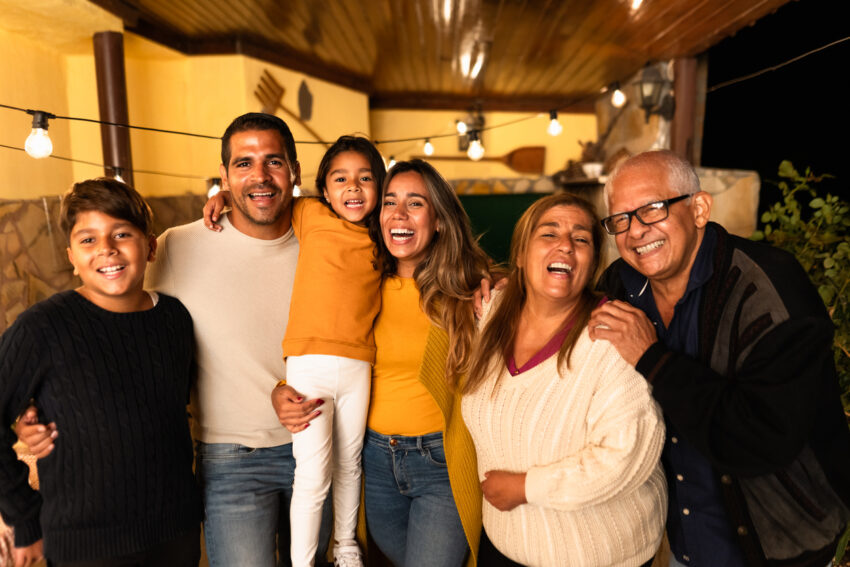
Migrating and resettling in a new country is a difficult process, marked with mental, emotional, and physical challenges, including potential family separation. For Latino immigrants, challenges may continue even after resettlement in the US, including significant socioeconomic and healthcare access disadvantages. Despite these hardships, studies show that Latino immigrants have better physical and mental health outcomes compared to their US-born counterparts. This interesting phenomenon is known as the Latino Immigrant Paradox. And the paradox applies to parents, too, according to a new report. Latino immigrant parents have a lower prevalence of mental health disorders (29%) than Latino parents born in the United States (51%), according to a report by the National Research ...