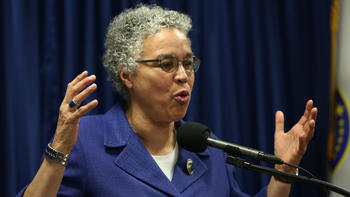
Soda tax discussion in Cook County, Ill. (28.9 % Latino) started to bubble up as Board President of the county, Toni Preckwinkle discussed a proposal for a penny-per-ounce tax to help balance the budget. As the city is fighting debts in the budget, the tax would be applied to help raise an estimated $74.6 million to help fill a $174 million gap, explains, The Chicago Tribune. The American Beverage Association continues to fight against soda taxes in Philadelphia, San Francisco, and Boulder and has already started running TV and radio ads against the tax in Cook, calling it a "grocery tax" as mentioned in other arguments. Other organizations like the, No Cook County Beverage Tax Coalition, also bringing attention to the tax do not to mention anything about how the tax is solely on ...
When city leaders in Loretto, Tenn. (2% Latino) began discussion of closing the city's only pool, residents turned to social media to stay informed and engaged, and they won. Swimming may be most the promising activity to get and keep Latino kids active in and out of school. In 2011, the Loretto City Pool closed because of safety concerns. In early 2013, Loretto residents started a Facebook page to get a new pool built. Through the “Save the Loretto City Pool” Facebook page, residents stayed informed of city council meetings and project updates and encouraged each other to attend public meetings. The Loretto Parks and Recreation Department conducted a needs assessment asking residents what the top three priorities were over the next five years when it comes to parks and ...
Across the nation, 17% of college students were diagnosed with or treated for anxiety problems during the 2015-2016 calendar year, The Wall Street Journal reports. Of this group, nearly 14% were diagnosed or treated for depression. This number is up significantly from a 2011 survey by the American College Health Association and counselors on campus are reporting seeing more “serious illnesses.” There is also a rise in the number of students who are enrolling with pre-existing psychiatric histories. The reason for this unprecedented surge is unclear. Therapists and college counselors have speculated that factors ranging from the economy and rising tuition rates to the impact of social media have led to the current rise in mental health issues. “Students are overwhelmed with ...
Dentists in Fairbanks, Alaska (7.0% Latino) have partnered with the state Division of Public Health, to help reduce sugary drink consumption in their patients and work to decrease childhood obesity, according to Newsminer.com. The Latino population in Fairbanks has grown rapidly reported the Alaska Department of Labor and Workforce Development that detailed the trend, highlighting a 52% growth rate for Hispanic or Latino residents in Alaska from 2000 to 2010. Many Latino kids and teens drink more sugary drinks on a daily basis than their white peers, sometimes even up to three drinks a day studies show, and with each sugary drink the risk of becoming an obese adult jumps to 60%. Since September of 2016, the public health state workers have started providing training to dental ...
Diversity is becoming more and more of a conscious thought in the minds of everyone in higher education, especially when it comes to the nation's rapidly growing Latino population. Latinos have made great strides in attaining college degrees in recent years, however, they still lag behind most ethnic and racial groups in obtaining higher education degrees. At the University of Michigan, a new plan looks to take steps to help Latinos and other minorities better navigate the college experience and earn degrees, the Associated Press reports. The university, located in Ann Arbor, Mich. (4.6% Latino population), has committed $85 million over the next five seasons to implementing programs that will help incoming minority freshmen adjust to the college life and develop skills that will ...
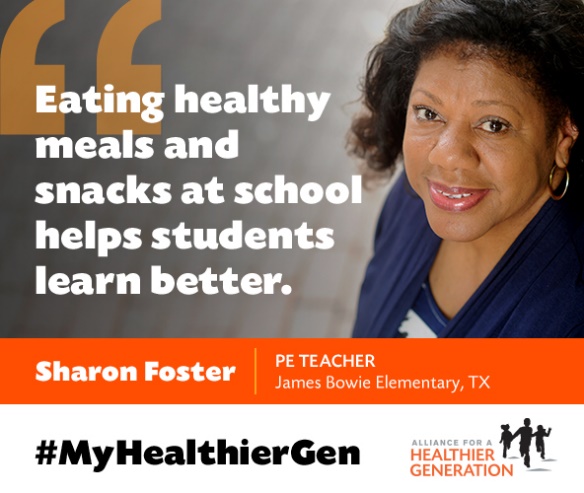
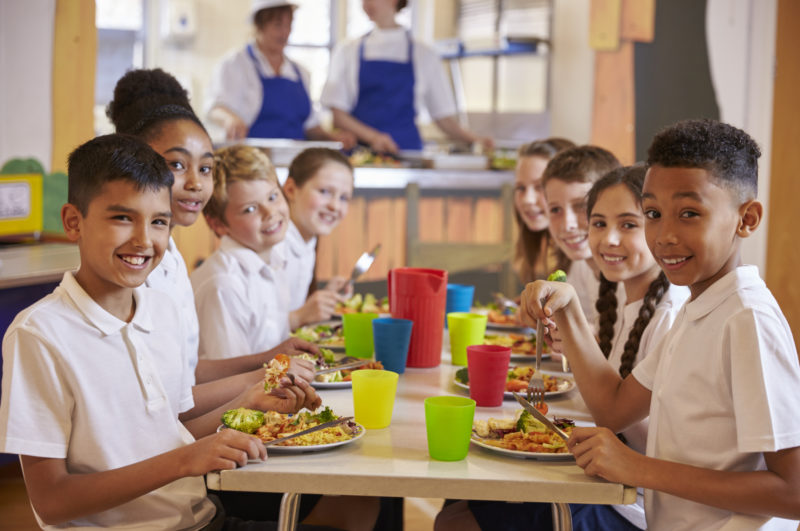
Today kicks off the National School Lunch Week, helping to provide awareness and support for National Farm-to-School Month throughout October and to share and support schools who are implementing healthy school food efforts all year round. Considering that students eat more than half of their daily calories at school, nutritious school food plays a vital role in the development of healthy students and healthy eating habits. This is even more true for Latino kids who often are in schools that don't always implement healthy foods and snacks in schools, studies show. To learn more about how school meal programs have encouraged healthy eating decisions among students insights were gathered from a panel of school nutrition leaders commissioned by the Kids' Safe and Healthful Foods ...
The college enrollment numbers for Latinos have steadily risen in recent years. However, Latino students still lag behind other racial and ethnic groups in obtaining two- and four-year degrees. In an effort to curb this trend, the National Community College Hispanic Council (NCCHC) has determined that addressing strategies at an institutional level are needed to help Latino students. “It is up to us to identify the challenges community college Latino students face but also to let them know there is hope,” said Maria Harper-Marinick, chancellor of the Maricopa Community College District and NCCHC president. In order to reduce health disparities, it is critical to address inequities in programs, practices, and policies. Join our site, connect with others, and get ...
Since 2012, Minnesota (5.2% Latino) school districts have been working to expand farm-to-school fresh food options within school lunches, buying local fresh fruits and vegetables and serving up whole-grain fresh bread. Over 27 kitchens within the state now offer fresh, cooked from scratch meals, Bertrand Weber, Minneapolis Public Schools Nutrition director explained to the StarTribune. A department of agriculture had help invest over one million dollars in over 57 districts to help support schools to upgrade their kitchens, buy local produce, make fresh meals and serve more nutritious options. However, a poll taken by Blue Cross Blue Shield of Minnesota found that 69 % of parents still worry about physical activity and healthy food access for their students while they are at ...
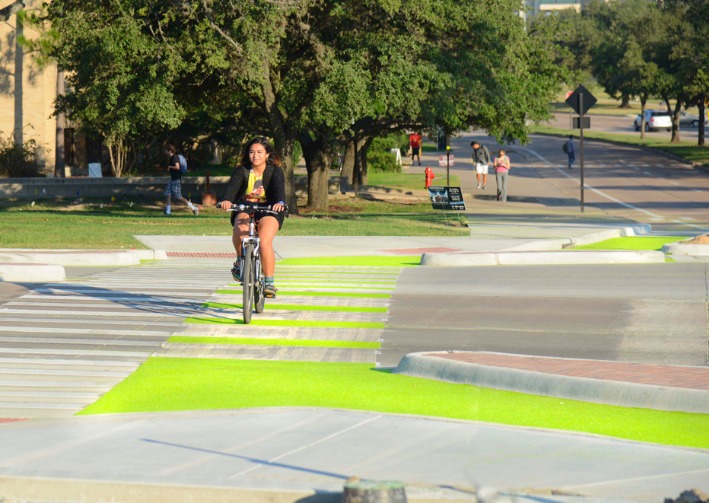
Cities across the world have come up with unique methods to make it safer for kids and everyone to bicycle. Safe places to bike-and walk and play-are critical to reduce health disparities and improve Latino and all kid's overall health and wellbeing. In College Station, Texas (14% Latino) the Texas Transportation Institute at Texas A&M designed a protected intersection, modeled after the Dutch Junction, with glow-in-the-dark bike lanes. Bike lanes are, in fact, a sound public health investment. The Dutch Junction is designed to separate cars and bicyclists using islands, moving bicyclists in front motorists and out of their blind spots. To improve path visibility, the bike lanes are coated with a glow-in-the-dark material that absorbs and stores solar energy during the ...