Miami-Dade (66.8% Latino) has a culturally diverse population of over 2.7 million people, but nearly one in three children are living in poverty and in turn dealing with higher health disparities. In fact, various studies, including one from Havard T.H. Chan, has shown that income level and where you live can impact the health and diet of families. However, new initiatives are changing the future of health in Miami-Dade and the Robert Wood Johnson Foundation (RWJF) is taking notice, highlighting the county as a winner of the Culture of Health prize. Miami-Dade's Consortium for a Healthier Miami-Dade Country has been recognized by RWJF, in creating a culture of health with access to parks that have free fitness equipment, access to healthier foods, and other whole community ...
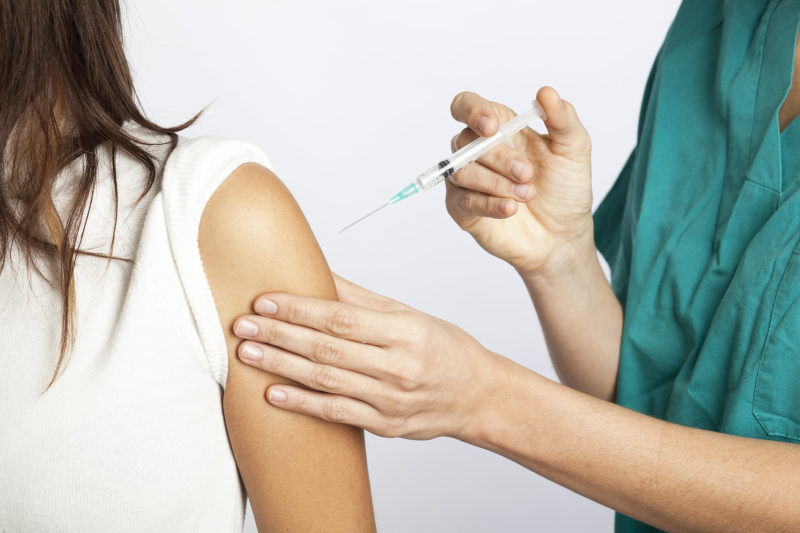
The U.S. Department of Health and Human Services (HHS), in collaboration with Walgreens, one of the nation's largest drugstore chains, will help provide more than $10 million worth of free flu shot vouchers this flu season to improve flu immunization rates among uninsured Americans. “Since 2010, this partnership has helped us make substantial strides in addressing disparities in flu vaccination coverage by providing free flu shots for more than 1.4 million people,” said Dr. J. Nadine Gracia, deputy assistant secretary for minority health and director of the HHS Office of Minority Health. “As the flu season approaches, our continued collaboration will help protect hundreds of thousands of people from influenza, which can make chronic health problems worse or lead to ...
Despite increasing numbers of Latinos improving their health through gaining medical insurance, there are still large disparities in many areas of health care. One of the main gaps in care is mental health. A new study has determined that Latino children and young adults with mental health issues are only half as likely as their white counterparts to receive treatment. The national study, “Racial and Ethnic Disparities in Mental Health Care for Children and Young Adults,” examined data on children under 18, and young adults 18-34 from 2006-2012. The authors theorize, in the study, that this lack of mental health treatment could explain why many more Latinos (compared to their White or Asian peers) are expelled from school. Latinos receive a lot less psychiatric care overall, ...
In 2008 an acre sized school farm started at IDEA schools on the border of Texas and Mexico in Donna, Texas, (92.3% Latino). The farming classes taught by Hernan Coldemero, practice agriculture basics and learn about food systems, all the while consuming healthier school lunches. In fact, 95% of the 6600 lbs of produce is used in school lunches while the leftover produce helps to keep the farm and schools sustainable, selling the produce to parents at the school's farmers market Noah, a student who comes after school to help take care of the plants and hopes to learn more about how to grow food so he can one day plant a garden at home said in the video, "Not all schools have this opportunity", he said, "If you're going to the cafeteria and eating fruits and vegetables, you can ...
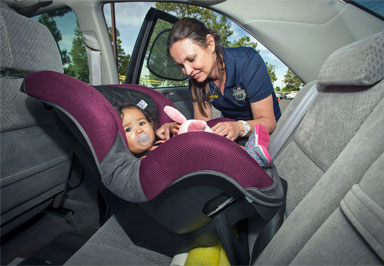
There is no doubt people are zealous about children's safety; we are zealous about children's health. What if these two groups of enthusiasts worked together? They would reduce time spent riding in a car: To reduce unintentional injury and death due to motor vehicle crashes; and
To increase time spent walking and biking to reduce obesity, heart disease, and diabetes. Motor vehicle traffic crashes are the leading cause of unintentional injury deaths for children age 5 through young adults age 24 and the second leading cause of unintentional injury deaths for children ages 1-4, after drowning. Keep in mind, this is with the latest advancements in child safety seats. Latinos, in particular, face disparities in traffic injury and death, as well as obesity, heart disease, ...
Healthy marketing can help people purchase more produce, shows a recent study, but it also can help people who speak different languages see the healthier choices in stores. Two years ago, working in various neighborhoods in California, including Simi Valley, Moorpark, Thousand Oaks and Newbury Park, Latino teens also saw the difference healthier marketing can do to protect the hearts of their family members. Six Spanish-speaking high school teens came up with a simple way to help mark healthier foods, despite lingual obstacles, and show other Spanish-Speaking shoppers which foods were best for their health, all by following dots. Dots? Yes, students placed colored dots to help shoppers understand health benefits of certain foods while shopping. Red dots on food showed ...
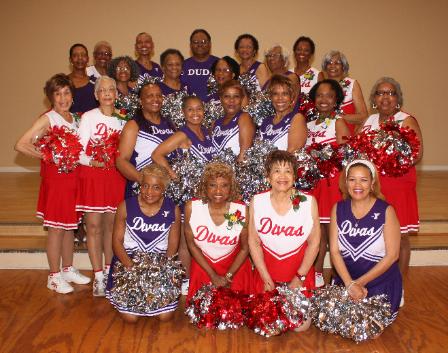
Louise Gooche, a retired nursing professor and director of nursing education from Durahm Technical college, founded Durham Divas 'n Dude, a senior citizen cheer squad in February 2004. Gooche was an aerobics instructor at the YMCA of the Triangle, in Raleigh, North Carolina (10.7% Latino). After seeing senior cheerleaders perform at the North Carolina Senior Games, Gooche posted a sign-up sheet at the "Y" and volunteered to coach a cheer squad. The "Y" agreed to sponsor the team. The Divas volunteer their time and services to various "Y" programs and the "Y" provides them with a place to rehearse twice a week, as well as uniforms, sweat suits, pom-poms, megaphones, and flags. "I love to perform for the elderly in the nursing homes, and bring a little joy to their hearts, ...
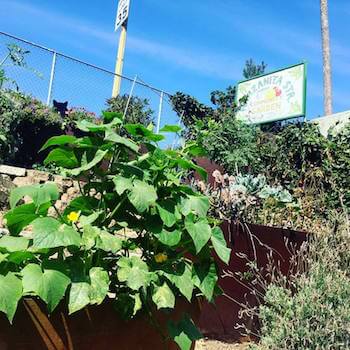
What can community gardens bring? Not only can community gardens help people grow healthy food, it can also build and connect a community. In Los Angeles, Calif. (48.4% Latino) the Los Angeles Community Garden Council (LACGC) is helping to manage over 40 community gardens for local communities. Julie Beals, the executive director of LACGC explained to SeedStock, that the gardens have helped lower body mass index (BMI) of residents where the gardens are and have helped reduce crime. Beals also explained that members are getting more exercise, property values are increasing with the gardens as well. The LACGC also offers nutrition classes, helping members of the gardens learn about the health benefits of what they are growing. Latino communities need access to healthier ...
Local and national events have pushed the subject of race, equality, and equity to the top of the city of Ashville, NC’s (6% Latino population) political agenda. In a response to widespread public acclaim, city officials have put forth an ambitious $433,000 initiative to establish an Office of Equity and Diversity as well as a plan for a racial disparity study of their community. Ashville’s City Council will review the plan, which is set to cost the city $350,000, during meetings in September 2016. The newly funded Office of Equity and Diversity will cost the city $110,000 this year and nearly $150,000 annually going forward. Staff have yet to be hired for the new department. “Statistics and other evidence can be used to show decisions and practices have discriminatory ...