You know junk food marketing to Latino kids is a problem and degrades Latino kids' health. But how do you communicate this issue to others? A new framing brief by the Berkeley Media Studies Group (BMSG) can help you communicate more effectively and frame the targeted marketing of junk food to children of color as a health equity issue. Understanding and communicating effectively about how junk food companies specifically target Latino children is a critical step toward action and achieving health equity.
Targeted Marketing is a Health Equity Issue
Targeted marketing of junk food to Latino children is a major obstacle because food and beverage companies aggressively target Latinos in their communities and schools. California passed historic legislation this year to ban ...
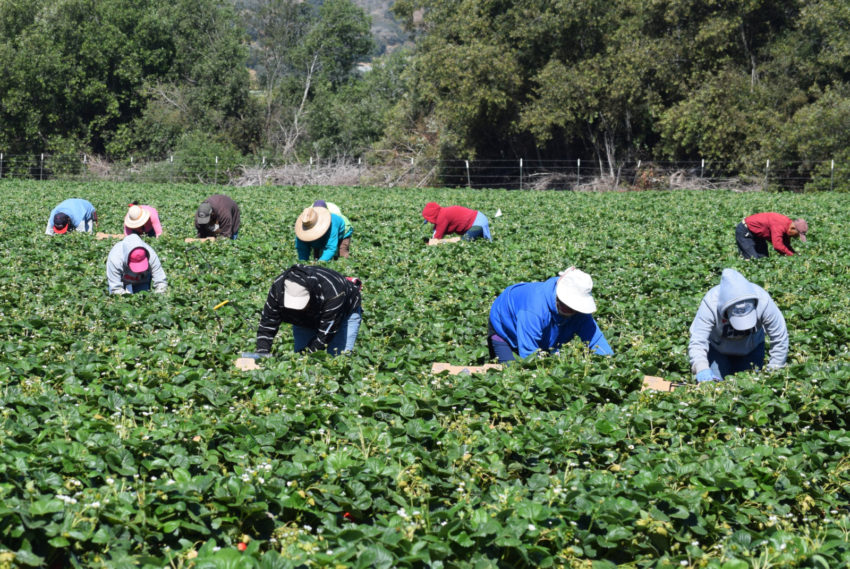
The U.S. is home to more than three million migrant farmworkers, according to the National Center for Farmworker Health. Who are these migrant farmworkers? Most are Latino men—fathers, husbands, sons—who leave Mexico with dreams of making enough money to support their families back home, then ultimately returning to their homeland. The health challenges these farmworkers face, like diabetes, rarely get attention.
A Nurse's Care for Farmworkers Elisabeth Almekinder, a registered nurse who has spent 22 years in public health in South Carolina, knows the health issues facing farmworkers. Almekinder has built up the diabetes self-management education program at her health department in the Coastal Region of North Carolina. Her favorite class to teach is one for ...
Map, track, and evaluate. These words are music in public health nerd's ears. Especially for walking nerds, America Walks is hosting a webinar to help public health advocates turn data into action to improve walkability across the United States at 2 p.m. EST Dec. 13, 2017.
Why Connect Health and Walking Advocates?
Decades of inequity in investment in streets, sidewalks and communities has disproportionately burdened Latino and many communities with health disparities, traffic fatalities, and even criminal citations for jay-walking. Many health advocates lack adequate data or the ability to use data to make the case for environmental, systems, or policy changes. Particularly when it comes to walking and walkability because, traditionally, non-health departments and ...
Most people know about cyberbullying these days. Continual cyberbullying online and through social media platforms can cause and/or increase depression, anxiety, low self-esteem among children, and Latinos especially struggle with bullying and discrimination. Texas even has David’s Law to criminalize and prevent cyberbullying. But, sadly, there's a new wave of cyberbullying that's harming teens' mental health: digital self-harm or “self-cyberbullying.”
Cyberbullying’s New Victims
Self-cyberbullying is when kids anonymously post hurtful messages about themselves online and on social media. In a first-ever study of its kind, researchers from Florida Atlantic University’s Cyberbullying Research Center asked 5,600 U.S. high school students from across the country about ...
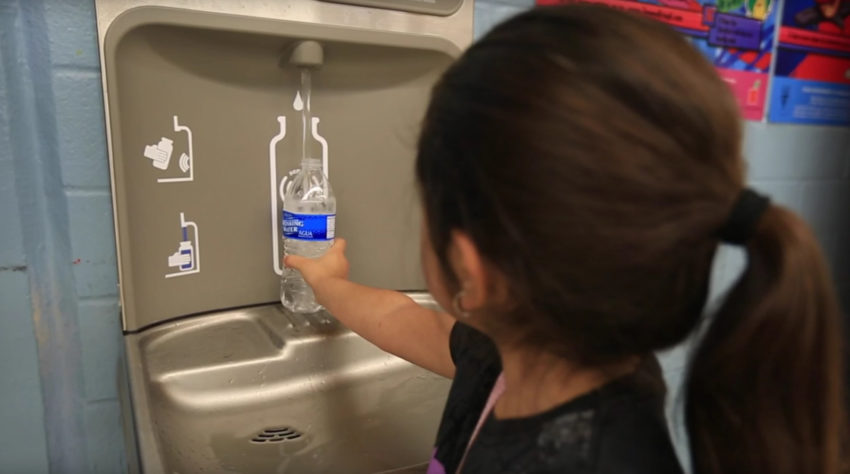
Many American kids eat two out of three meals at school. Schools must offer healthy food and drinks, especially for Latino students who are more likely than their peers to face an unhealthy weight, unhealthy neighborhood food options, and unhealthy early development. That's why schools should offer plain water with meals—not milk. So says a new study by University of Illinois researcher Ruopeng An, which encouraged children to drink plain water with their school lunches. This simple switch from milk to water at school could prevent more than a half-million kids from becoming overweight or obese, and trim the costs of obesity by more than $13 billion, An's study suggests. "The nutrition profile doesn't change much when people increase their plain-water intake, but we ...
Did you know that someone in the United States develops Alzheimer's every 66 seconds? Multi-billionaire philanthropist Bill Gates knows. He has had family impacted by the disease. And that's why he's investing $50 million to fund research to find treatment for Alzheimer's disease, a type of dementia that destroys memory and mental processing. "It’s a terrible disease that devastates both those who have it and their loved ones," Gates wrote on his blog recently. "I know how awful it is to watch people you love struggle as the disease robs them of their mental capacity, and there is nothing you can do about it. It feels a lot like you’re experiencing a gradual death of the person that you knew." Alzheimer's is the No. 6 cause of death in the United States. It kills more ...
Having easy access to healthy food can drastically change the way we eat. So it's alarming that Latinos neighborhoods lack grocery stores and other healthy food options, while abundant in fast food. Policies that aim to make healthy food access a priority can improve the quality of food we eat, stimulate economic growth and create jobs. That's why three nationally recognized policy think tanks—the Vermont Law School's Center for Agriculture and Food Systems, the Public Law Center, and the UConn Rudd Center for Food Policy and Obesity—partnered to launch the Healthy Food Policy Project (HFPP). The HFPP will focus on making healthy food access a priority for socially disadvantaged and marginalized groups, promote health equity, and support local economies through ...
Here's an interesting fact: the more education you have, the longer your lifespan can be. In recent years, Latinos have made tremendous progress in education. High school graduation rates are up while dropout rates are down. Latino students are also enrolling in two- and four-year colleges in greater numbers than ever before. That is the good news. Now, the not-so-good.
Education: Good News vs. Bad News
Latinos, despite their progress, continue to fall behind their white and black peers. In 2016, 45% of all Latinos had at least some college education, up from 35% in 1992, according to the new “Latino Education and Economic Progress: Running Faster but Still Behind” report from the Center on Education and the Workforce. However, the college education gap between Latinos ...
Mental health is a rising concern in the United States. For Latina women, the concerns become even more dire. Research has shown that Latinas receive less mental health care than whites, even if they have insurance. They also report more symptoms of depression and anxiety than whites. However, what if there was a better way to reach them? Latina women have a higher than average use of smartphones and the Internet. Technology could be the answer. A recent study from UCLA found that culturally tailored media programming can encourage Latina women to seek help for mental health, as well as decrease their symptoms of anxiety and depression. The researchers developed a digital storytelling series featuring a fictional young Latina woman named "Catalina" that is dealing with ...