Obesity rates are showing signs of leveling off, but rates among Latino adults and children remain much higher than whites, according to a new report. In nine heavily Latino-populated states, the adult obesity rates were at or above 35%, according to the 14th annual State of Obesity: Better Policies for a Healthier America report by Trust for America’s Health (TFAH) and the Robert Wood Johnson Foundation (RWJF). Latino adults are more obese (42.6%) than their white peers (36.3%). Similarly, among children, Latinos have are more obese (21.9%) than their black (19.5%) and white (14.7%) peers, according to the new report. This means much work is left to promote a healthy weight.
Adult Obesity by the Numbers
This year, the adult obesity rates were over 35% in five states: ...
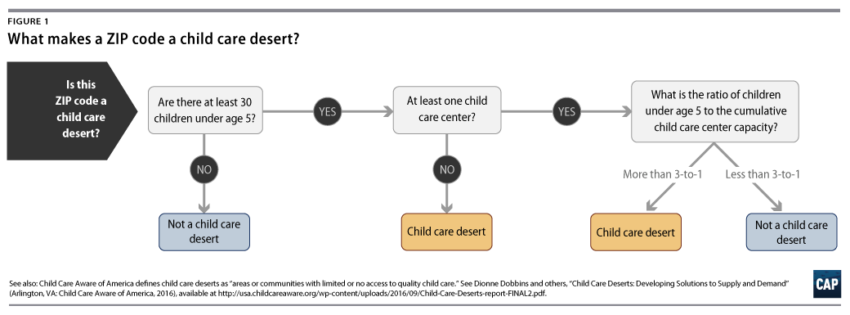
Although research has shown the many health, social and emotional, and cognitive benefits of quality early child care and education, Latinos have the lowest participation in these programs. Why? Child care deserts may be the answer. Although affordability, work schedules, and waiting lists are also factors, location is often the first major consideration for families. Center for American Progress looked into the location of child care centers across eight states, which accounts for 20% of the population under age five. The authors define child care desert as a ZIP code with at least 30 children under the age of five and either no child care centers so few centers that there are more than three times as many children under age 5 as there are spaces in centers. See ...
When the housing market collapsed in 2006, it led to one of the hardest-hitting, wide-reaching financial crises that the United States had felt in decades. The Great Recession, as it became known, had a disproportionate impact on minorities – especially Latinos – that still impacts their ability to achieve the goal of home ownership. It also keeps many Latinos from fully participating in the economy. A study from the Federal Reserve Bank of St. Louis found that the housing prices during the recession fell more in urban, low-income areas and that minorities had far larger shares of their personal wealth “tied up” in their homes than whites. “The housing market collapse affected millions of American families across the country, but it hit black and Latino families ...
Latino kids tend to live in neighborhoods with more access to fast food restaurants and less access to healthier food options, according to Salud America! research. Regularly eating high-calorie, high-sugar, and high-sodium meals at these restaurants can have devastating long-term health impacts, such as obesity, heart disease, and more. In an effort to combat these worsening trends, some of the largest fast-food restaurant chains pledged to offer healthier meal options on their kids’ menus. Some pledged to remove sugary drinks, and other pledged to add healthier options. Were they able to keep their promises?
Fast food study The Rudd Center for Food Policy & Obesity, a nonprofit research and public policy organization based out of the University of Connecticut, ...
Dr. Amelie G. Ramirez of UT Health San Antonio today received a new $1.3 million grant to expand Quitxt, her bilingual service that sends texts with culturally and regionally tailored support to help South Texan young adults quit smoking. The new grant is from the Cancer Prevention Research Institute of Texas. The new funding will enhance the Quitxt service—currently designed to turns a user’s phone into a personal quit coach by providing texts and links to online support, educational content, music, and videos—with a new social media support component. Quitxt also will extend beyond South Texas to include English and Spanish speakers in rural counties, and Spanish speakers in urban areas of South, West and Central Texas. To quit smoking now, join Quitxt in English or ...
It’s a fact. Where you live greatly affects your health. Live near a major road? A power plant? Or a densely populated neighborhood? Are you close to a supermarket? All of these factors – and more – impact your health on a day-to-day basis. For many low-income and Latino families, live in areas that have been classified as food deserts, with little to no access to healthy food options, safe places for physical activity, or access to quality health care. Many of these highly segregated areas are high in crime and poverty. The data analyzation web site, Niche, has compiled a ranking of the “Safest Places to Live” for 2017. How does this list impact Latinos?
Most and Least Safe Cities in the U.S.
By studying FBI reports on numerous crime factors in cities (9,932 of them) ...
While still on the rise, the annual growth rate of the U.S. Latino population has dropped from 3.7% in 2006 to 2% in 2017, according to new stats from Pew Research Center. U.S. Asians now account for the highest growth rate (3% in 2017). The black population rose slightly (0.9), while whites slightly decreased. Why the leveling off of Latino population growth? "Following a Hispanic population boom in the 1990s that was driven by immigration and high fertility rates, the Hispanic population’s annual growth rate peaked at 4.2% in 2001," according to Pew's Jens Manuel Krogstad. "It then started to decline as fertility rates fell and immigration slowed, a trend that accelerated during the Great Recession." But that doesn't mean the Latino population is in decline. Rather, ...
Latinos have historically lagged behind whites in education. They have made strides, like a declining dropout rate and increased college enrollment, but are still more disconnected (not in school, not working) and lag in college completion. Education is key to health, income, and the economy. That's why the financial website WalletHub analyzed 150 U.S. metro regions with nine factors—like public school quality and college graduate rates—to find the "most educated" and "least educated" areas. Unfortunately, the five least-educated areas were all heavily Latino. The McAllen-Edinburg-Mission metro area in South Texas (85.77% Latino) was the least educated city in the country. The area came in 150th on the Educational Attainment and 104th on the Quality of Education & ...
Guest Blog by Smokefree Apartments Los Angeles Today, due to lack of affordable housing, more Latinos are renting instead of owning homes, and make up nearly 20% of the renter population nationwide. Exposure to secondhand smoke (SHS) is occurring as more Latinos are moving into multi-unit housing. One out of three renters reporting SHS drifting into their homes, according to a recent UCLA study by the Center for Health Policy Research. Even more troubling: comparatively the Latino community is disproportionately exposed to SHS at work and at home. The same UCLA survey indicated 41% of Latino renters responding SHS was an issue in their apartments. Many are unaware SHS can drift into your apartment through vents, windows, and doors—even when closed—as well as pipes, ...