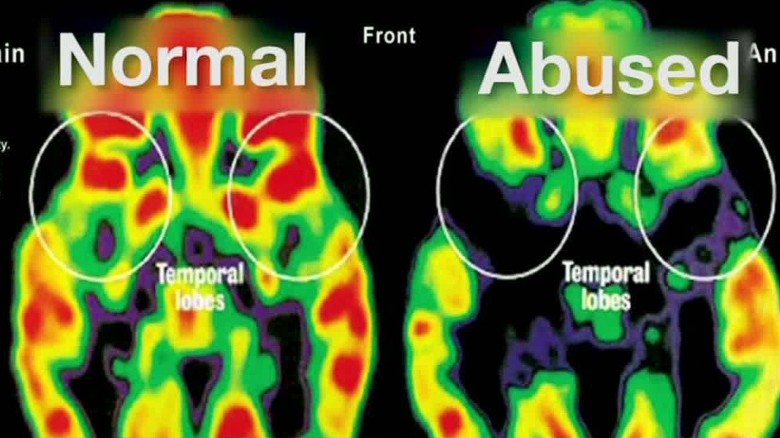
Children don't magically "get over" trauma when they turn 18. Trauma, toxic stress, and adverse childhood experiences permanently change a child's body and brain, which can have serious, lifelong consequences, according to a recent report from the Center on the Developing Child at Harvard University. Here are four ways trauma can overload a child's developing system: 1. Hormone level changes: Cortisol and adrenaline are the "stress hormones" that help you react to a perceived threat or danger by directing blood flow to major muscle groups and bypassing the thinking part of the brain to activate the survival part. High levels of these hormones keep your blood pressure elevated, which weakens the heart and circulatory system; keep your glucose levels elevated, which can lead ...
Araceli Guzman wants to make a difference for the Latino community. The California native is off to a good start. Guzman recently became her family’s first college graduate after earning a bachelor’s degree in public health promotion at California State University of Northridge. Now she is working on a master’s degree in public health, and gaining valuable research experience helping Latinos with disaster preparedness and working with Latinos in a reproductive health clinic. To further her training and education, Guzman applied for the Éxito! Latino Cancer Research Leadership Training program. The program, led by Dr. Amelie G. Ramirez at UT Health San Antonio with support from the National Cancer Institute, recruits 25 master’s-level students and professionals each ...
For the first time since the passage of the Affordable Care Act (ACA) in 2012, the rate of uninsured Americans rose during the fourth quarter of 2017. The uninsured rate rose 1.3 percentage points from to 12.2% from its all-time low of 10.9% at the end of 2016, CNN Money reports according to a Gallup Poll. The increase reflects roughly 3.2 million new uninsured Americans in the U.S. The uninsured rate for both blacks (2.3 percentage points) and Latinos (2.2 percentage points). The ACA-based healthcare exchanges opened in 2014, the same year that Medicaid expansion began. One of the central tenets of the ACA was its individual mandate, which required all Americans to obtain health insurance or incur a tax penalty. Those circumstances were credited with helping reverse the ...
Update: In December 2018, Healthy Equity Award prize winners were selected! Winners include Janeth Tapia of North Carolina Farmworkers Project in Benson, N.C., which provides access to affordable, quality health care for a population that is often politically marginalized and isolated Tapia educates health care providers about the hazards that farm workers face, and she helps farm workers take charge of and advocate for their own health. The program provides transportation and volunteer translators for medical visits, and it has worked for extended clinical hours so farmworkers can get care at night or on weekends. Have you worked hard to improve access to quality care, education, or the environment for Latinos or other minorities? Then you could win the Health Equity ...
Thanks to her spiritual “Lita” who was a friend to all, Elena Martinez was taught to love all. And Martinez has already applied her caring attitude to the benefit of many people here in San Antonio, having actively participated in programs on obesity and cancer prevention, immunization education, health literacy, and youth mental health awareness. Martinez, a Dallas native, is currently a master’s-degree student in health and kinesiology at UT San Antonio. She earned a Certified Health Education Specialist status in 2013 and has helped plan and evaluate health initiatives and programs for all age groups in San Antonio. She also has played an active role in Building a Healthy Temple, a chronic disease prevention program at UTSA under Dr. Meizi He, since 2015. To further ...
More kids in Philadelphia experience four or more childhood traumas (21.5%) than kids across the nation (14.3%). Multiple traumas like abuse, parental death, racism, fear of deportation, and others—known as adverse childhood experiences (ACEs)—can significantly impact a child's brain development, academic achievement, and physical and mental health into adulthood. Latino kids are at high risk of multiple traumas, and acting out. That's why we are excited to see three philanthropic groups team up in Philadelphia (14.4% Latino) to create a new guide to help funders and groups focus on bringing trauma-informed care for local kids. Trauma-informed care shifts the outlook from "What's wrong with you?" to "What happened to you and how can we help?" "Understanding the ...
Update on April 25, 2018: A federal judge orders the U.S. government to continue Deferred Action for Childhood Arrivals (DACA) and accept new applicants, according to the Washington Post. Immigration is a politically divisive issue. It can be hard to keep in mind that real people are affected, no matter what your political views. People's livelihoods began to hang in the balance in September 2017 when U.S. Attorney General Jeff Sessions announced that the Trump administration would be rescinding the DACA. DACA is an Obama administration program begun in 2012 that allows undocumented immigrants who were brought to the United States as children to apply to defer deportation and legally reside in the country for two years. They can apply for reinstatement after. How many ...
From her supportive abuela to her two-hour-long big family dinners, Arielle Guzman feels a strong connection to her Mexican heritage. So she knows very well that Latinos face big health obstacles. This experience, and her own father’s struggle with multiple myeloma, inspired her to pursue a career as a culturally competent healthcare professional targeting cancer. Currently a master’s degree student in public health and epidemiology at Loyola University Chicago, Guzman already honed her health skills as a volunteer at a Chicago hospital and in Santo Domingo, Ecuador. She also will participate in cancer health disparities research. Her main goal is to find cutting-edge ways to boost cancer screening, beneficial policies, and health education among Latinos. To further her ...
More than 2 in 3 kids report at least one traumatic event by age 16. It's even worse among Latino kids. In fact, 28.7% of Latino kids have experienced four or more traumatic experiences. The impact of childhood trauma can last well beyond childhood. In order to suspend judgement and help children heal, it is important to recognize the signs of traumatic stress and understand the short- and long-term impacts. The infographics can will help: Understanding Childhood Trauma from SAMHSA's National Child Traumatic Stress Initiative
Entendamos el trauma infantil from SAMHSA's National Child Traumatic Stress Initiative
Language Matters from The National Council
How to Manage Trauma from The National Council
Why Trauma Matters in Primary Care from The National ...