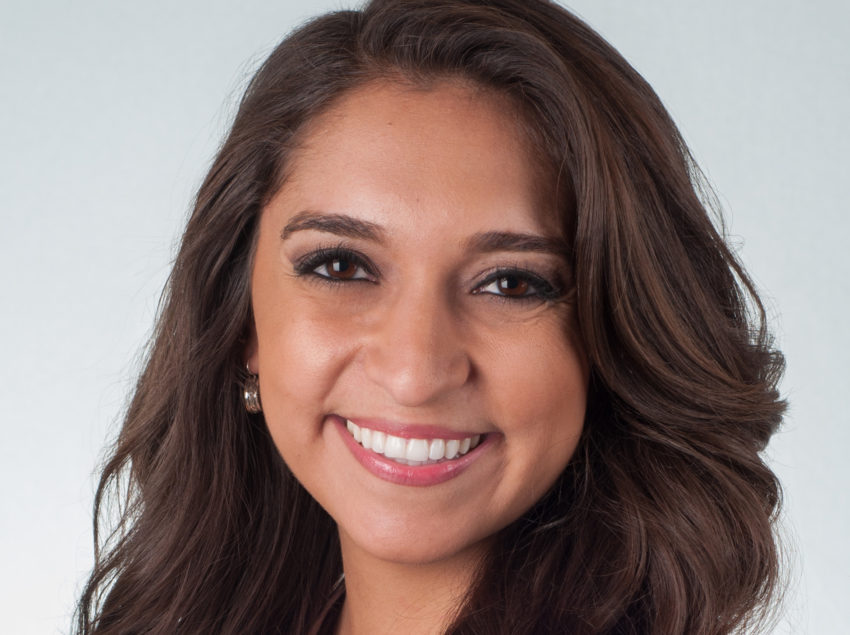
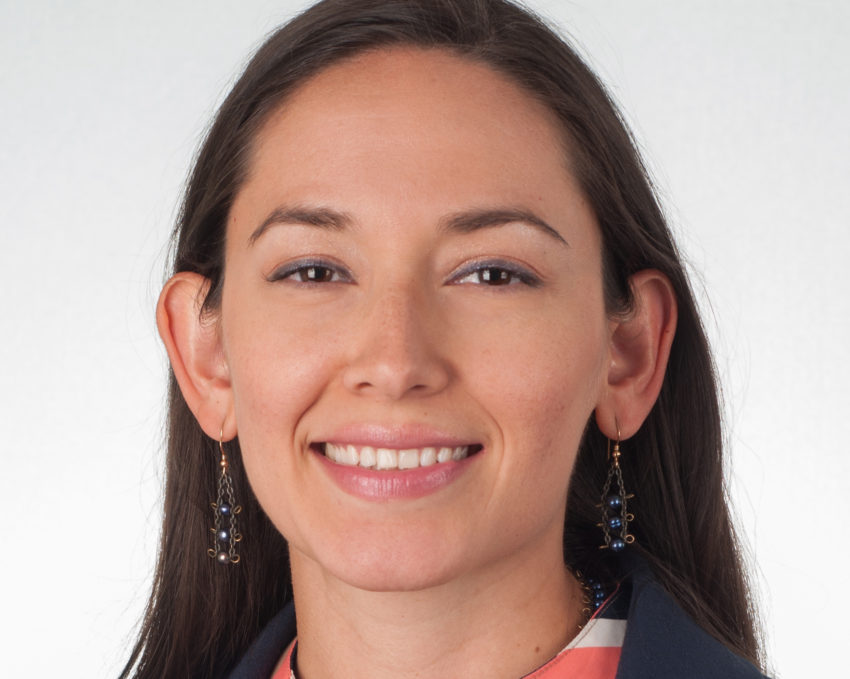
With the little “casita” (home) as a sentimental reminder of her childhood home and her late grandmother, Gabrielle Castellanos caring nature shines through. Castellanos truly cares about others through her desire to pursue a master’s degree and a PhD, and then apply what she learns to improve health in the community. She creates unique ways to help people live healthier lifestyles, whether it’s through a better diet, stress management, or cancer and chronic disease prevention—or a super-innovative way to integrate all of these elements. Castellanos, a native of San Antonio and a graduate of Health Careers High School, earned her bachelor’s degree in Biomedical Science at Texas A&M University. She is now pursuing a master’s degree in Allied Health Education ...
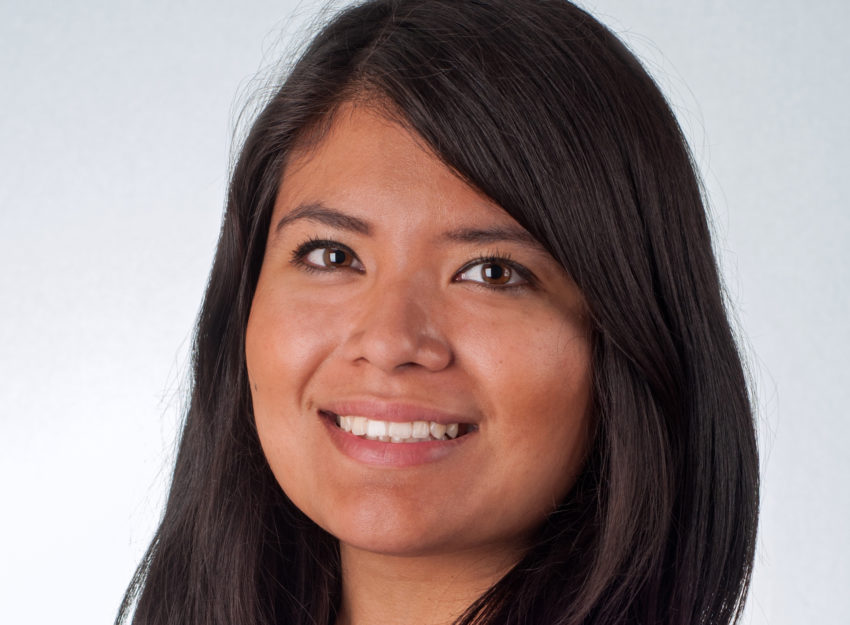
Listening to community needs is critical to solving health disparities. Kendra Cruz embodies this goal, as she has displayed a willingness to listen intently and a passion for addressing any identified health concerns in the community. Cruz is already working on studies on smoking cessation and HPV, and she’s interested in working with rural Latinos to learn their needs and identify ways to best provide resources. Her desire to listen and respond to people’s health needs is just as beautiful, if not more so, than the amazing traditional dresses she keeps from her native Oaxaca, Mexico. Cruz came to the states at age 8 without speaking any English, but was fortunate to learn the language in a school year. At 14, she returned to Mexico to be closer to her family, but at 17 ...
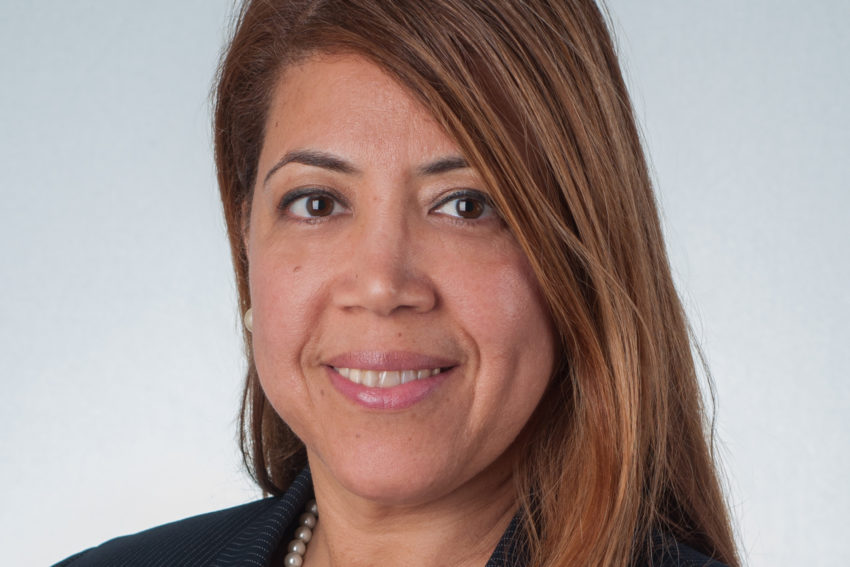
Maria Alvarez, proudly waving her native country’s flag for “Dios, Patria, y Libertad,” (God, motherland, and freedom), draws inspiration from her Dominican heritage and perseverant family to help people live healthier lives. Alvarez learned hard-working ways from her truck-driving father and education-seeking mother. When her family struggled with asthma and lung cancer, she stepped up in a big way as a researcher on these very topics. Alvarez, who has a master’s degree in health education and health behaviors from Teachers College Columbia University, is a Clinical Research Coordinator in the Hematology and Oncology Department at Columbia University Medical Center (CUMC). She has collaborated on studies and educational projects associated with cancer, prevention ...
Communities and organizations play a role in developing policies and programs to support walking, biking, physical activity, and healthy communities. Whether for recreation, transportation, work, or household, physical activity improves mental and physical health and reduces risk for chronic disease. In order to reduce health disparities, it is important for communities to ensure that all residents have access to safe places to walk, bike, play and be active where they live, learn, work, play, pray, according to a Salud America! research review. Check out these seven case studies from Voices 4 Healthy Kids and Safe Routes to School National Partnership. They demonstrate successful state- and local-level campaigns to increase physical activity, through active transportation ...
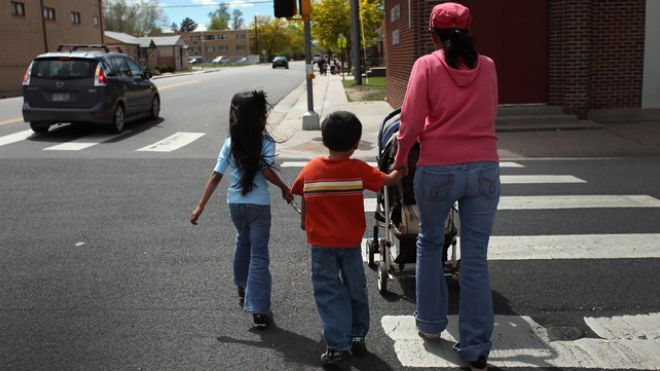
There are often preconceived notions in regards to Latinos and their family dynamics. Already the country’s largest racial/ethnic minority group, which is expected to grow exponentially in the coming years, Latinos represent a diverse group of people with distinct differences depending on where they are from and the language they use. New research has confirmed what many already knew about Latino families: they are tightly-knit, resilient, and generally stable. The National Research Center on Hispanic Children & Families has recently released a new brief series entitled “La Familia: Latino Families Strong and Stable, Despite Limited Resources.” The series is one of the first ever to give the complete “breakdown” of Latino households, examining data about mothers, ...
National Nutrition Month is all about getting the word out about making the healthy choice the easy choice for all and what better way to do that than to find out how to support all to have healthy food choice options. The American Heart Association (AHA) is working to bring awareness to the Texas Capitol to encourage policy around healthier food access for the unfortunate 3.4 million Texans that simply don't have a choice for healthy food as they deal with limited access to health food options. AHA is asking everyone to support the healthy choice for everyone, by joining them on Thursday, March 23rd in Austin to meet with elected officials to discuss specific legislation that will help increase access to healthy food in underserved communities and help encourage healthier early ...
Childhood obesity is a serious problem facing our country, especially among Latinos who have far less healthy weights than their non-Latino peers. A new study has found an unlikely, controversial source for Latino childhood obesity: Antibiotic exposure. Exposing a child to antibiotics before the age 6 months increases the risk of obesity by age 2 for Latino infants in low-income urban communities, according to an article published in the journal Childhood Obesity. Study authors determined that antibiotics might have “harmful effects … on the healthy gut microbiome” during the early period of development for young children. This could increase the risk of obesity as they get older. “The work by [Drs. Annette Ville, Janet Wojcicki, and others at the University of ...
With a mother that instilled accountability, Colombia native Diana Diaz has taken responsibility to push hard for cancer control and prevention. Diaz, a research coordinator at Moffitt Cancer Center, is already helping conduct trials in tobacco research and lung cancer. She wants to demystify the stigma of terror and language barriers that patients face in cancer centers. Diaz applied for the Éxito! Latino Cancer Research Leadership Training program, which recruits 25 master’s-level students and professionals for a five-day Summer Institute to promote doctoral degrees and careers studying Latino cancer. Éxito! is led by Dr. Amelie G. Ramirez at UT Health San Antonio, with support from the National Cancer Institute (NCI). “[Éxito!] has provided me with a more narrow ...
It is a known fact that one of the most important social determinants of health is where you live. More and more local and state governments are realizing how important environment is to overall health and well-being. For Latinos, where they live is often leads to unavoidable health disparities due to lack of access to healthcare, healthy food choices, and educational opportunities. Recently U.S. News & World Report outlined the best and worst states to live in based on a host of categories that residents value the most. These categories include health care, education, infrastructure, crime rates, and economic opportunities. According to the new report, Massachusetts (10.56% Latino population) was rated number one overall. Not surprisingly, as Massachusetts is home to Harvard ...