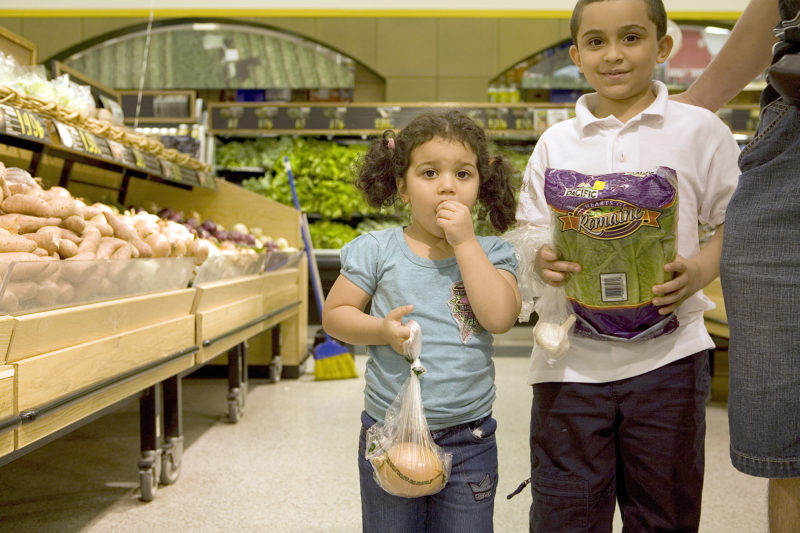
A recent article reported research from a national survey, showing that more than 10 percent of Latinos reported difficulty in accessing affordable fresh fruits and vegetables. The report also indicated that Latino families that live further from larger grocery stores also may be at risk for poor health. Many small supermarkets or corner stores are starting to carry more fresh fruit options, however, the price of fruits and vegetables at smaller stores are many times still higher in cost than at a larger grocer. Studies show that Latinos may be more likely to buy healthier foods if small convenient stores offered healthier foods at affordable prices. For instance, one New York program added and promoted healthy food items at local bodegas and it led to more fruit (32% increase in ...
A growing body of research suggests that physical activity is associated with maintaining a strong and healthy mind, boosting memory and learning, and possibly delaying age-related cognitive decline. A new study supported by the National Institute for Health (NIH) and published in Cell Metabolism found a specific protein secreted by skeletal muscle cells during physical activity that enters the bloodstream and can cross the blood-brain barrier, which is noteworthy because not all proteins cross it. In mice, this protein is thought to be neuro-protective and associated with the production of new neurons in part of the brain associated with memory, thus physical activity induced secretion of this protein may prevent or delay Alzheimer's disease.. Adults who exercise more ...
America Walks hosted a webinar, "Exploring Local Ballot Initiatives" to advance active transportation projects, showcasing the tools and resources available at the Center for Transportation Excellence. Three professionals talked about the various ways local ballot initiatives can be used to support and develop projects related to active transportation to make America a great place to walk. Watch the webinar here. Copy and Share: .@AmericaWalks Webinar: "Exploring Local Ballot Initiatives" advance active transportation #ActiveSpaces @SaludToday ...
Many people know that vegetables are healthy and better for your body, but can they help reduce health risks like diabetes? New research reports that adults who ate a plant-based diet with few animal products cut their risk of Type 2 diabetes by 20 percent, and 34 percent for healthful plant-based food products like whole grains, fruits, vegetables, nuts, and legumes. Researchers also noted that diets containing more less healthy plant foods like sweetened beverages, sweets, and refined grains and potatoes, were 16 percent more at risk of diabetes. The study followed more than 200,000 make and female health professionals for over twenty years, collecting data on lifestyle, diets, medical history and disease diagnoses. Dr. Frank Hu, the study's senior author and professor at ...
Cities are currently striving to understand how mass transit connects to health, economic opportunities, and overall equity. The Center for Neighborhood Technology and TransitCenter, a nonprofit foundation dedicated to improving urban mobility, have released the AllTransit interactive database. Billed as “the largest source of connectivity, access, and frequency data in America,” the site utilizes data from 805 of the largest transit agencies in the country. The tool overlays the data with information about jobs, demographics, and even the location of farmer’s markets. The database provides a wealth of information on how transit serves communities. One of the metrics that AllTransit offers is the AllTransit Performance Score, an index based on transit connectivity, access to ...
Muchos latinos se sienten no estar preparados para tomar el medicamento que previene el VIH conocido como preEP , informa NPR. Según la CDC 1 en 36 hombres latinos serán diagnosticados con VIH en su vida. En 2012 Truvada una "profilaxis pre-exposición", fue aprobado por la FDA como una píldora de prevención contra el VIH cuando se toma correctamente y puede reducir el riesgo en más de un 90 por ciento. La droga, que bloquea la propagación del virus en el cuerpo puede llegar a costar hasta $ 1,300 al mes. Pero, aunque la mayoría de los seguros y los programas de Medicaid; y también los gobiernos locales cubren una parte del precio para los residentes sin seguro, los expertos creen que el alto precio y estigmas culturales en torno a las relaciones homosexuales podrían ...
A few things are changing on the nutrition label that may help consumers be more aware of the amount of sugar that is in products and their overall daily diet. A recent article explains a few key things about the new label, pointing out the importance of consumers to think about their diet- especially in regard to added sugars. Sugar is now an important change on labels, where grams were once the only indicator, now a percentage of what is recommended for daily sugar consumption will also inform consumers of added sugars in products. Also, the added processed sugars will be clearly separated from sugars that are already naturally in products. Professor Dr. John Satzberg explained in the same article that this will hopefully guide consumers away from products with a lot of added ...
A recent report from the Annie E. Casey Foundation, a research nonprofit that tracks the health and well-being of children and families found that Florida’s children are falling behind in economic well-being and health as the state ranked 40th on the report’s list of states. National trends find that children overall are getting healthier; however, the report found that Florida’s children in 2014 were less likely to be insured, more likely to be born at low birth weight, and abuse drugs and alcohol at higher rates than children in other states. Overall, Florida ranked 47th in terms of child health. Florida is home to over 4.3 million Latinos, according to the Pew Research Center. This is 23% of their overall state population and 51% of these are native-born residents. In Florida, ...
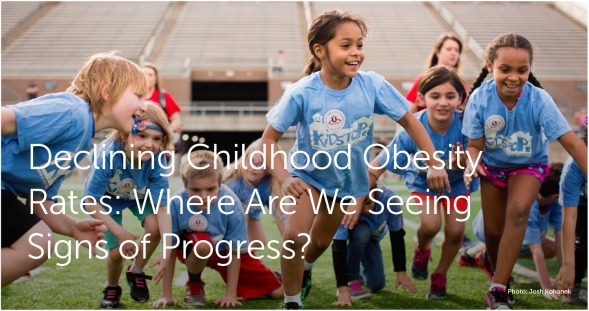
New reports reveal that childhood obesity rates are declining and the national diet is improving.
According to the Robert Wood Johnson Foundation, communities of color and low-income are more likely to be hit by higher rates of childhood obesity, however, states across the nation have shown signs of progress! For example, Georgia has seen a 10.8% decline in obesity among children ages 2-4, New Mexico has also seen a 15.1% and 11.1% decline in overweight and obesity among children, and in a Wisconsin school district, a report shows a combined overweight and obesity decline of 30.2%.
How are these communities ensuring healthy weights for kids?
Communities are building a culture of health by working together to increase consumption of healthier foods and beverages and increase physical ...