To help increase awareness of unhealthy food and beverage marketing and inspire collective action to make positive changes in communities, schools and other places that children gather, the UConn Rudd Center for Food Policy & Obesity created a set of presentations as a resource for advocates to spread the word about unhealthy food and beverage marketing in their communities.
The presentations are suited for a wide-range of audiences including health department outreach events, parent gatherings, school PTO meetings or school wellness committee, faith and youth groups, and food policy councils.
Among these resources is a downloadable presentation on "Food Marketing to Youth: What's the Harm?", which explains the importance of eating healthy foods, the truth about how millions of ...
Many parents are unaware of the marketing kids see in their schools about food. Many times, kids are marketed unhealthy food options as large food companies sponsor school activities and events.
What does it teach kids when the products are featured in the halls, cafeterias, vending machines and athletic fields are the same ones that their teachers and parents tell them are not good for their health?
The UConn Rudd Center for Food Policy & Obesity has created a set of presentations to help advocates inform their communities on how unhealthy marketing practices contribute to an epidemic of poor diet among youth, and what communities can do to help ensure that their children grow up at a healthy weight.
Among these resources is a downloadable presentation on "Food Marketing in ...
A new report from the Agency for Healthcare Research and Quality (AHRQ) found that the rate of uninsured Latinos under the age of 65 decreased greatly from 2010 to 2015. Overall, numbers for Americans under the age of 65 decreased from 18% to 10%. The new report also shows that more and more Latinos now have a “usual” place to go for medical care. Latinos showed the most gain in this area climbing from 77% in 2010 to 83% as of the first half of 2015. As the cost of healthcare became more affordable, thanks to initiatives such as the Health Insurance Marketplace for the Affordable Care Act (ACA) and the expanded Medicaid coverage that became available in more than half of the States, fewer people overall reported having difficulties paying their medical bills. Individuals age ...
Looking for a new resource to spread the word about unhealthy food and beverage marketing to kids in your school or community?
The UConn Rudd Center for Food Policy & Obesity has created a set of presentations to help advocates inform their communities on how unhealthy marketing practices contribute to an epidemic of poor diet among youth, and what communities can do to help ensure that their children grow up at a healthy weight.
Among these resources is a downloadable presentation on "Food Marketing to Youth: What's the Harm?", which explains the importance of eating healthy foods, the truth about how millions is spent in unhealthy food marketing towards kids and how to talk to kids and reduce advertising impacts on kids.
Latino kids often see more ads on TV than their white ...
In 2015, the Kids’ Safe and Healthful Foods Project-a collaboration between the Robert Wood Johnson Foundation and the The Pew Charitable Trusts (pew)-conducted a literature review to assess the potential impact of updates to CACFP nutrition standards in order to develop evidence-based recommendations to improve kid's health. The conclusion was that updates to the CACFP nutrition standards could positively affect kid's health. Pew released a fact sheet on the health benefits of the new CACFP Final Rule. The fact sheet includes: The Health Impact Assessment Process
Probably effects of final rule to CACFP nutrition standards on children's health Increased whole grain intake
Decreased consumption of grain-based desserts
Increased vegetable ...
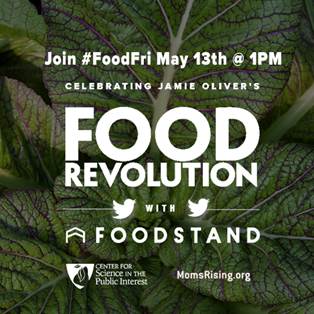
Many people know that having too much sugar is bad, but few know how to know how to read sugar labels and know how much sugar is in everyday foods. Added sugar is a health risk for consumers in sodas, juices, pastries, bread, and more. The more we consume unknown sugars, the more our bodies are at risk for high-sugar diet-related diseases like diabetes and heart disease. To help consumers understand how to cut added sugar from their diets and how to encourage policies that can help consumers reduce the consumption of hidden sugars, join the #FoodFri tweetchat this Friday at 1-2pm by following the hashtag #FoodFri on twitter with organizations @MomsRising, @CSPI, @TheFoodstand, and @FoodRev. Copy & Share this Tweet: What’s the deal with added sugars? Join us along w/ ...
According to a recent study from the Federation of American Societies for Experimental Biology (FASEB), the brains of unborn children may become addicted to junk foods if the mother eats junk foods during pregnancy. Eating healthy has always been a good practice for moms-to-be, but according to new research, unborn children's brains are impacted by opioid signaling when mothers consume junk foods. The negative impact is that children who become accustomed to these addicting high fats and sugar signals from the mother's consumption of unhealthy foods, need to eat more high fat and sugar foods to achieve a "feel good" response. Researchers examined two groups of baby rats, one group fed on normal rat food and the other on a range of "junk foods" during pregnancy and lactation. ...
In a landmark move, the Food and Drug Administration (FDA) announced it will ban the sale of e-cigarettes to people under 18 and will regulate all e-cigarette products including hookah, CNN reports. "This action is a milestone in consumer protection -- going forward, the FDA will be able to review new tobacco products not yet on the market, help prevent misleading claims by tobacco product manufacturers, evaluate the ingredients of tobacco products and how they are made, and communicate the potential risks of tobacco products,” the agency said The new regulations ban free samples and “ products may not be sold in vending machines accessible to people under 18. The new regulations will go into effect within the next 90 ...
The partnership good4growth is working to help connect parents and caregivers to resources and tips to help their children grow up healthier through creative play, healthy snacks, and a caring environment. Their goal is to help all children get the very best start in life and have asked all who know a child in their life to take the 7 Day Connect Challenge. The 7 Day Connect Challenge asks people to connect with a child in their life and promote healthier, smarter kids for seven days and spread the message! Thier site also gives valuable toolkits and a Talk with a Doc area that builds education on how to help kids in all areas of life to grow up healthier. Learn more about the importance of creative play, healthy food and a caring environment on their ...