Individual health is influenced by a variety of non-medical factors, like where people are born, live, learn, work, play, worship, and age. These conditions are known as Non-Medical Drivers of Health (NMDoH). To help improve health and wellbeing through NMDoH, the White House and U.S. Department of Health and Human Services (HHS) have released new resources, including the first-ever U.S. Playbook to Address Non-Medical Drivers of Health. “It is clear that the health of our people does not exist in a vacuum, but it is affected by our access to stable housing, healthy food, and clean air to breathe,” said HHS Secretary Xavier Becerra. “It is crucial for HHS to tackle health care and public health holistically by addressing patients’ social ...
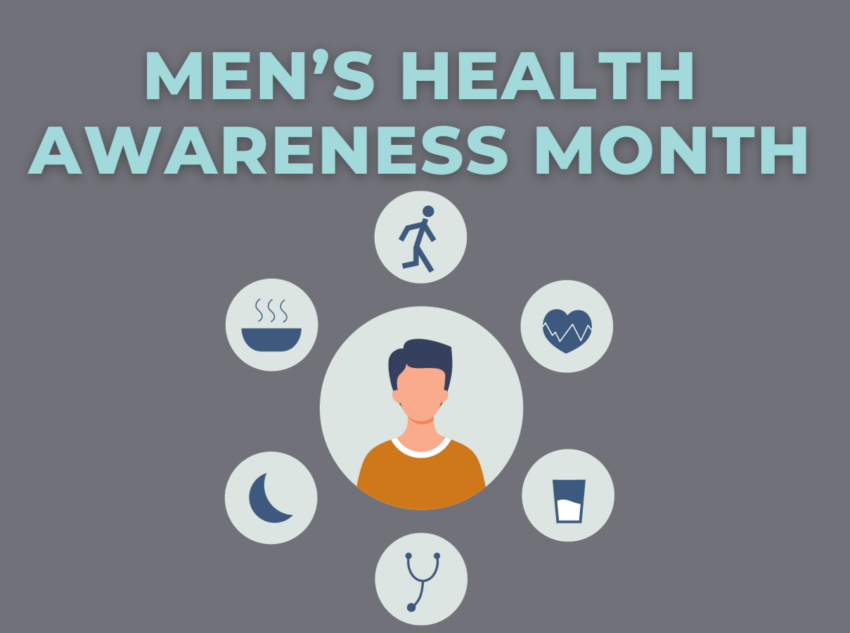
Did you know 12.1% of men are in fair or poor health? Similarly, the average life expectancy of men in the United States is almost 5 years less than women (76.2 compared to 81). November is National Men’s Health Awareness Month, highlighting the importance of men’s physical and mental health while encouraging support for men facing prostate, testicular, and other cancers. In November (and beyond), here are some ways you can support men’s health!
Latino Men’s Health
Latino men face many health differences when it comes to physical and mental health. For example, while national suicide rates decreased, the rates went up 6% for Latino men, according to a 2022 article from Texas Public Radio. Machismo and other forms of stigma can play a large part ...
You don’t have to stop smoking in one day. Start with Day 1. On Thursday, Nov. 16, 2023, you can join thousands of people who will begin their smoke-free journey with the Great American Smokeout. This annual event from the American Cancer Society encourages smokers to make a plan to stop smoking. Need help? Enroll in Quitxt, a free English or Spanish text-message service that turns your phone into a personal “quit smoking” coach from UT Health San Antonio. To join Quitxt, text “iquit” (for English) or “lodejo” (for Spanish) to 844-332-2058. “For the Great American Smokeout, we’re excited to share Quitxt to provide real-time help with motivation to quit, setting a quit date, handling stress, and much more, all on your phone,” said Dr. Amelie G. Ramirez, ...
Healthcare workers, looking for your next informative – and entertaining – infection control resource?! Look no further, the Washington State Department of Health’s Project Firstline Podcast covers a variety of infection control topics, from healthcare-associated infections to multi-drug-resistant organisms. The podcast is part of the US Centers for Disease Control and Prevention (CDC)’s Project Firstline, which provides all healthcare workers the infection control training and resources they need to protect themselves, their patients, and their coworkers from infectious diseases. With 17 episodes to choose from, you’ll be sure to learn something new. Let’s dive in!
A Glimpse at the Episodes
Dating back to the height of the COVID-19 pandemic, the opening episodes ...
Spending on health is rising in America. Yet, ironically, health outcomes are getting worse. In fact, people here experience the worst health outcomes overall of any high-income nation. U.S. residents are more likely to die younger, and from avoidable causes, than residents of peer countries, according to a 2023 report from The Commonwealth Fund. Let’s compare health outcomes with peer countries to provide an important baseline for where we are in health outcomes and set a target for where we could be.
The U.S. and 5 Important Domains of Healthcare Systems
A 2021 study by The Commonwealth Fund compared five performance domains of health care systems across 11 high-income countries. Researchers found the U.S. ranks last on four of five domains: access to care (last)
...
Researchers need your help as they seek to better understand how lung cancer impacts people differently and how to improve treatment and quality of life. That’s why the GO2 Foundation for Lung Cancer started its Lung Cancer Registry. The international Lung Cancer Registry, available to join now, aims to double the 5-year survival rate of lung cancer patients from 20% to 40% by 2025. “By sharing your lung cancer story, contributing your experiences as a person with lung cancer or a caregiver of someone with lung cancer, you are helping the research community develop new treatments,” according to GO2. Let’s dive into more about the registry, how you can join, and how it can help Latinos.
Joining the Lung Cancer Registry
Participants interested in ...
The amount of Americans who are food insecure — without enough food for a healthy life for all family members — is on the rise, according to a new USDA report. 12.8% of Americans struggled with food insecurity in 2022, up from 10.2% in 2021. Latino households experienced the largest spike. “Too many of our neighbors struggle to put healthy food on the table," said Agriculture Secretary Tom Vilsack. "[The data] paint a picture of just how many Americans faced the heartbreaking challenge last year of struggling to meet a basic need for themselves and their children." Let's explore the report and the issue of food insecurity among Latinos.
How Many Latinos Experience Food Insecurity?
U.S. food insecurity had been in decline for several years. But, after the food ...
Did you know 1 in 5 people with liver cancer in the United States are Latino? The rise of liver cancer in Latinos is happening for many reasons. Some of the big reasons include excess body weight, alcohol use, smoking, and metabolic disorders. Latinos are often diagnosed at more advanced stages of liver cancer. With this in mind, let’s explore helpful resources for Latinos and all people on liver cancer.
Liver Cancer Connect
With liver cancer impacting so many Latinos, it’s crucial that they have educational tools and resources to help navigate through their diagnosis. Liver Cancer Connect is a program by the Hepatitis B Foundation that provides liver cancer patients and their families with information and support. “Although this is a serious ...
We know that Latinos are impacted by Alzheimer’s, dementia, and other health conditions like Parkinson’s disease. That is why it’s important to have support and resources for those who are impacted, as well as their families and caregivers. Let’s explore various support groups from the Glenn Biggs Institute for Alzheimer’s and Neurodegenerative Diseases at UT Health San Antonio!
Support for Those with Lewy Body Dementia
The Biggs Institute hosts an in-person support group, Living Together with Lewy: Support group for Individuals Living with Lewy Body Dementia and their Care Partners. Lewy Body Dementia is the second-most common form of dementia, behind Alzheimer’s. It results in irreversible cognitive decline and movement problems like Parkinson's ...