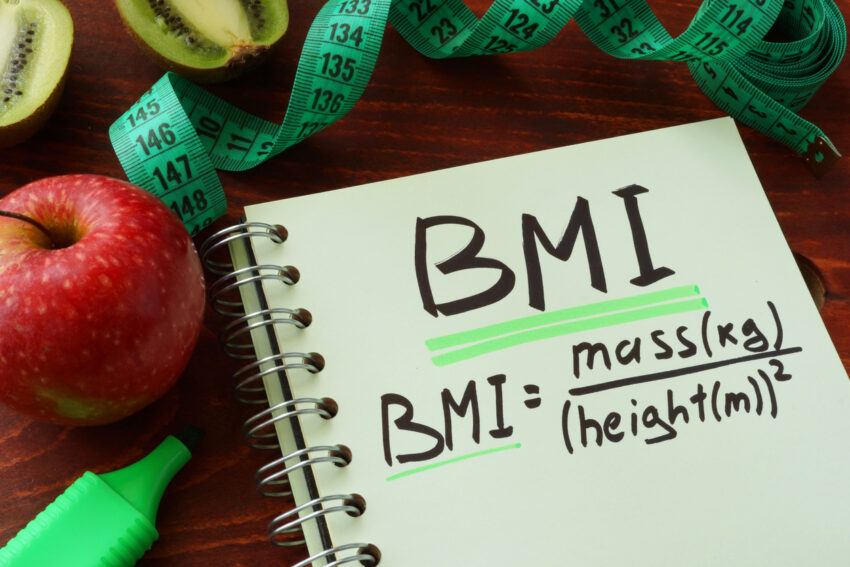
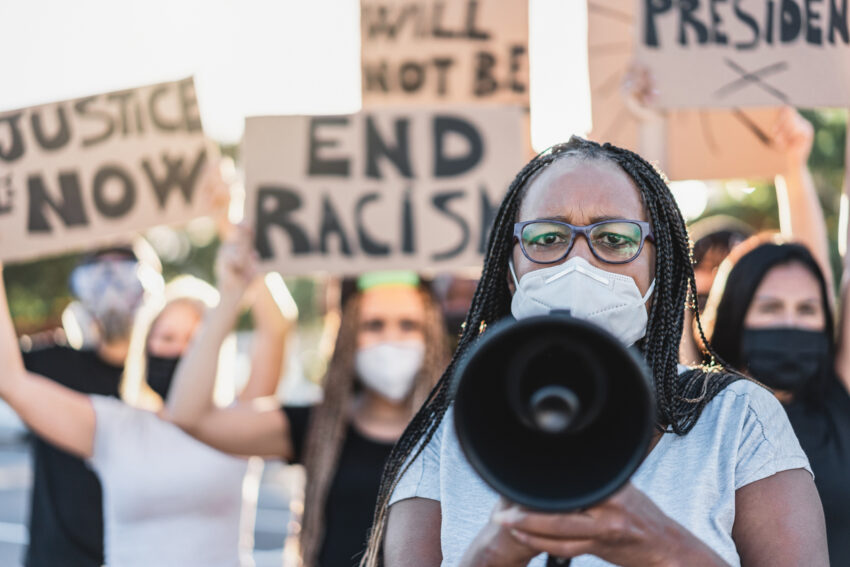
Obesity Care Week 2023 (#OCW2023) is here! From Feb. 27 to March 3, 2023, Obesity Care Week is an annual public awareness effort to end weight intolerance, as well as raise awareness, educate and speak up for a better world for people living with obesity. Also, World Obesity Day is March 4, 2023. Our Salud America! Latino health improvement team at UT Health San Antonio is happy to serve as an OCW2023 Champion to support this awareness week. "Unlike most other diseases, obesity is one that continues to be stigmatized and those impacted struggle to receive any care in many cases, let alone adequate care," said Dr. Amelie G. Ramirez, director of Salud America! at UT Health San Antonio. "OCW2023 aims to raise awareness, educate, and [speak up] for people living with obesity and ...
As more healthcare systems start to screen patients for non-medical drivers of health (NMDoH), we at Salud America! at UT Health San Antonio are spotlighting why screening for NMDoH is so important to improve health outcomes for all people, including Latinos. Today, we are sharing three NMDoH screening tools that can help address NMDoH-related needs, or the non-medical challenges to health, of all patients. You can use these screening tools – questionnaires that gather information from patients – in your healthcare facility or use them as inspiration to create your own screening tool. Let’s dive into these health-changing tools!
The Protocol for Responding to and Assessing Patients’ Assets, Risks, and Experiences (PRAPARE®)
PRAPARE® helps health centers and other ...
Did you know that your Zip code is more important than your genetic code in predicting how long you will live? That’s right – where you live can have a big impact on your health. In fact, our health is influenced by a variety of non-medical factors, such as the conditions in which we are born, grow, live, work, and age. These conditions are known as non-medical drivers of health. Addressing non-medical drivers of health is key to improving health for Latinos and all people. Numerous studies suggest that non-medical drivers of health accounts for between 30-55% of health outcomes and non-medical drivers of health influences individual health behaviors, which account for another 30% of health outcomes. Fortunately, healthcare systems are placing more emphasis on screening ...
The CDC recently revised Body Mass Index (BMI) charts for children to help healthcare providers better track growth in children and identify “severe obesity.” Before the update, BMI charts for children did not go above 37. The revised charts extend to a BMI of 60 to account for the rise of severe obesity in children ages 2-20, according to the CDC. Now clinicians can more easily see whether a child’s BMI falls within the range of underweight, ideal weight, overweight, obese, or severely obese, based on a percentile measured against other children of the same age and gender, according to CNBC and healthline.com. A BMI higher than 95% of kids of the same age and other factors is defined as obese. Severe obesity is a BMI 120% higher than the 95th ...
As we begin a new year, it’s important to take a step back and appreciate our achievements. But it’s also critical to recognize our shortcomings – especially in public health, which affects everyone. Here’s your reminder why racism is still a public health crisis in 2024, and how you can help support the health of all people.
What is Racism?
Racism is the discrimination or prejudice of others based on their race or ethnic group. Racism has existed for thousands of years globally and is deeply rooted in our nation’s history. Populations of color, such as Blacks and Latinos, often experience racism. Racism against others can happen directly, such as denying someone a job because of their race, or indirectly, such as through structural policies that perpetuate ...
The U.S. has a violent child death problem. Developing strategies to prevent violent child death from firearms and traffic crashes is a demanding task that requires consideration of numerous upstream, interrelated, and tangential issues. To help safety advocates develop strategies to prevent violent child death, we compiled five frameworks to help: Understand and explain how proposed strategies will prevent violent child death
Layer multiple strategies to cover shortcomings in strategies
Prioritize upstream primary prevention strategies to improve outcomes for entire populations
Consider the level of intrusiveness of strategies
Apply racial equity tools to ensure equitable adoption/implementation of strategies The five frameworks include: Logic Model/Theory ...
COVID-19. Monkeypox. Inflation. The housing crisis. Student debt. Climate change. There’s a lot going on. It’s understandable why young people are stressed “basically at all times.” Unfortunately, many believe the future may not be much better for young people. More than half of Americans agree that young people today are unlikely to have a better standard of living than their parents, according to a new poll from the University of Chicago Harris School of Public Policy and The Associated Press-NORC Center for Public Affairs Research. A better standard of living includes having the financial means to comfortably raise a family and own a home, but these goals have gotten harder to achieve with the rising cost of living and housing. Add the student loan debt crisis, ...
Clinical trials can help researchers learn to better treat asthma – but they need diverse volunteers. Black and Latino children who have severe asthma, are prone to asthma attacks, and live in low-income urban neighborhoods are underrepresented in asthma treatment clinical trials, even though they are more likely than whites to face health inequities that can exacerbate asthma symptoms. Fortunately, a recent National Institutes of Health (NIH)-funded clinical trial with mostly Black and Latino children found that a monoclonal antibody – mepolizumab – can decrease asthma attacks by 27%. Antibodies are made naturally in the body to fight infection. A monoclonal antibody is made in the laboratory and administered to patients to treat a variety of diseases and infections, ...
Everything is bigger in Texas – except wages, worker protections, and the right to organize, according to a recent study by Oxfam, an organization dedicated to fighting poverty and injustices. After analyzing each state’s wage policies, worker protections, and the right to organize, Texas ranked 48th out of 52 (including Washington D.C. and Puerto Rico) in Oxfam’s “Best States to Work Index.” In comparison, Oregon, California, and Washington placed first, second, and third, respectively. What does this mean for Latinos, who make up 40.2% of Texas’ population? First, let’s take a closer look at Oxfam’s study.
Wage Policies
Oxfam’s evaluation criteria for this category included the ratio of the state minimum wage to the cost of living for a family of four, ...