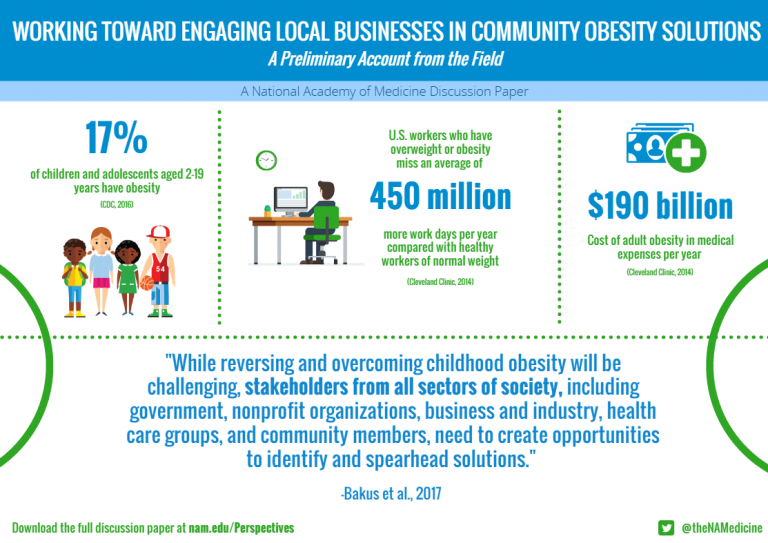
Childhood obesity is a serious public health concern in the United States. About 12.7 million children and adolescents aged 2–19 years, or 17 percent of the population, have obesity. For minorities, the statistics are even more troubling. Nearly 40% of Latino children are overweight or obese (higher rates than both white and black children), placing a significant burden on the current and future state of Latino health. The National Academy of Medicine (NAM) has recently released a discussion paper in which they analyze the role that local businesses can play in alleviating this the childhood obesity epidemic. Per the report (and in line with Salud America’s research) a lack of access to affordable, healthy foods, the absence of physical activity in schools and childcare ...
Corpus Christi, Texas, had been called the fattest city in the nation. Zoya, Sara, and Saherish Surani wanted to do something about it. So the three sisters, with the help of their parents and others, created the iConquer program to get older students to teach younger students how to move more, eat right, and develop healthy habits to reduce obesity in Corpus Christi public schools. Now the Surani sisters won the Salud America! #SaludHeroes video contest! Watch their winning video or read the story how the sisters worked hard to develop, garner support for, fund, and sustain the iConquer program that brings a team of high school students to visit local elementary schools for about an hour once a week for four weeks to present a creative music video, animated videos, dance ...
Two projects from the Keck School of Medicine of University of South California National Institutes of Health for obesity research have been awarded funding to support research focused on preventing and treating obesity-related fatty liver disease in Latinos. Michael Goran, Ph.D., professor of preventive medicine, co-director of the Diabetes and Obesity Research Institute and director of the Childhood Obesity Research Center at the Keck School, was the recipient of both grants and will be leading the research efforts. Prior work from the Goran lab showed that early introduction of sugary beverages to Latino infants was associated with higher prevalence of obesity. Going off this information, one of Goran's project swill examine how reducing sugary beverage consumption for ...
Childhood obesity is one of the leading health concerns plaguing the Latino community. New research shows from several federal agencies show that obesity among toddlers from low-income families is declining. New research from several federal agencies, the American Academy of Pediatrics (AAP) reports. However, despite the decline, the prevalence of obesity for low-income toddlers is 14.5%. This number far exceeds the national average. “Continued initiatives to work with parents and other stakeholders to promote healthy pregnancies, breastfeeding, quality nutrition, and physical activity for young children in multiple settings are needed to ensure healthy child development,” according to the authors from the Centers for Disease Control and Prevention (CDC) and the U.S. Department ...
Thirty-four of 56 WIC State Agencies reported modest decreases in obesity among young children from 2010 to 2014; however, Hispanic children still had higher rates of obesity than their peers, according to the study published in the Morbidity and Mortality Weekly Report, The CDC worked in collaboration with the United States Department of Agriculture (USDA) to monitor obesity among toddlers aged 2-4 from low-income families using data from the Special Supplemental Nutrition Program for Woman, Infants, and Children (WIC) Participants and Characteristics. These decreases in obesity rates are likely due to obesity prevention efforts at the community, state, and national levels, such as the USDA redesign of WIC food packages to meet the special nutritional needs of low-income ...
What is the state of obesity in your state? New interactive maps & data released by the Trust for America’s Health and Robert Wood Johnson Foundation-The State of Obesity: Better Policies for a Healthier America. Some key findings of the report, based data from 2014-2015, : 9 of the 11 states with the highest obesity rates are in the South and 22 of the 25 states with the highest obesity rates are in the South and Midwest.
10 of the 12 states with the highest rates of diabetes are in the South.
Adult obesity rates are at or above 30 percent in 29 states for Latinos and 16 states for Whites. Why disparities in the South and among Latinos? Latino kids have limited space to be physically active-download the issue brief for free here-and Latino kids have limited ...
For the first time in the past decade, U.S. adult obesity rates decreased in four states—Minnesota, Montana, New York and Ohio—in the past year, according to a new report. But there's bad news, too. Obesity increased in Kansas and Kentucky and remained above 20% in all states. Obesity rates also are at or above 30 percent in: 40 states and Washington, D.C. for Blacks; 29 states for Latinos; and 16 states for Whites, according to the according to annual State of Obesity: Better Policies for a Healthier America from the Trust for America’s Health and the Robert Wood Johnson Foundation. Louisiana has the highest adult obesity rate at 36.2%. Colorado is lowest at 20.2%. The new report did indicate some evidence that the rate of increase of adult obesity has been slowing ...
According to local news and a recent study of California school children, unemployment rates can increase a child's risk of becoming an unhealthy weight. Researcher and lead author of the study, Vanessa Oddo from Johns Hopkins Bloomberg School of Public Health in Baltimore explained that there is a trickle down effect that impact kids health. Researchers studied California's unemployment levels and house foreclosures from 2008 to 2012 along with heights and weights of 1.7 million school-aged children, more than half Latino, from the state's department of education. Students body mass index (BMI)'s were compared with economic indicators showing for every one percent increase in unemployment in a community, children had a 14% increase in BMI. However, foreclosure had a reverse ...
New research centers in Harvard and John Hopkins and USC will work to address research in hopes to improve health in communities overburdened by pollution and environmental factors. The Maternal and Developmental Risks from Environmental and Social Stressors Center (MADRES) will recruit and research 750 mother -infant pairs from low-income urban hospitals in the Los Angeles area over three years to determine how environmental factors impact child weight, and how psychological stress and behavior risk factors impact the mother's weight gain before and after pregnancy. Pollution was been shown to be a key factor in pregnant rats gaining weight within a recent study. Latino's are often faced with higher risks for obesity, explained Keck School of Medicine professor, Carrie Breton, ...