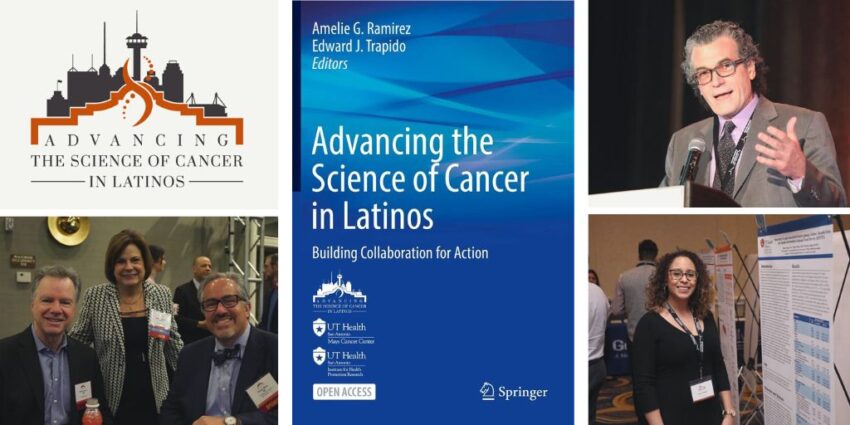
This is part of the "Advancing the Science of Cancer in Latinos: 2022 Conference Proceedings," which summarizes findings and discussions of the 2022 Advancing the Science of Cancer in Latinos Conference on Feb. 23-25, 2022, in San Antonio, Texas.
Updates in Genomics of Breast Cancer among Latina Women
Dr. Elad Ziv is a Professor of Medicine at the University of California San Francisco (UCSF), with a research focus on human genetics of cancer susceptibility and hematological traits. Genomics Explained To set the stage for his presentation, Dr. Ziv explained genomics in a lay-friendly way, describing it as a long series of letters. A change of one letter in this series, from an A to a G for example, can lead to anything from a change in height to a disease susceptibility. Not ...
This is part of the "Advancing the Science of Cancer in Latinos: 2022 Conference Proceedings," which summarizes findings and discussions of the 2022 Advancing the Science of Cancer in Latinos Conference on Feb. 23-25, 2022, in San Antonio, Texas.
Addressing Differences to Advance Health Improvement for Latinos
Dr. Marcella Nunez-Smith is an internal medicine physician, the Associate Dean for Health [Improvement] Research at Yale School of Medicine, and the Associate Director for Community Outreach and Engagement at the Cancer Center. Dr. Nunez-Smith served as chair of the Presidential COVID-19 Health [Improvement] Task Force, and is one of the nation's foremost experts on differences in healthcare access. Health Differences Affecting Neglected Communities Dr. Nunez-Smith spoke ...
This is part of the "Advancing the Science of Cancer in Latinos: 2022 Conference Proceedings," which summarizes findings and discussions of the 2022 Advancing the Science of Cancer in Latinos Conference on Feb. 23-25, 2022, in San Antonio, Texas.
Healthcare Improvement in the Latino community
The United States healthcare system is rife with challenges affecting the Latino community, with a population of 60.6 million [Estrada]. Health challenges include higher rates of infant mortality, stroke, cancer, heart disease, diabetes, hypertension, and COVID-19. [Webb Hooper, Duma] Latino patients, especially those who are uncomfortable discussing care in English, are often labeled as unintelligent and non-compliant. [Duma] In the COVID-19 pandemic, cases among the Latino population have been ...
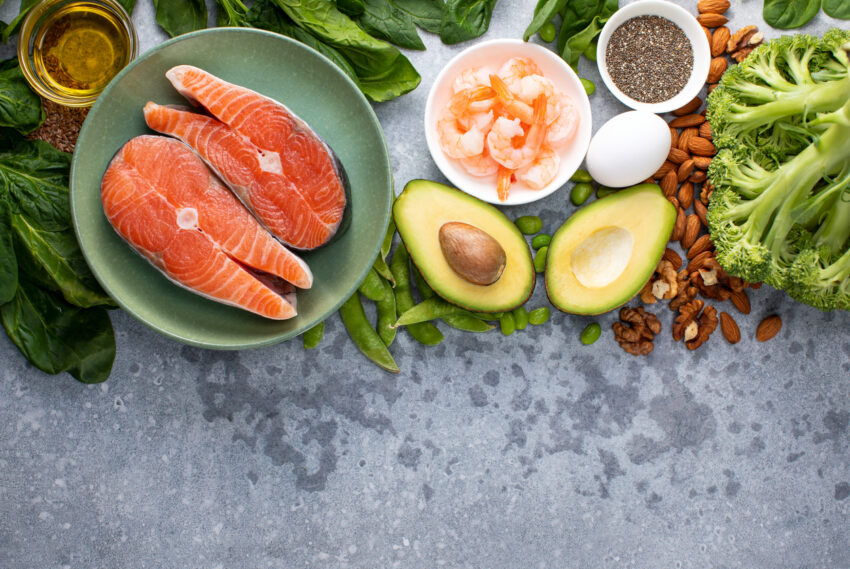
Consuming cold-water fish and other sources of omega-3 fatty acids could preserve brain health and enhance cognition in middle age, according to a recent study led by researchers at UT Health San Antonio and the Framingham Heart Study. “Our results, albeit exploratory, suggest that higher omega-3 fatty acid concentrations are related to better brain structure and cognitive function in a predominantly middle-aged cohort free of clinical dementia,” according to the study.
What Are Omega-3s?
Omega-3s are a family of essential fatty acids that play an important role in the human body. “Although evidence is mixed, studies indicate that omega-3 fatty acids can protect against all sorts of illnesses, including breast cancer, depression, ADHD, and various inflammatory diseases,” ...
U.S. Latinos face heavier burdens of stomach, liver, and cervical cancers, and worse outcomes for many cancers, than their White peers. But why? Unfortunately, many factors cause these disparities, from poverty and a lack of healthcare access to cultural barriers, acculturation, and genetic heritage. That's why it takes everyone working together to address Latino cancer. To this end, UT Health San Antonio has published a new open-access book, Advancing the Science of Cancer in Latinos: Building Collaboration for Action. The book is a collection of articles based on presentations at the 2nd biennial Advancing the Science of Cancer in Latinos conference on Feb. 26-28, 2020, in San Antonio, co-hosted by Mays Cancer Center and the Institute for Health Promotion Research (IHPR) ...
Rapamycin is a medication approved by the US Food and Drug Administration as an immunosuppressant drug, making it helpful in preventing rejection in organ transplantation. The medication has also been tested in prior studies — like clinical trials, which help researchers learn how to better slow, manage, and treat diseases — as a treatment for cancer and to evaluate its effects on physical and cognitive function and immune health. Now, researchers at UT Health San Antonio are recruiting participants for a study to evaluate Rapamycin’s effects on heart function, heart muscle stiffening, and circulation. Participants will be compensated up to $300 for study completion, which involves five study visits over the course of about two months.
Who Can Participate in the Rapamycin ...
We’re all busy with the hustle and bustle of life. It’s tempting to grab fast food or buy ready-to-eat food to avoid cooking after a long day. But choosing those ultra-processed foods may cost you more than the money in your wallet. We already know that processed food is bad for your health, but an August 2022 study in The BMJ suggests that consuming ultra-processed food may increase risk for a serious disease – colorectal cancer. Let’s unpack these study results and what they mean for Latinos.
What Are Ultra-Processed Foods?
Ultra-processed foods – industrial ready-to-eat or ready-to-heat formulations made of little or no whole foods – now contribute 57% of total daily calories consumed by American adults, according to the study. These foods are usually rich ...
Volunteering for Thanksgiving, Christmas, and New Year’s helps other people. It gives the volunteer a nice emotional boost, too. So why not volunteer your "voice" or "actions"? We at Salud America! invite you to take or start these 11 actions to promote health equity for Latino and all families this holiday season!
1. Start a School Food Pantry!
About 1 in 6 children are food insecure. They don’t know where their next meal is coming from. Your school can help these kids! Try the Salud America! “School Food Pantry Action Pack.” This is a free guide to help school personnel talk to decision-makers, work through logistics, and start a School Food Pantry to help hungry students and reduce local food insecurity. A School Food Pantry accepts, stores, and redistributes ...
How does COVID-19 affect the brain? Researchers at the Biggs Institute for Alzheimer’s & Neurodegenerative Diseases at UT Health San Antonio are looking for the answer and need your help. Volunteer for the 7T MRI Study of How COVID-19 Affects the Brain! Study volunteers will get an advanced state-of-the-art MRI scan to compare brain imaging of those recovered from COVID-19 to those who have never tested positive for the infection. “This study is to identify the long-term neurological and psychiatric effects of a COVID-19 infection,” according to the Biggs Institute study team, including Drs. Mitzi Gonzales, Gabriel de Erausquin, Sudha Seshadri, Monica Goss, and Mohamed Habes. To volunteer for the 7T MRI Study, contact Vibhuti Patel (210-450-7186), Erin ...