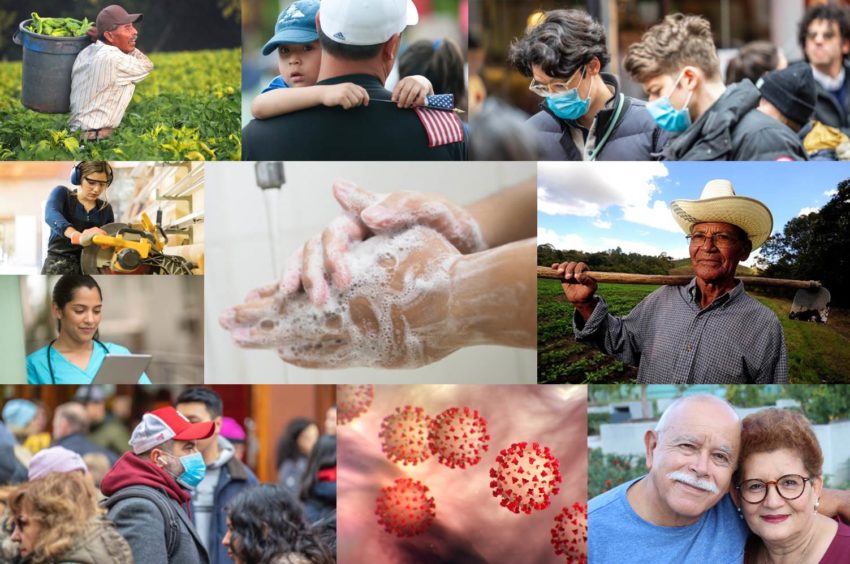
With the rise of COVID-19, our team at Salud America! is digitally curating content about what the coronavirus pandemic means for Latino health equity. We want to ensure Latinos get an equitable share of culturally relevant information. You can do your part! Share our Latino COVID-19 Vaccine "Change of Heart" Bilingual Storytelling Campaign in English or Spanish. We hope to move Latinos from vaccine hesitancy to vaccine confidence through telling stories of real Latinos who ended up getting the vaccine! Share our "Juntos, We Can Stop COVID-19" bilingual campaign to stop the spread! Share our infographic on 8 ways coronavirus impacts Latinos (English | Spanish).
Follow our content that has increased exposure to Latino health equity amid the pandemic, according to a ...
Dr. Amelie G. Ramirez, director of the Institute for Health Promotion Research (IHPR) at UT Health San Antonio and a leading health promotion researcher, has been named to the Women in Cancer Research Council of the American Association for Cancer Research (AACR). The council organizes the activities of the members of the Women in Cancer Research group, including fostering career development and recognizing scientific achievements. They also advise AACR leadership on issues of concern to investigators. Ramirez will serve on the council for a three-year term starting December 2019. “I’m very excited to serve the AACR in this role. I hope to advance our role in cancer research across the continuum from the lab to survivorship,” Ramirez said. She is professor and chair of the ...
As U.S. Latinos face a staggering 142% projected rise in cancer cases by 2030, UT Health San Antonio leaders gathered international cancer experts to publish a new book with innovative research and recommendations to reduce Latino cancer. The book, Advancing the Science of Cancer in Latinos in Springer Open Books, showcases results of the same-named conference that brought 300 researchers to San Antonio in 2018. A follow-up conference, set for Feb. 26-28, 2020, in San Antonio, is open for registration. Included in the new book are promising research findings on Latino cancer and strategies for new research covering the entire cancer continuum, from advances in risk assessment, prevention, screening, detection, diagnosis, treatment, survivorship, and policy. “Our book, ...
Like the beautiful turquoise bracelet and shawl gifted to her by her Colombian abuela, Clara Reyes is fearless when it comes to facing challenges and seeking solutions. That’s why it’s no surprise Reyes is blazing a path to better health for Latinos. Reyes, who has served on a Peace Corps mission to El Salvador, is currently a clinical trials program manager in the Department of Public Health Sciences at New Mexico State University (NMSU). She works with several NMSU faculty members to manage a randomized clinical trial in two U.S.-Mexico border counties. The trail is testing a culturally adapted program for Latina mothers diagnosed with cancer and their children. To further her experience and education, Reyes applied for the Éxito! Latino Cancer Research Leadership ...
Continuing its work to promote action for Latino health equity, Salud America! is launching a new project: The Salud Talks podcast. This production, which will go live on Wed., Sept. 4, expands on previously covered topic areas of Latino health and life — approaching each discussion with a holistic mindset. Episodes will be available every Wednesday morning on Apple Podcasts, Spotify, and SoundCloud. "The Salud Talks podcast is yet another extension of Salud America!'s wide and impactful reach," said Dr. Amelie Ramirez, director of Salud America! "The podcast will give listeners insight into many of the health disparities impacting Latinos and all Americans. Furthermore, it will raise awareness of emerging solutions to those disparities."
What to Expect
The podcast's first ...
Dr. Amelie G. Ramirez, director of Salud America! and the the Institute for Health Promotion Research at UT Health San Antonio, has been named chair of the Department of Population Health Sciences (formerly Epidemiology and Biostatistics), announced Dr. Robert Hromas, dean of the Long School of Medicine. The appointment is effective June 1. Dr. Hromas also announced the department will be renamed the Department of Population Health Sciences. The new department will continue to provide services in all biological and medical analytical areas. It will also focus on efforts to use analytical tools to enhance the health of the unique populations in San Antonio and South Texas. Dr. Ramirez will continue to serve as director of the Institute for Health Promotion Research, which she ...
The U.S. burden of Alzheimer’s disease and related dementia will more than double within 50 years, and Latinos will suffer the biggest rise, according to the CDC. Alzheimer’s is the only top-10 cause of death without an effective treatment or cure. However, new legislation is targeting this rising crisis.
The CHANGE Act
The CHANGE Act takes a targeted approach to addressing our nation’s Alzheimer’s crisis by encouraging early detection, diagnosis, and access to interventions, according to UsAgainstAlzheimer's. The CHANGE Act was introduced by eight U.S. Senators, including two Latinos, Robert Menendez (D-NJ) and Linda Sanchez (D-CA). Some of the senators are Republican, some Democrat. The latest emerging science indicates that proactive, risk-modifying measures exist ...
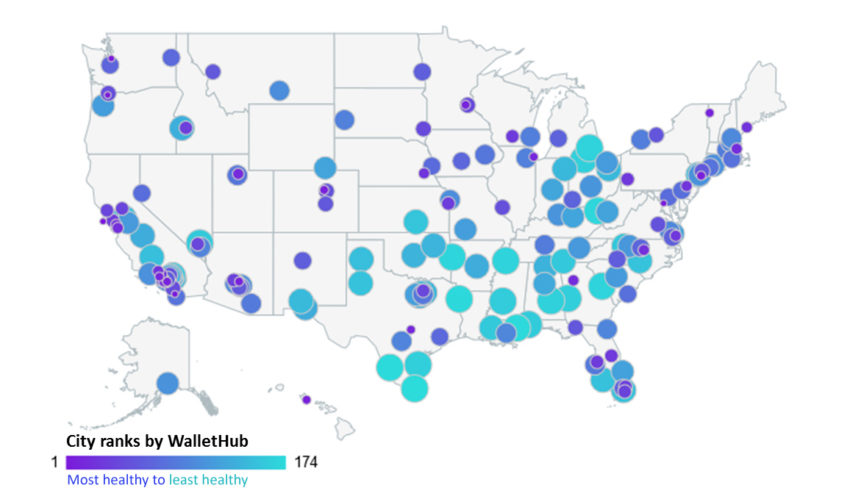
Two Texas cities—Laredo (95.4% Latino) and Brownsville (93.9% Latino)—rank as the least healthy U.S. cities, according to the 2019 Healthiest & Unhealthiest Cities in America by WalletHub. The ranking scores 174 large cities based on 42 health indicators. They look at cost of medical visits, and the number of dieticians and mental health counselors. They also factor in the amount of green space, trails, and healthy restaurants. Healthy food consumption and physical activity also has weight. "Some places promote wellness by expanding access to nutritious food and recreational facilities. Others strive to keep healthcare costs affordable for everyone or keep parks clean and well-maintained," according to WalletHub. "When a city doesn’t take care of these issues, it can ...
Congratulations to Dr. Amelie G. Ramirez, director of Salud America! and the Institute for Health Promotion Research at UT Health San Antonio, on being selected for the Bluebonnet Award of the Texas Academy of Nutrition and Dietetics! This honor recognizes an individual who is not a dietitian, but who has contributed significantly to promote and advance nutrition in Texas and beyond. Ramirez will be formally recognized during the annual conference of the Texas Academy of Nutrition and Dietetics on April 11, 2019, in Arlington, Texas. “I’m very thankful for this award from the Texas Academy, which is a recognition of our ongoing work to promote healthy food access for people in Texas and across the nation,” Ramirez said.
Dr. Ramirez & Her Health Promotion ...