Amid a sweltering summer heat wave, communities in the U.S. East Coast are struggling to handle the stress on energy demand in homes built to heat rather than cool. In fact, many households across the county experience a lack of air conditioning reliability. This often-overlooked non-medical driver of health impacts overlooked populations, lower income individuals, those who live in rural areas, and families that live in densely populated urban areas that lack shade or in older buildings with no central air. Let’s explore how air conditioning reliability (or unreliability) can affect the health of you and your familia—and how local communities can address this inconsistency.
State of Air Conditioning Reliability
Over 35 million Americans live ...
2025 was filled with plenty of ups and downs in the world of health for Latinos and all people. However, there were some significant highs that drove health in 2025. For instance, 2025 gave us two campaigns that put readers in the driver’s seat of country-wide change and Salud America! received several opportunities to help make a difference in the lives of all people. But most of all this year gave us hope in the form of stories of survivorship and perseverance. Here were the top 10 stories driving Latino Health in 2025.
1. Linda Mota Shares Her Breast Cancer Survivorship Story
Breast cancer was the last thing on Linda Mota’s mind. She was diagnosed with stage 3 breast cancer — a disease that greatly affected her ...
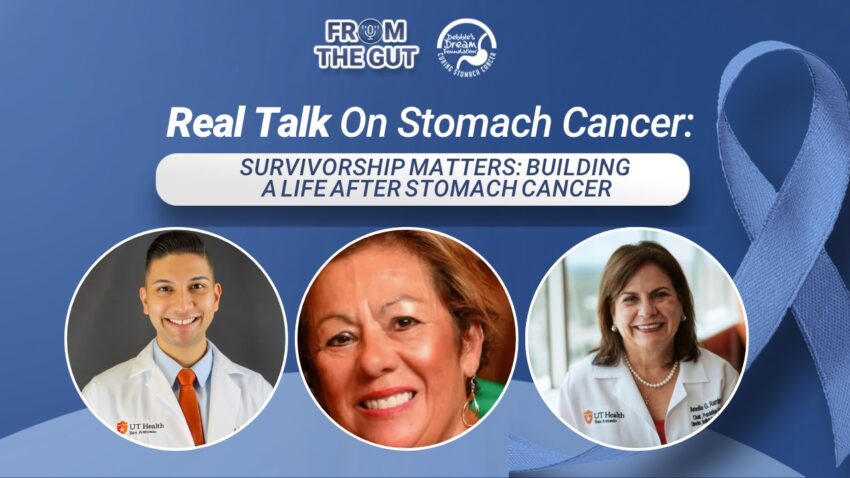
Now comprising 20% of the US population, Latinos are among the fastest-growing populations in the country. They are also afflicted with some of the highest rates of cancer, especially cancers with lower survival rates like stomach cancer. In honor of Stomach Cancer Awareness Month, Dr. Amelie G. Ramirez, leader of Salud America! and a cancer health researcher at the Mays Cancer Center at UT Health San Antonio, and Dr. Derek Rodriguez, a research scientist at UT Health San Antonio, appeared on the Debbie’s Dream Foundation From the Gut podcast. In the podcast’s fourth episode, the pair of cancer researchers focused on the Avanzando Caminos Hispanic/Latino Cancer Survivorship Cohort Study and the importance of creating a community of ...
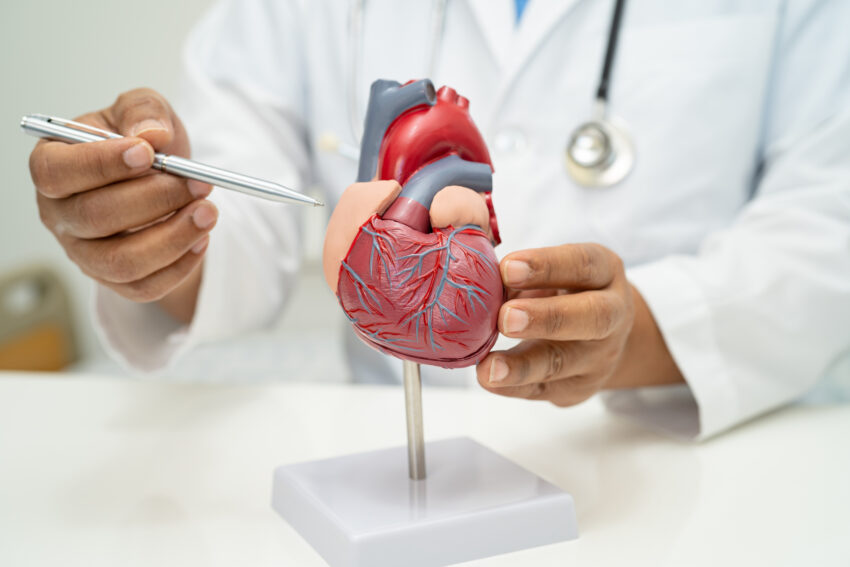
Scientists and collaborators at the Icahn School of Medicine at Mount Sinai recently identified novel genetic interactions that may contribute to congenital heart disease. Congenital heart disease (CHD) is a problem with the heart’s structure at birth. Let’s go beyond the surface and learn more about what the research means and how it can help others!
The Health Impact of Congenital Heart Disease (CHD)
When a disease or condition is congenital, it means someone is born with this condition. Congenital heart diseases or defects occur when “when the heart, or blood vessels near the heart, don’t develop normally before birth. Such defects result when a mishap occurs during heart development soon after conception — often before the mother is aware that she is pregnant,” ...
This content is from the "Advancing the Science of Cancer in Latinos: 2024 Conference Proceedings."
Non-Medical Drivers of Health Impacting Latino Cancer Health Gaps: Genetic Cancer Risk Assessment
Dr. Alejandra Hurtado de Mendoza is an Assistant Professor at the Cancer Prevention and Control Program at Georgetown Lombardi Comprehensive Cancer Center. Gaps across the continuum Dr. Hurtado de Mendoza’s presentation focused on gaps in genetic cancer risk assessment, multi-level hurdles that Latinos face across the genetic cancer risk assessment continuum, and an example of a multilevel intervention to decrease gaps. The presentation began by discussing how gaps in the genetic cancer risk assessment continuum begin with awareness. Only 23% of Latino individuals were aware of ...
El soldado del Ejército Estadunidense,Tony Rentas, oriundo/originario de Puerto Rico, quien había soñado toda su vida con servir en el Ejército, sufrió una convulsión durante una misión en Kosovo. A Tony le diagnosticaron un glioma de bajo grado, un tipo raro de tumor cerebral. No tenía ni idea de lo que era un glioma de bajo grado. Así que empezó a buscar en Google. Encontró poco que le ayudará a entender este diagnóstico y lo que significaba para él y su familia, y aún menos estaba disponible en español. Por eso Tony está compartiendo su historia y participando en el Registro Internacional de Glioma de Bajo Grado, que tiene como objetivo aprender más sobre las mejores formas de tratar estos tumores en diferentes grupos de personas, incluyendo a miembros ...
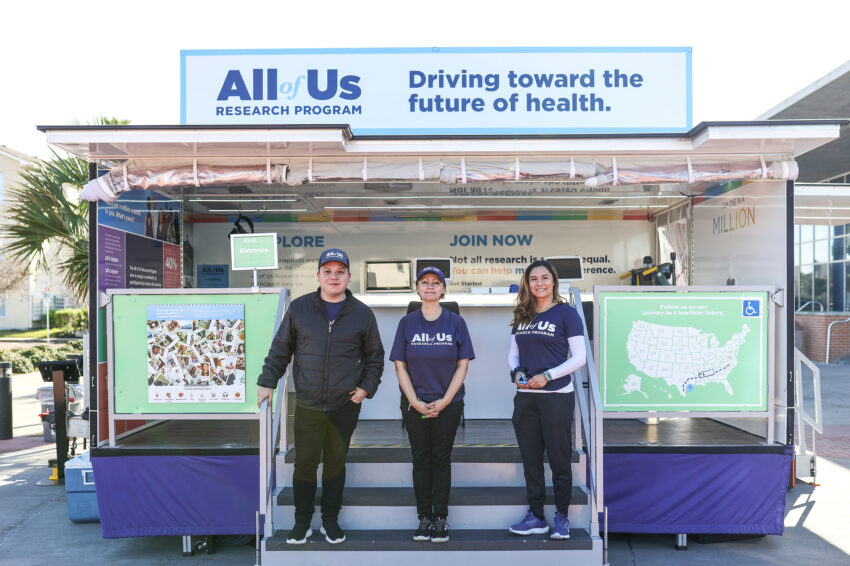
Sit down and buckle up because the National Institutes of Health’s All of Us Research Program could be pulling into a town near you!
On April 16, 2024, the All of Us Research Program announced its annual nationwide tour focused on engaging historically underrepresented communities in medical research, according to a recent news release.
The national mobile tour, dubbed “the All of Us Journey,” kicked off its route with stops on the East Coast in Ohio before eventually making its way to the New York area in early May.
Other East Coast stops include Washington, D.C., Maryland, and Virginia along with first-time destinations of Vermont, New Hampshire, and Rhode Island.
The program plans to visit more than 80 communities, including central regions like Texas, Colorado, and New ...
Dr. Rebecca Jones of UT Health San Antonio has been approved for a 2-year, $250,000 funding award through the Eugene Washington PCORI Engagement Awards (Engagement Awards) program, an initiative of the Patient-Centered Outcomes Research Institute (PCORI). The funds will support the creation of the Creando Conexiones: Cancer Health Research Agenda, which will outline research priorities identified by South Texas cancer survivors, caregivers, and community members. The coalition is directed by a core team led by Jones and an executive committee led by Jason Massiatte, president and CEO of Ma Hila’s Heart Children's Cancer Foundation. Join the Creando Conexiones coalition! "We know that research has the most impact when guided by voices of cancer survivors and community ...
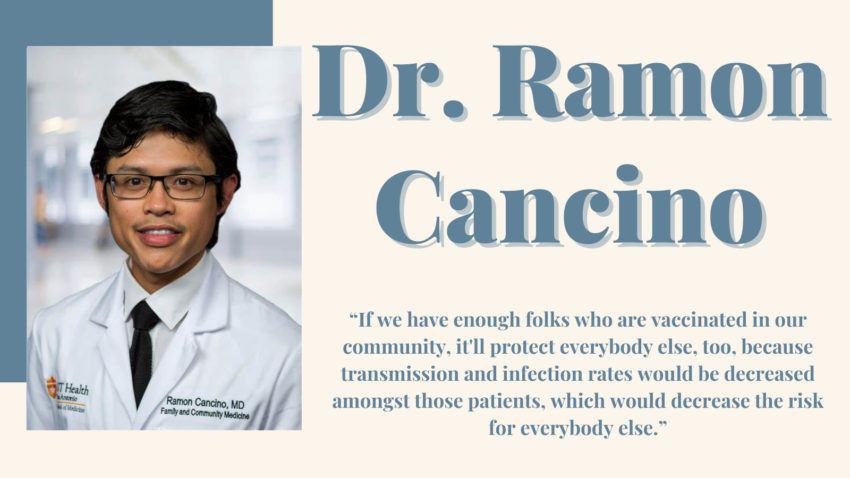
The COVID-19 virus is still a threat for many. U.S. Latinos continue to suffer a from a high number of COVID-19 cases. Fortunately, vaccines are available and free for children and adults, and they’re the best way to protect yourself and your family against the worst outcomes of the virus! Dr. Ramon Cancino, a family medicine physician at UT Health San Antonio and leader of the UT Health Physicians Primary Care Center, stressed the importance of getting vaccinated. “If we have enough folks who are vaccinated in our community, it'll protect everybody else, too, because transmission and infection rates would be decreased amongst those patients, which would decrease the risk for everybody else,” Cancino said. Find a vaccine near you!
Difficulties ...