For the first time in decades, overall tobacco use increased among high school students. This could have a big impact on Latino health. Lung cancer is the leading cause of cancer death among Latino men and the second-leading cause among Latino women. The Tobacco 21 Coalition is trying to raise the legal minimum age for cigarette purchase to 21 in San Antonio, Texas (68% Latino). Every year in Texas, 75,000 kids try smoking for the first time and 12,300 kids become regular smokers. In San Antonio, 12.6% of male high school students and 9.9% of female high school students currently smoke. These youth are more sensitive to nicotine's addictiveness because their bodies are still growing and developing, according to health experts. Thus, these youth are more likely to smoke as ...
TV host Karla Martinez, nutritionist Chef Lala, yoga instructor Yudy Arias, and dentist Karent Sierra are teaming with Colgate Total on a new campaign to empower Latinas to invest in healthy lifestyles, beginning with proper oral health. For the campaign, called Simplemente Saludable (Simply Healthy), each woman will highlight ways to shake up health routines. Karla will speak on women's empowerment and self-help. Karent will open up about the best oral health routine and tips for a healthier smile. Yudy will share new at-home exercise routines. Chef Lala will provide nutritious ways to enjoy traditional Latin cuisine. For example, Chef Lala shared these six tips related nutrition: Apples are a healthy source of sweetness, but they could shake up the plaque that ...
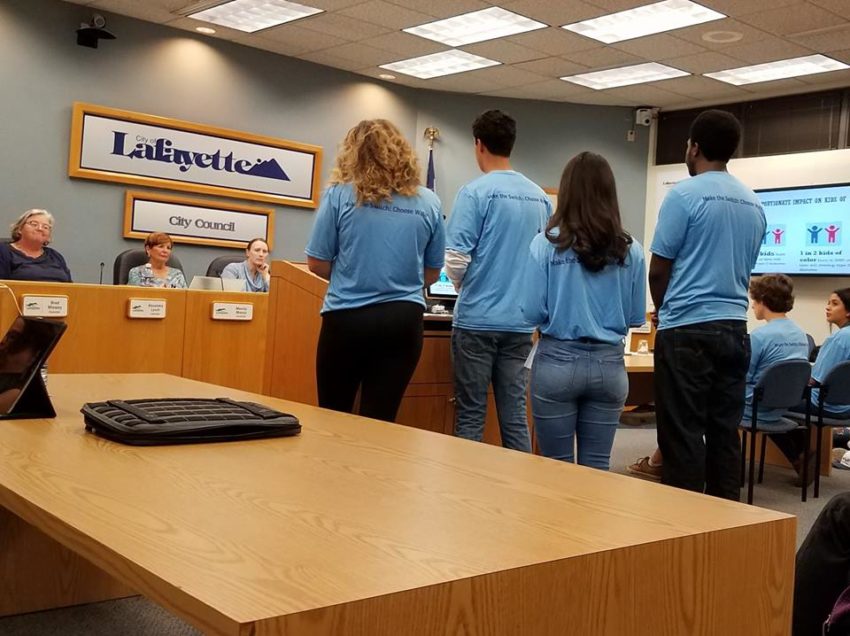
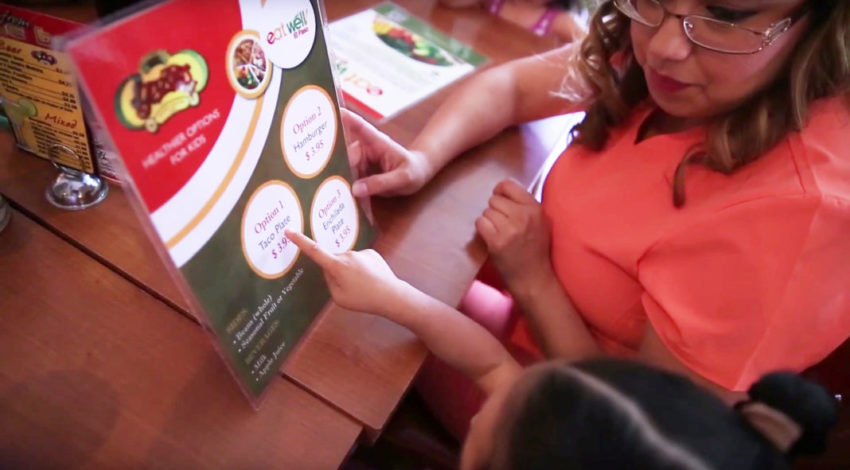
Kids were fed up with the effect of sugary drinks on people's health in the small mountain town of Lafayette, Colorado (16% Latino). They pushed city leaders for change, and scored a big victory in October 2017 when the Lafayette City Council voted 5-1 for an ordinance to require all local restaurants to offer only milk and water with kids’ meals. This means that kids will no longer see enticing pictures of sodas or juices as an option on kid's menus. The city is the fifth U.S. city, and the first outside of California, with such an ordinance. However, this isn't an outright ban on sugary drinks. Parents can ask for a sugary drink with their child’s meal, and restaurants can meet that request.
Youth Speak Up for Healthier Generations
The ordinance is a huge success ...
About » Team » History » Curation » Science »
Scientific Articles
Our Science behind Healthy Change in Communities How far along is healthy change in your community? Where can you get involved? The answers can be found in the Salud America! Policy Contribution Spectrum, a science-based way to identify and describe the stages of policy development. The Spectrum helps pinpoint important activities that contribute to the process of policy development, from noticing there is a problem, to the passing of a policy, to monitoring a policy to make sure it does what it was created to do. Our detailed Spectra is found in the March 2013 issue of the American Journal of Preventive Medicine. Curating Health Content for a New Generation At Salud America!, we use "digital ...
About » Team » Curation » Science » History » Salud America! is led by health promotion researcher Dr. Amelie G. Ramirez. Dr. Ramirez is supported by a passionate team of communicators at the Institute for Health Promotion Research at UT Health San Antonio. The program was supported in the past the Robert Wood Johnson Foundation (2007 to 2021) and now has support from the National Hispanic Medical Association, Genentech, and more. The program's handle on social media is @SaludAmerica (prior to 2017 it was @SaludToday).
Funding History Salud America! Established to Improve Child Health (2007)
Salud America! Gets Continued RWJF Support (2012)
Salud America! Gets Continued RWJF Support (2015)
Salud America! Gets Continued RWJF Support (2016)
Salud ...
Latino kids and families often have shockingly limited spaces to be physically active. What are the best ways to improve Latino families’ access to “active spaces” like gyms, athletic fields, parks, and playgrounds? Shared use agreements set up rules for public use of schoolyards after class. Improved parks, safer streets, and marketing also can stimulate more physical activity. Read the Research: Active Spaces & Latino ...
Latino kids tend to live in neighborhoods with more access to fast food restaurants and less access to healthier food options, according to Salud America! research. Regularly eating high-calorie, high-sugar, and high-sodium meals at these restaurants can have devastating long-term health impacts, such as obesity, heart disease, and more. In an effort to combat these worsening trends, some of the largest fast-food restaurant chains pledged to offer healthier meal options on their kids’ menus. Some pledged to remove sugary drinks, and other pledged to add healthier options. Were they able to keep their promises?
Fast food study The Rudd Center for Food Policy & Obesity, a nonprofit research and public policy organization based out of the University of Connecticut, ...
Thank you for speaking up on the importance of menu labeling! Salud America! supporters submitted 12% of the comments FDA received regarding their one-year delay of menu labeling (332 of 2,714 online comments). We also reached more than 6 million people online and on social media with menu labeling messages. These actions show that many people want to make it easy for Latino and all families to make healthier decisions about the foods they eat outside the home. Now, what will FDA do?
The fight up to now
Months ago, the FDA announced a one-year delay for food companies to adopt changes to menu labeling of foods in restaurants and other eateries. Industry stakeholders welcomed the extension amid concerns over their ability to meet the compliance deadline of July 2018, while ...
A healthy movement is growing in Los Angeles (48.5% Latino) where schools are saying no to the unhealthy marketing of McTeachers nights. This week of May 12, 2015, schools are being asked to vote on nutrition and fundraising policies, including voting on policies around food marketing for local wellness school policies. The United States Department of Agriculture (USDA) has outlined updates for school districts on local wellness policies (LWP) to include a policy around food marketing in schools by June 30, 2016. School marketing includes any advertising, promotion of oral written, or graphic statements made for the purpose of promoting the sale of food or beverages, explains a resource from Voices for Healthy kids and the Center for Science in the Public Interest ...