This is part of our Food and Latino Kids: A Research Review »
Conclusions
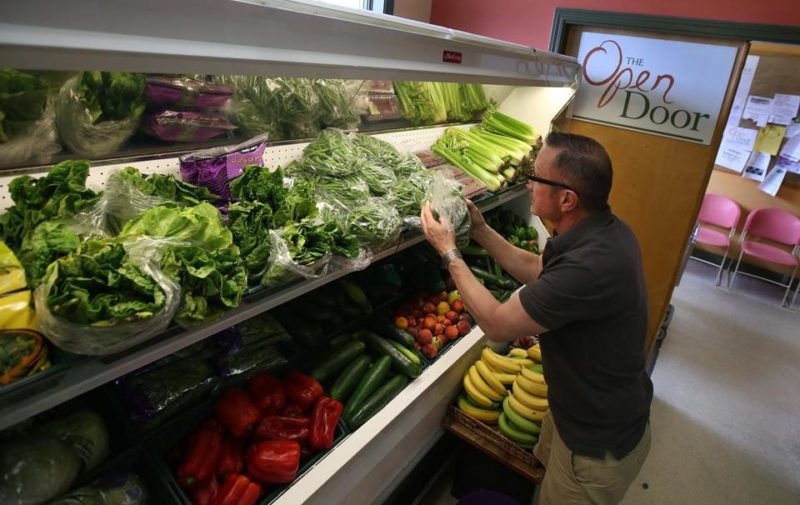
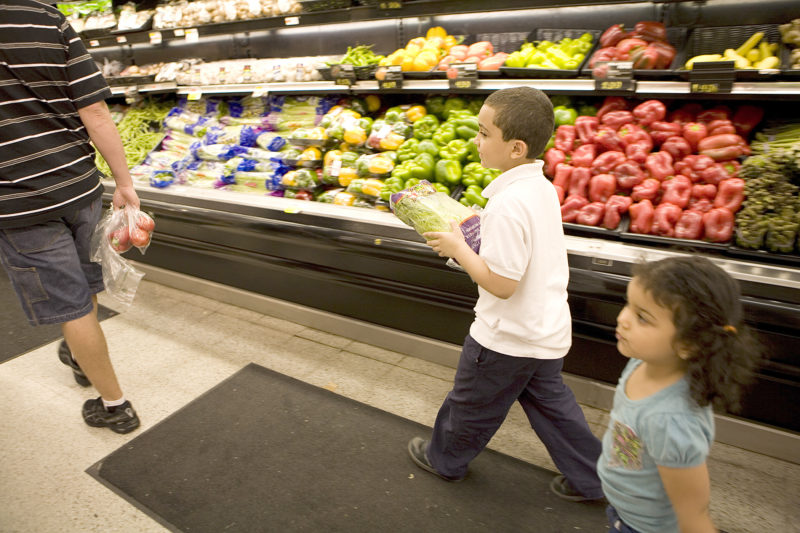
A large portion of U.S. families lack access to healthy, affordable foods in their neighborhoods. Lack of access is especially prevalent in low-income communities, including Latino communities. In these neighborhoods, convenience stores and fast-food restaurants are widespread, but there is a scarcity of supermarkets and farmers’ markets that can provide fresh and healthy food options. Healthy food financing initiatives are relatively recent, but promising at increasing the availability of healthy foods in low-income neighborhoods. These initiatives involve children and adults and are spread across various localities with different environments, characteristics, and obesity rates. There is still ...
This is part of our Food and Latino Kids: A Research Review »
Introduction
While a nationwide concern, obesity is especially prevalent among Latino children. Nearly 40 percent of U.S. Latino youth ages 2-19 are overweight or obese compared with 28.5 percent of non-Latino white youths.1 Obesity is linked to increased risk of developing type 2 diabetes, cardiovascular disease, asthma, liver disease, and cancer.2 Given that Latinos are one of the fastest-growing U.S. populations, preventing and reducing obesity among Latinos will have an important impact on our nation’s health. Latino children are more likely to live in poverty than others,3,4 causing diet quality to suffer and increasing the risk for developing obesity.5 Limited neighborhood access to affordable, healthy ...
Healthy food is important to health for all people. Yet fast food and corner stores outnumber supermarkets and farmers’ markets in many neighborhoods, including Latino neighborhoods. This results in overconsumption of unhealthy foods, and more risk of obesity. Fortunately, healthy food financing initiatives can boost access to healthy, affordable foods. This happens when supermarkets and farmers’ markets get certain incentives to develop their businesses in certain areas. Groups also can help corner stores to expand their inventory of healthy, affordable foods. Also, more marketing of healthy foods, and less of junk foods, can help spur desirability. See the Full Research Review with references (PDF)
Read the Issue Brief in English (PDF)
Read the Issue Brief in ...
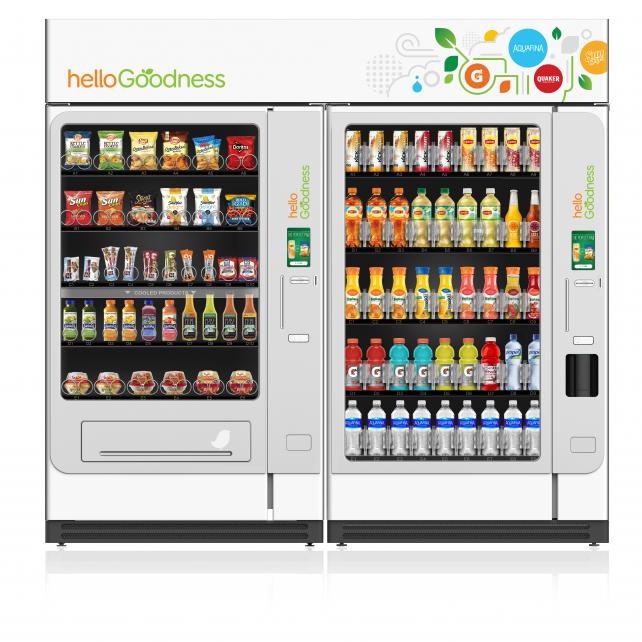
According to a recent article, vending sales have declined by one percent to $4.5 billion in 2014. This is a great advancement in healthier choices for most schools and cities, that are changing vending machine options to encourage healthier foods. However, not all vending machines are made the same, many include highly processed foods that are high in sodium and sugar. Working on the future of vending machine sales growth, is PepsiCo Inc. with their new marketing for vending machines, the Hello Goodness Brand. Thier aim is to help bypass the many health concerns that schools and cities across the nation are concerned about with soda and candy as being the main options in vending machines. The new machines are planned to hold more "healthy" options, including Naked Juice, Lays Oven ...
Latinos tend live in neighborhoods with few supermarkets and other sources of healthy, affordable food options, but several promising solutions are emerging, according to a new package of research from Salud America!, a national network for childhood obesity prevention and communication funded by the Robert Wood Johnson Foundation. Salud America!’s Better Food in the Neighborhood research package includes an in-depth review of the latest science on the U.S. food environment and recommendations based on that research. It also includes an issue brief, animated video, and infographics. The research shows that Latino neighborhoods have one-third as many supermarkets as non-Latino ones, corner stores with few healthy options, and more marketing of unhealthy foods. Promising ways to ...
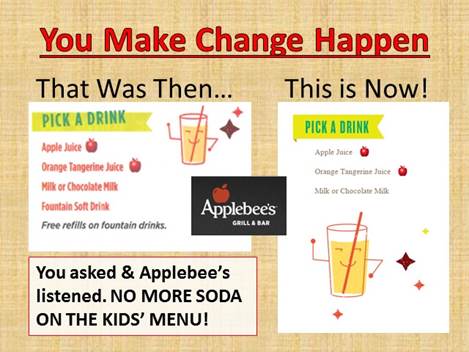
Studies have shown over-consumption of sugary beverages is linked to health risks like diabetes and obesity. Healthier options are a must for kids menu's. Helping parents and kids to make the easy choice the healthy choice when dining out, the company behind Applebee's and IHOP restaurants, has decided to completely remove the option of soda on their kid's menus. This is the first family-dining restaurant to promote and incorporate this change throughout their national chain of restaurants. Organizations like Center for Science in the Public Interest (CSPI), MomsRising, the UConn Rudd Center for Food Policy and Obesity (Rudd Center) and the Interfaith Center on Corporate Responsibility, along with many other organizations support have made these changes possible. They have ...
RJ Manchester and Erica Asti, staffers at the Florida Hospital for Children, along with Dr. Angela Fals and her team, spent years working with obese children and families in their Central Florida CCFW clinic. The local childhood overweight and obesity rates ranged from 32% in Orange County (28.7% Latino population) to 64% in Osceola County (48.6% Latino). The team was growing increasingly concerned about younger and younger patients with obesity-related health complications. “We were having some of the youngest patients we’ve ever had in the weight and wellness clinic with pre-diabetes and diabetes,” Asti said. They wanted to step up in a big way.
An Underlying Issue: No P.E. Asti and Manchester and the CCFW team discovered that many parents misidentified their ...
A farmer's market is a lot of fun—for parents only, usually. Kids often just tag along, glumly, as their parents busily shop for fresh fruits and vegetables. That is, until the Market Sprouts Kids Club. Kaely Summers and other farmer's market managers in Oregon teamed up to create the Market Sprouts Kids Club program to teach local kids who come to the market about farming, fresh produce, and healthy eating. Now kids ages 5-12 who visit local markets, like Summers' Forest Grove Farmer's Market in Forest Grove, Ore., (23.1% Latino), do fun, interactive activities alongside farmers and volunteers who teach about healthier foods and healthier choices!
Farmer's Markets and Children in Oregon
Officials with Adelante Mujeres, a non-profit organization fin Forest Grove, have been ...
Many kids live in “recreation deserts,” which lack access to safe, affordable physical activity opportunities. Therefore, they often do not meet daily physical activity recommendations and are at increased risk for obesity. One way to reduce these challenges and increase physical activity among children is to provide free, safe recreation facilities in their neighborhood with relevant programming. Shawn Levy and Ricki Ruiz, two community-driven initiatives in Multnomah County, Ore., have crossed paths in their efforts to reduce recreation deserts in neighborhoods by building and fixing soccer fields and futsal courts.
Soccer Loving Kids Live in Recreation Desert
Oregon residents Shawn Levy and Ricki Ruiz love soccer and know it is good for kids and adults. But each found ...