A lack of access to healthy, nutritious foods has harmed countless minorities for years. This problem has only gotten worse during the coronavirus pandemic. One in 10 Black and Latino families struggle with food insecurity, which is being without reliable access to a sufficient quantity of affordable, nutritious food, according to a recent report from the Census Bureau. While different nonprofits and businesses have made attempts to help, wide-reaching gaps remain to make significant headway in food disparities. "We are seeing families every week, and, unfortunately, the need is not going to go away because these issues were here before COVID," Antonio Santos, co-founder and executive director of the Gage Park Latinx Council in Chicago, told Block Club Chicago. "We are also ...
Exposure to adverse childhood experiences (ACEs), such as poverty or abuse, is a known risk factor involvement in the legal and judicial system. And, involvement in the legal and judicial system may be an indicator of toxic stress. Thus, the legal and judicial system plays an important role in preventing the effects of ACEs and toxic stress. That’s why, in December 2020, Dr. Nadine Burke Harris released her Roadmap for Resilience: The California Surgeon General’s Report on Adverse Childhood Experiences, Toxic Stress, and Health. Salud America! is exploring the report as part of its 11-part series on toxic stress. “Factors that underlie connections between victimization or trauma and later [legal and judicial] involvement provide a window into areas for primary and ...
Since the turn of the century, research has highlighted the importance of early life experiences on long-term health and social outcomes. While childhood exposure to severe or prolonged toxic stress can negatively impact the brain, body, and behavior, early interventions can increase the odds of positive health and social outcomes. That’s why, in December 2020, Dr. Nadine Burke Harris released her Roadmap for Resilience: The California Surgeon General’s Report on Adverse Childhood Experiences, Toxic Stress, and Health. Salud America! is exploring the report as part of its 11-part series on toxic stress. “The pervasive, high prevalence of [adverse childhood experiences (ACEs)] and the enormous costs of health, economic, criminal justice, and other downstream effects ...
A new study led by researchers at Case Western Reserve University found that people with dementia are at a higher risk of contracting COVID-19. People with dementia were also more likely to be hospitalized and die from COVID-19 than those without dementia. The study is one of the largest studies on COVID-19 and dementia, examining millions of medical records in the U.S. to draw conclusions. Researchers found that people of color with dementia were more likely to contract COVID-19 than white people with dementia, likely due to the disproportionate burden that communities of color have faced throughout the pandemic. However, the study mostly analyzed Black people with dementia compared to white people, highlighting the need to increase Latino participation in dementia ...
President Joe Biden has vowed to completely reform how the U.S. handles immigration. In the first two weeks of his presidency, Biden has begun taking action to stop the border wall, family separation, support DACA recipients, reverse the public charge rule, and is planning further legislation to create an easier path to citizenship for immigrants. How does Biden’s immigration reform affect Latino immigrants? Let’s take a look at the different immigration policies Biden has in store. Update 3/10/21: Biden's administration stopped enforcing the public charge rule first enforced by Donald Trump's administration, according to CBS News. Update 7/22/21: The US Department of Health and Human Services (HHS) reaffirmed that the public charge rule is no longer in effect and ...
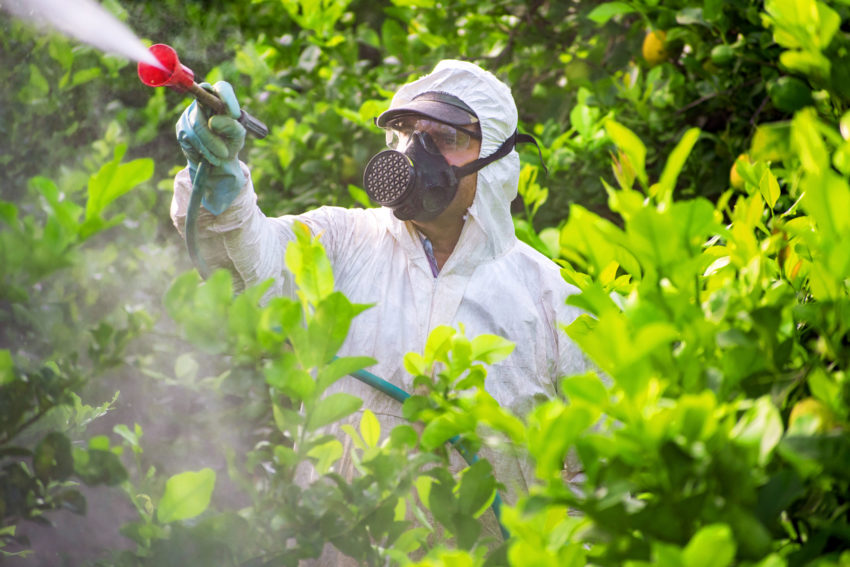
Despite the swearing-in of President Joe Biden, a proposed rule from former president Donald Trump is still in the works to further deregulate harmful chemicals in products. This kind of action could lead to health consequences among the workers who use pesticides with the chemical Chlorpyrifos, as well as the communities where those products are used. California already bans the chemical. The only way to ensure protection is to stop this rule before it is approved, according to George Kimbrell, the legal director for The Center for Food Safety. “True to form, the Trump Administration has placed corporate dollars over public health,” he said in a recent statement. “If allowed to stand, its proposal to continue registering this neurotoxic insecticide would cause irreparable ...
More and more Californians are working toward a tobaccoless future. In the city of Crescent City, Calif., residents will no longer be able to smoke in multi-unit housing. A new ordinance, recently passed by the City Council, aims to reduce the harmful toxins non-smokers face when facing secondhand smoke inside their apartments or condos. The city joins a list of over 60 other California cities with similar policies. Secondhand smoke is linked to cancer and heart disease. There is even data to suggest that some forms of exposure are more harmful than other, such as sidestream exposure — a mix of mainstream smoke, the smoke exhaled out by a smoker, and sidestream smoke from the burning tobacco product. “[Sidestream] smoke has higher concentrations of cancer-causing agents ...
Despite experiencing some of COVID-19’s worst impacts, Latinos struggle to get a vaccination — especially in Austin. This comes at a time when many from communities of color are already uncertain in the first place. There are higher rates of Blacks and Latinos who report hesitancy about obtaining a COVID-19 vaccination, according to the COVID Collaborative. This kind of information is exactly why those ethnic groups need to be prioritized in the vaccine rollout, according to the Austin Latino Coalition. "Due to the historical discrimination that has often posed barriers to economic advancement, lack of access to health care, food and other systemic inequities that still exist today, Latinos, African-Americans, and low-income communities have borne the brunt of the COVID-19 ...
The U.S. Department of Agriculture (USDA) and Department of Health and Human Services (HHS) have issued their new dietary guidelines for 2020-2025. But they’re missing some important expert guidance: Reducing sugar and alcohol intake. The Dietary Guidelines Advisory Committee, made up of 20 expert scientists, advised that the USDA and HHS reduce suggested sugar intake be lowered from 10% to 6% of daily calories and that daily alcohol intake for men be reduced from two to one drink a day. Thousands of people, including many Salud America! members, spoke up in agreement over the past few years, pushing for these and other strong nutritional guidelines. Despite expert advice that these sugar and alcohol restrictions would help fight obesity and other health disparities, the ...