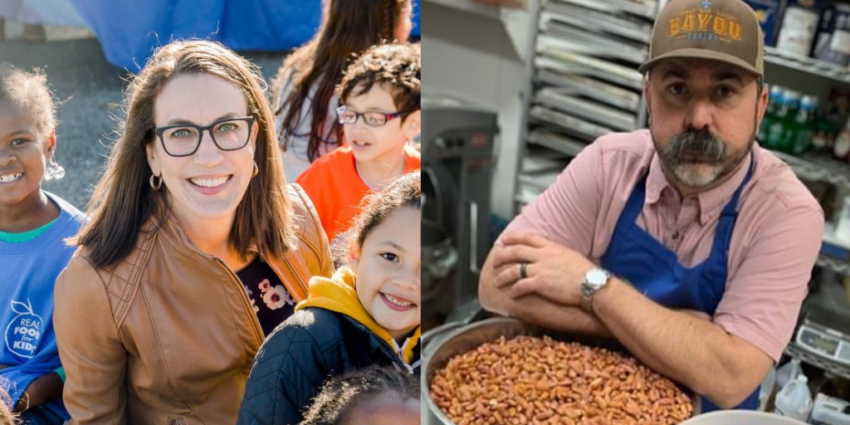
Jenn Yates is an advocate who usually pushes for healthier school food in Arlington, Virginia (15.8% Latino). David Guas is a chef who usually is feeding people. These days, amid the COVID-19 pandemic, Yates and Guas are a dynamic duo that provides free meals to vulnerable families to prevent hunger while schools and restaurants are closed. And, thanks to the advocate and the chef, red beans and rice are feeding thousands. May 5 UPDATE: The Chefs Feeding Families initiative has provided 18,000 meals to families across the DC metro area.
Yates, the Advocate, Understands the Importance of Food Assistance Programs
Yates grew up in a low-income, working family. She said she is grateful for food assistance programs like free meals at schools. “I got school meals as a kid,” ...
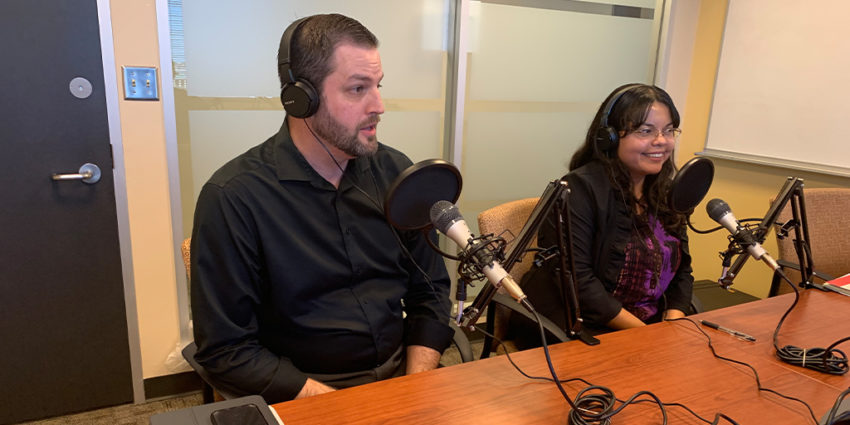
Amid a global pandemic, most find themselves inside their homes more than ever. While this is tough for some and easier for others, one thing is apparent: Many are asking some tough questions, including, are the systems that are currently in place operating in the best interest of everyone? One system in question is how our local, state, and federal governments—as well as every citizen in the country—practices sustainability. In January, we sat down with government officials from ReWorks San Antonio, an agency of the city's Solid Waste Management Department, that aims to connect businesses to cost-effective recycling solutions and promote those businesses among consumers who value social responsibility. Check out this discussion on the Salud Talks Podcast, Episode 23, ...
The coronavirus outbreak is making it harder for Latino and other families to get enough food to feed their families, a condition also called food insecurity. People are stocking up on groceries and buying online in hopes of hunkering down and limiting social interactions, to help prevent the spread of COVID-19. But families who rely on nutrition aid can’t stock up. They also can’t buy online. With many schools and farmer’s markets also closing, many families are struggling to replace school meals at home for their children. This is especially impacting Latino and black households, who are more likely to suffer food insecurity (16.2% and 21.2%, respectively) than the national average (11.1%).
SNAP Benefits Not Adapting to Coronavirus Crisis
As many families are piling up ...
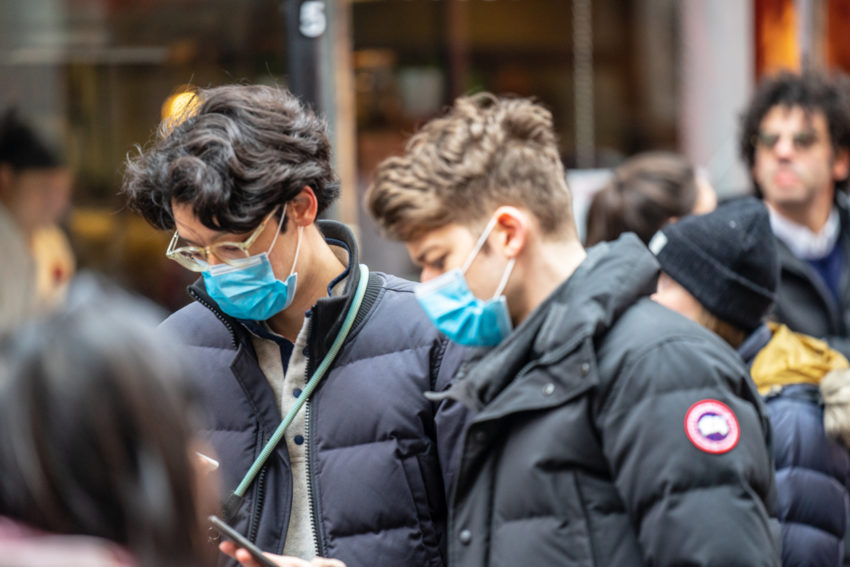
Older people are highly susceptible to the coronavirus COVID-19, but young adults aren't off the hook, either. Almost 40% of U.S. coronavirus patients who were sick enough to need hospitalization were between the ages of 20 to 54, according to recent CDC data. "I think everyone should be paying attention to this," Stephen S. Morse, a professor of epidemiology at Columbia University's Mailman School of Public Health, told the New York Times. "It's not just going to be the elderly. There will be people age 20 and up. They do have to be careful, even if they think that they're young and healthy."
Why Coronavirus is a Concern for Young People
Globally, officials are reporting 246,276 confirmed cases or coronavirus, with 90,000 recoveries and 10,000 deaths. Out of the 508 U.S. ...
People need to stay home to prevent the spread of the coronavirus, Covid-19. However, for the 27% of the U.S. private workforce with no paid sick leave, staying home isn’t an option, particularly for the full prescribed 14-day quarantine. That’s why a form of paid sick leave and family/childcare leave are part of a new $100 billion relief law, Families First Coronavirus Response Act, which also includes nutrition aid, unemployment health insurance, and free COVID-19 testing. Trump signed the new law on March 18, 2020. It goes into effect April 2, 2020. But the new law could leave out up to 19 million workers, roughly 12% of the workforce, including many low-income Latinos, women, and other vulnerable populations, experts say. Moreover, economists estimate that three ...
A fines del año pasado, un nuevo virus broto en Wuhan, China: esta enfermedad, ahora conocida como COVID-19 (tambien llamada coronavirus), se ha extendido por todo el mundo. Está presente en casi todos los continentes, y el número de casos segue aumentando y afectando incluso a muchos latinos y hispanos. Aún así, aunque los expertos médicos dicen que el coronavirus es algo que debemos tomar en serio, también señalan que es algo que se puede manejar con intervención directa. "Esta epidemia puede retrasarse, pero solo con un enfoque coordinado e integral que involucre a toda la maquinaria del gobierno", dijo el director general de la Organización Mundial de la Salud (OMS), Tedros Adhanom Ghebreyesus, en una reciente conferencia de prensa. "Hacemos un llamado a todos los ...
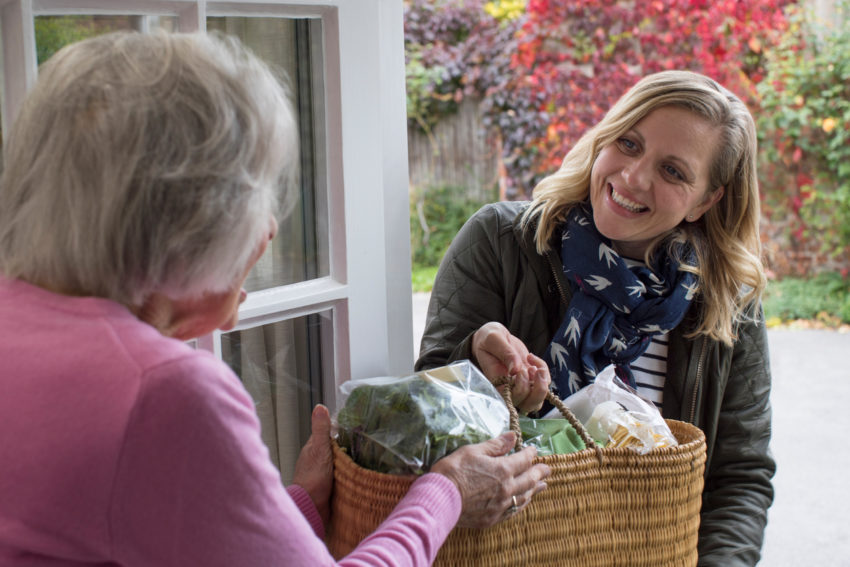
The coronavirus pandemic is causing fear and hoarding of groceries. But it's also inspiring beautiful acts of kindness around the nation. Kindness and equity can be rare during times of panic. Coronavirus, or COVID-19, is a serious condition that demands our attention. Smokers are uniquely susceptible. But, even amid an unusual disease outbreak, people and organizations are showing that kindness is instrumental in caring for people and promoting survival and health equity in tough times. "At a time of so much fear and uncertainty, these acts of kindness — for those committing and receiving them — are a desperately needed balm," says Latina writer Helen Ubiñas of the Philadelphia Inquirer. "A unifying act of humanity that reminds us that we are all in this ...
Cancer survivors who have a "next-level" patient navigator—one who regularly calls to offer support and tailored materials—have better health-related quality of life than survivors with a more passive navigator, according to a new study by UT Health San Antonio, University of Miami, and Northwestern University. The study, published in the journal Cancer, provided patient navigation services to 288 Latino breast, prostate, and colon cancer survivors in San Antonio and Chicago. Half of survivors got access to a typical navigator. They could reach out to their navigator for help with paperwork, transportation, appointment scheduling, translation, accompaniment, and more. The other half got access to a "next-level" patient navigator who offers the same services and—in ...
Where we live plays a big role in how long we live. That’s why racial and economic segregation are so harmful. Unequitable distribution of investment and services results in poor social and health outcomes for some. Tonika Johnson saw this in real time as a teen when she commuted from the less affluent South Side Chicago neighborhood where she lived to the more affluent North Side neighborhood where she attended school. “It’s like there was an invisible line dividing the city,” she said. Johnson started the “Folded Map” project to explore neighborhood differences and discuss solutions. In San Antonio, public health group CI:NOW were intrigued by Johnson’s “Folded Map.” How could they use it as model to create their own data tool to help residents, ...