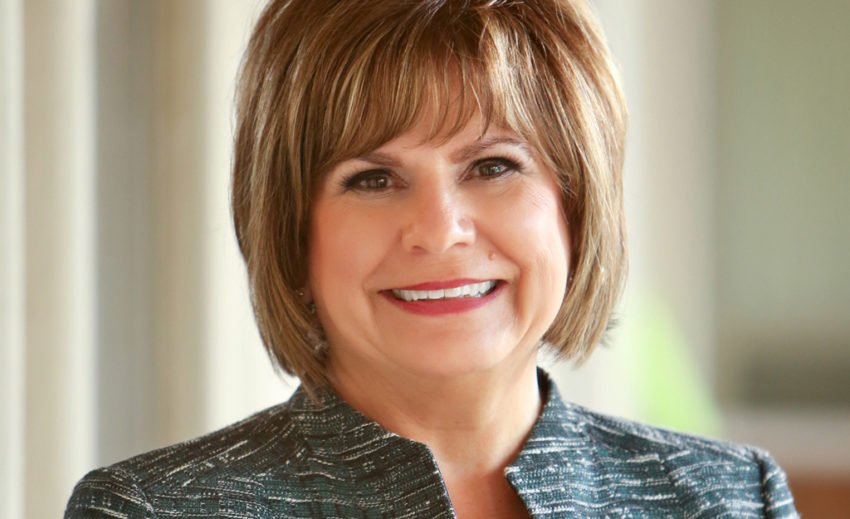
San Antonio Mayor Ron Nirenberg and Bexar County Judge Nelson Wolff announced the addition of Dr. Amelie G. Ramirez, director of Salud America! and the Institute for Health Promotion Research at UT Health San Antonio, to the COVID-19 Health Transition Team, which is working on a plan to slowly reopen the city economy after physical distancing. Nirenberg and Wolff wrote a joint memo that stay-at-home rules have saved lives. Yet they acknowledge physical distancing isn't permanent. "Our community needs a local strategy to reenter into everyday life," Nirenberg and Wolff wrote. "These decisions have critical implications on our community – including our ability to avoid subsequent outbreaks, ensure we protect our ... populations ... and to identify parameters for transitioning ...
Latino teens are more worried than their peers that they won't be able to keep up with school work or extracurricular activities amid coronavirus, says a new survey by Common Sense and SurveyMonkey. 70% of Latino teens fear falling behind in homework. 62% of Latino teens fear lagging in activities like band and sports. These are far higher percentages of worry about online, distance learning than their white (49% and 53%), black (66% and 54%), and other (40% and 50%) peers. How "real" is this teen angst?
Many Teens Are Not Connecting with Teachers During the Coronavirus Pandemic
Coronavirus has shut down schools and fueled the rise of online, distance learning. But not all teen students regularly communicate with their teachers. One in four teens connect with teachers ...
The current novel coronavirus, COVID-19, is a respiratory illness — that means it harms the lungs more than other parts of the body. Many scientists say that COVID-19 feature pneumonia and affects the lung function, and is especially worrisome for those with weak lung or immune systems. Worse, many experts believe that if you smoke, or you're regularly around secondhand smoke, you may have a better chance of getting coronavirus. Smoking may also increase your risk of developing severe complications from the virus. "The lining of the respiratory tree becomes injured, causing inflammation," Dr. John Wilson, president-elect of the Royal Australasian College of Physicians and a respiratory physician, told The Guardian. "This, in turn, irritates the nerves in the lining of the ...
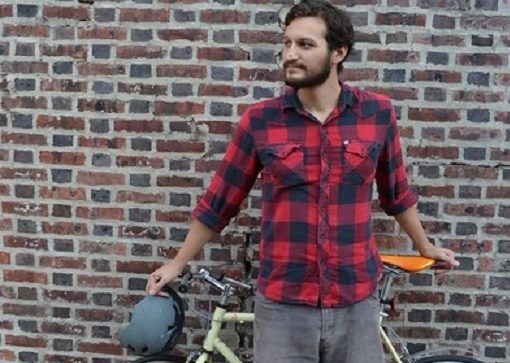
Randy LoBasso is pushing to make bicycling safer and more equitable in Philadelphia. But, as COVID-19 shut down businesses and schools, the bike-as-transportation enthusiast found people crowding local bike trails and making it hard to practice social/physical distancing. LoBasso had a thought. What if Philadelphia (15% Latino) closed streets to car traffic? Could people use streets to freely bike, walk, and be physically activity while also maintaining six-feet distance? LoBasso led an “open streets” petition and got the city to close a major street to cars, and open it for people walking, biking, and rolling. And he’s not stopping there.
LoBasso Understands Need for Biking as a Means of Transportation, Access to Opportunity
LoBasso isn’t a spandex-wearing ...
COVID-19 can affect anyone. But, in reality, it's worsening the health and social inequities facing U.S. Latinos. Now the pandemic is raising fears of racial/ethnic and income disparities in coronavirus exposure, testing, prevention via social distancing, and treatment. "As the number of cases rises, citizens are rightfully concerned about who is getting tested and who will receive treatment," writes health equity adviser Brian Williams in a column for the Dallas Morning News. "For those who exist on the margins of health care justice, access to life-saving treatment is never guaranteed."
Disparities in Coronavirus Exposure
We know Latinos are more likely than their white peers to suffer from poverty, underlying conditions, and a lack of quality housing and transit. They also ...
Lack of access to healthy food, insufficient health insurance coverage, living paycheck-to-paycheck — all issues that have impacted U.S. low-income families for decades. Sadly, experts say these problems are worsening as the current novel coronavirus, COVID-19, continues to spread. This leaves the millions of men, women, and children, including the 3 million people who have recently lost their jobs, at risk of more issues than just becoming sick. Latinos—many of whom fall below the poverty line—could face significant hardship without a dedicated response from local, state, and federal leaders. "What we are seeing around the country is that we're operating and telling people to do things from the position of wealth," Rev. William Barber II, co-chair of the Poor People's ...
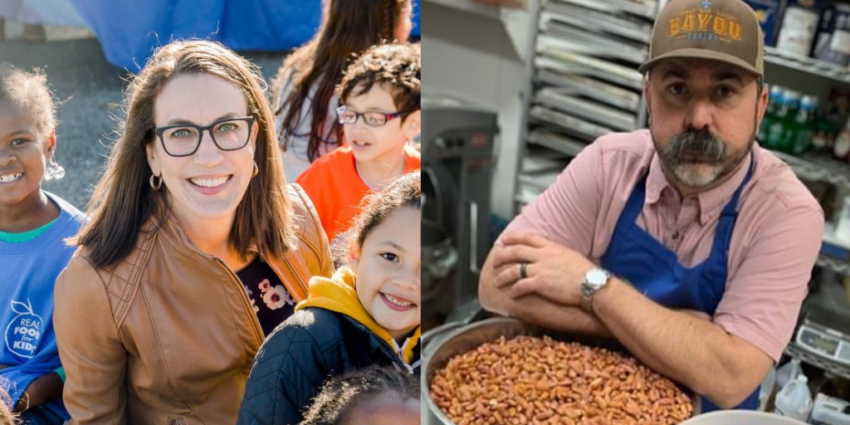
Jenn Yates is an advocate who usually pushes for healthier school food in Arlington, Virginia (15.8% Latino). David Guas is a chef who usually is feeding people. These days, amid the COVID-19 pandemic, Yates and Guas are a dynamic duo that provides free meals to vulnerable families to prevent hunger while schools and restaurants are closed. And, thanks to the advocate and the chef, red beans and rice are feeding thousands. May 5 UPDATE: The Chefs Feeding Families initiative has provided 18,000 meals to families across the DC metro area.
Yates, the Advocate, Understands the Importance of Food Assistance Programs
Yates grew up in a low-income, working family. She said she is grateful for food assistance programs like free meals at schools. “I got school meals as a kid,” ...
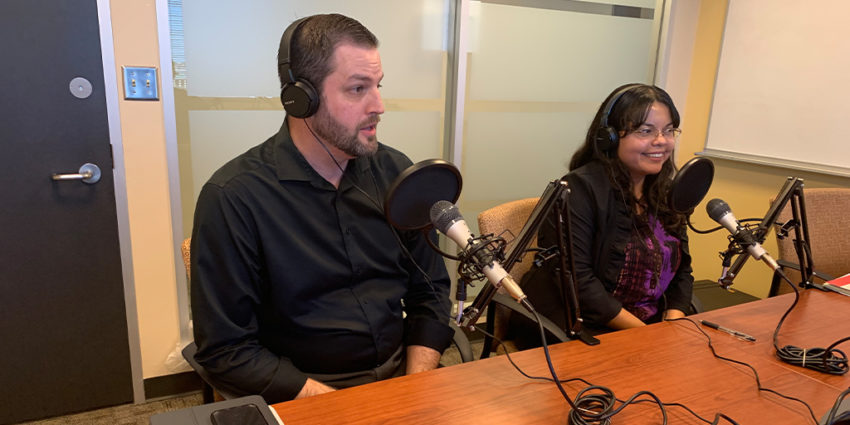
Amid a global pandemic, most find themselves inside their homes more than ever. While this is tough for some and easier for others, one thing is apparent: Many are asking some tough questions, including, are the systems that are currently in place operating in the best interest of everyone? One system in question is how our local, state, and federal governments—as well as every citizen in the country—practices sustainability. In January, we sat down with government officials from ReWorks San Antonio, an agency of the city's Solid Waste Management Department, that aims to connect businesses to cost-effective recycling solutions and promote those businesses among consumers who value social responsibility. Check out this discussion on the Salud Talks Podcast, Episode 23, ...
The coronavirus outbreak is making it harder for Latino and other families to get enough food to feed their families, a condition also called food insecurity. People are stocking up on groceries and buying online in hopes of hunkering down and limiting social interactions, to help prevent the spread of COVID-19. But families who rely on nutrition aid can’t stock up. They also can’t buy online. With many schools and farmer’s markets also closing, many families are struggling to replace school meals at home for their children. This is especially impacting Latino and black households, who are more likely to suffer food insecurity (16.2% and 21.2%, respectively) than the national average (11.1%).
SNAP Benefits Not Adapting to Coronavirus Crisis
As many families are piling up ...