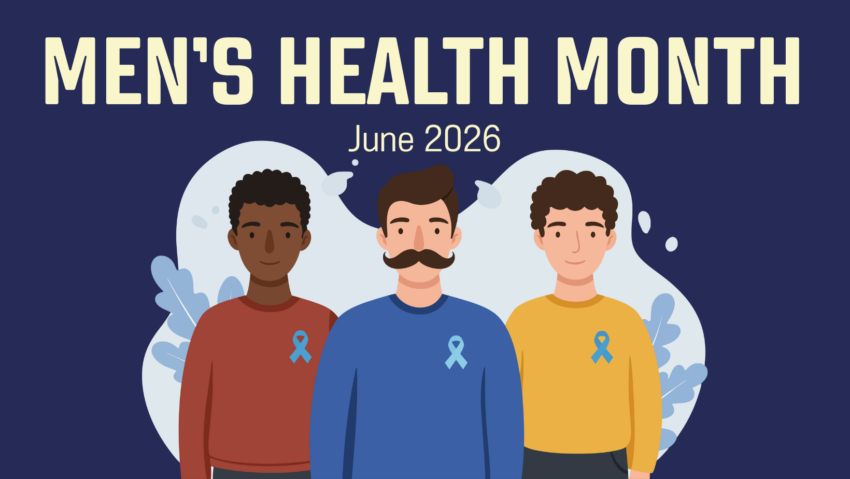
The month of June is recognized as Men’s Health Month. It’s a time to educate, start conversations, and share resources on men’s health. This year’s theme is “Partners in Care: Advancing Men’s Health Through Connection, Education, & Advocacy Across the Lifespan — for Better Lifespans,” according to the Men’s Health Network. “Health behaviors, access to care, and long-term outcomes are shaped by relationships with partners, families, caregivers, friends, and communities,” Men’s Health Network states. “When men are supported through shared advocacy, education, empathy, and connection, outcomes improve not only for men, but for everyone connected to them.” Let’s look into resources you can find and share with others during Men’s Health ...
Alzheimer’s Disease is a rising health issue for Latinos and many others. To ensure support for those affected and their caregivers, UT Health San Antonio hosted a webinar, “Zeroing in on Alzheimer’s, Brain Health, and Caregiving in At-Risk Populations,” at 11 a.m. Central on Tuesday, July 21, 2026. Webinar host Dr. Amelie Ramirez, leader of Salud America! and the Institute for Health Promotion Research at UT Health San Antonio, joined experts from the San Antonio CAPAS research program, a representative from Genentech, a community health worker, and a Latino caregiver to focus on the impact of Alzheimer’s in South Texas and beyond. Panelists discussed the state of Alzheimer’s among Latinos and all people, early signs, early diagnosis, and what the condition means for ...
When we get older, our body changes.
The foods we like don’t respond quite the same way, it may be harder to get around, or it might even be difficult to recall certain memories.
While these are all symptoms of aging, there are also lesser-known factors that contribute to how we age and how quickly some of these issues are brought on.
One surprising factor is drought.
For instance, a recent study has found that environmental stressors like long periods of drought can cause faster cognitive decline.
Check out our new fact sheet, Does Drought Impact Brain Health in Older Latinos?, to help our abuelos and abuelas understand how environmental stressors can impact their brain health.
This fact sheet was created by Dr. Amelie G. Ramirez of Salud America! and UT Health San Antonio based ...
In South Texas, risk is high for liver cancer, cervical cancer, and pediatric leukemia. To pave way for responsive research, the Creando Conexiones: Creating a Patient Centered Cancer Health Research Agenda in South Texas (Creando Conexiones) project aimed to outline patient-centered comparative clinical effectiveness research (PC-CER) priorities and topics identified by South Texas cancer survivors, caregivers, and stakeholders affected by these cancers. The result is the Creando Conexiones: Cancer-Related Health Outcomes Research Agenda. Let's explore the agenda.
Developing the Creando Conexiones Research Agenda
Dr. Rebecca Jones of the Institute for Health Promotion Research at UT Health San Antonio launched the Creando Conexiones program with a $250,000 from the ...
Health Confianza is following up on its successful health literacy virtual series with a new one focused on a wide range of topics. Last year the series covered information on how health workers and professionals can address stigma and use plain language with patients. This time around the organization is helping health workers navigate incorrect health information, support individuals with physical and mental hardships, and discuss how to speak up for health literacy. The upcoming series, Communicating with Confianza — A Health Literacy ECHO, is a six-part online learning experience focused on “empowering health professionals with health literacy education, resources and knowledge-sharing tools,” according to the nonprofit funded by Bexar County and ...
The Salud America! program, led by Dr. Amelie G. Ramirez of UT Health San Antonio, has received the National Health Award from the National Association of Medical Spanish (NAMS) and the Medical Organization for Latino Advancement (MOLA). The award was given during the MOLA-NAMS Annual Conference in November 2025 in San Antonio. "I am truly humbled and honored to accept this recognition on behalf of our Salud America! program, and the countless storytellers, community leaders, and cancer survivors who walk with us on this journey toward better health for all people," Ramirez said. Ramirez launched Salud America! in 2007 to create data-driven news report, role model stories, and action opportunities for better health for all. "Thanks to our passionate team and network, we’ve ...
UT San Antonio is shining a light on Alzheimer’s disease with a new research center to study an aging Latino population, the university announced in UT San Antonio Today. Funding for the center, called the San Antonio Center for Alzheimer’s Disease and Related Dementias (AD/ADRD) Population Aging and Social Studies (CAPAS), was made available through a grant program from the National Institute on Aging. CAPAS seeks to bridge the gap in Alzheimer’s research by aligning experts in demography, neuropsychology, biology, economics and public health across UT San Antonio’s campuses, including its Health Science Center. UT San Antonio experts will be working alongside experts from other institutes, such as the Biggs Institute for Alzheimer’s and Neurodegenerative ...
Volunteering for Thanksgiving, Christmas, and New Year’s helps other people. It gives the volunteer a nice emotional boost, too. So why not volunteer your “digital voice” or “actions”? We at Salud America! invite you to take or start these 17 actions to promote health for Latino and all families this holiday season!
1. Get Your Town's Health Report Card!
How is the state of health in your community? Find out by downloading a Salud America! Health Report Card for your town! Enter your county name and get auto-generated local data with interactive maps and comparative gauges on several health indicators. This can help you visualize and explore local issues in education, housing, transportation, food, health, and more. See how your county stacks up compared to the ...
Heart disease is a persistent threat for many Americans, including Latinos. As of 2022, heart disease is the leading cause of death of people living in the US, according to the Centers for Disease Control and Prevention (CDC). Many behaviors contribute to an increased risk for heart-related diseases, from lifestyle choices such as smoking, excessive alcohol use, physical activity, poor diet, as well as many health conditions, such as stress, obesity, and diabetes. And researchers are still learning more about these and other risks. In fact, let’s explore six recent studies on the relationship between physical behaviors and the risk of heart disease that you should be aware of.
1. Viral Infections Can Increase Risk for Heart Disease
Viral infections, such as ...