Thank you to the 38,367 people—including over 800 Salud America! members—who submitted public comments for better nutrition and limited added sugars for the 2020-2025 Dietary Guidelines for Americans! These comments are the latest step in shaping the guidelines. USDA and HHS update the guidelines every five years. They are the leading set of nutrition standards for people, health professionals, and federal food programs. Submitted between mid-July and mid-August 2020, the new comments arrive after an initial 55,000 public comments between winter 2019 and spring 2020. A federal committee then released a scientific report to inform the guidelines. Recommendations include no sugary drinks for children up to age 2 and less alcohol intake for men. Now we await the release the ...
Where you live matters for your health. The health of any population is determined by several factors including the physical, emotional, socioeconomic, and environmental circumstances in which they live. For U.S. Latinos, these factors can be daily challenges and cause poor health outcomes, especially for their children. As a result, Latino children have higher rates of obesity and diabetes and lower levels of physical activity than their non-Latino peers. These inequities are worsening amid the COVID-19 pandemic. These children also are at least twice as likely to be uninsured. "To help reverse these outcomes, it is important for Latino children and youth to enroll in health coverage and have access to preventive care. Children who have health coverage are shown to have ...
A culture of health is where everyone has a fair, just opportunity to be as healthy as possible. This also achieves health equity. Is your community creating a culture of health? If so, apply for the Robert Wood Johnson Foundation (RWJF) Culture of Health Prize! The contest provides $25,000 to communities that unite neighborhood, school, and business partners to improve health for all residents. Apply by Oct.15, 2020.
Read about 2019 Winners
Three largely Latino cities won three of five 2019 Robert Wood Johnson Foundation (RWJF) Culture of Health Prizes! Gonzales, Calif. (94% Latino), was chosen from nearly 200 applicants. Two other cities with large Latino populations—Lake County, Colo. (36% Latino) and Broward County, Fla. (30% Latino)—also won the health prize. ...
U.S. Latinos are bearing an extraordinary burden of COVID-19 cases and deaths. Why is this? Health experts are trying to find an answer. They say the pandemic is worsening historical health and social inequities among Latinos and other people of color, affecting people of a certain age, and those who have diabetes, obesity, and cancer, as well as those who smoke. Now a study points to a new, but common, culprit: language barriers (and the healthcare system's failure to accommodate people who don't speak English).
Latinos Face Language Barriers During COVID-19 Pandemic
Language is a common barrier to health care. That's why Spanish translation is important in education, providing medical care, bullying prevention, healthcare access, and even podcasting. When it comes to ...
Before COVID-19, families with SNAP federal food aid could not use their electronic benefits transfer (EBT) cards to buy groceries online. They had to go to into stores and risk infection. The good news is 37 states now have a SNAP online food purchasing programs. The bad news is that those online purchasing programs could “expose [SNAP] participants to increased data collection and surveillance, a flood of intrusive and manipulative online marketing techniques, and pervasive promotion of unhealthy foods,” according to the Center for Digital Democracy. The Center’s new report explains how federal and state policies fail to protect consumers against unhealthy food marketing, threatening the health of SNAP families. The report also recommends regulatory safeguards, industry ...
Researchers are finding that population density is not associated with higher death rates from COVID-19. Unfortunately, some people still blame compact housing and transit for pandemic spikes, and use that misinformation to promote sprawling residential development and disinvestment in transit in the name of health. These are the same poor practices that have segregated neighborhoods and contributed to drastic disparities in health and wealth for a century. As city leaders respond to concerns about COVID transmission and develop economic recovery plans, they must challenge the discriminatory status quo, consider transportation expenses, and shift toward equitable, compact (not overcrowded) housing development. “Restoring urban transit networks to full force, expanding their ...
In San Bernardino County (50% Latino), the Board of Supervisors voted 5-0 this week to make it California's first county to adopt a resolution to declare racism as a public health crisis, the L.A. Times reports. The resolution recognizes that racism "creates unfair disadvantages to some individuals and communities" and "results in disparities in family stability, health and mental wellness, education, employment, economic development, public safety, criminal justice and housing." In addition, the resolution commits to action, according to the report: Enhance diversity in the county workforce;
Study existing county policies and practices "through a lens of racial equality to promote and support efforts that prioritize health for people of color";
Plan collaborations ...
Delaying medical care can cause catastrophic health and financial problems. That’s why early in the COVID-19 pandemic, the Centers for Medicare and Medicaid Services temporarily expanded its telehealth coverage so physicians, nurse practitioners, clinical psychologists and licensed clinical social workers would be reimbursed for telehealth services. Other payers followed suit. Unfortunately, not everyone can just hop on a telehealth video call. Many Latinos and other vulnerable populations—older people, people experiencing domestic violence, and families with low income—face insurance, language, health literacy, digital literacy, and digital access barriers to telehealth services. Moreover, telehealth can be challenging for people with autism, intellectual and developmental ...
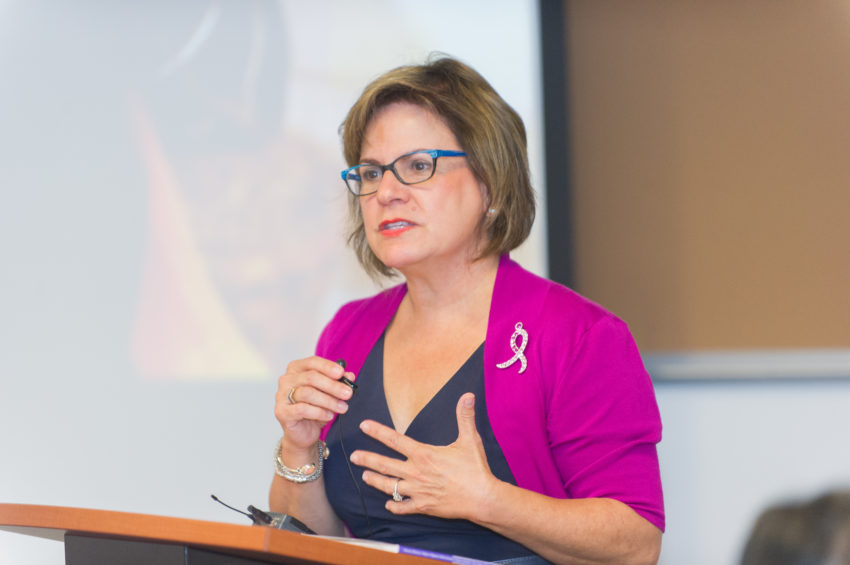
Dr. Amelie G. Ramirez, director of Salud America! and the Institute for Health Promotion Research at UT Health San Antonio, has been named one of the "The Cancer Health 25: Change Makers" by Cancer Health magazine. The magazine recognizes individuals who "make a difference every day." "They have each experienced cancer, either personally or through someone they love," according to the magazine. "And it has changed them, made them want to give back and given them a mission to make a difference for others living with cancer." Read about Ramirez and the other 25 change makers here.
Dr. Ramirez & Her Health Promotion Research
Ramirez is an internationally recognized health researcher at UT Health San Antonio. Here, she is professor and chair of the Department of Population ...