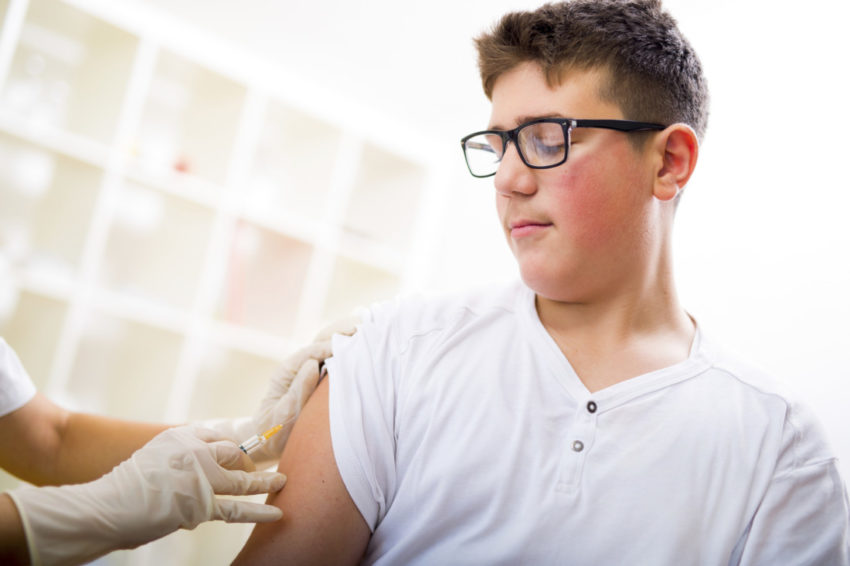
Latino youth are far more likely than their peers to have mental health issues, which often go unaddressed and untreated. Why? Immigration, cultural identity, poverty, bullying, discrimination and other factors create high levels of stress. But there’s good news, too. Interventions to reduce family, school and community stressors can have a positive effect on the mental health of this population. Promising policies, while few, also are emerging. Research Explore: Mental Health & Latino Kids ...
Since its inception, the Supplemental Nutrition Assistance Program (SNAP) has become the most important anti-hunger program in the United States. The program has helped benefit millions of low-income Latino families out of poverty and support them by providing an “adequate diet.” Overall, Latinos have a higher poverty rate than the national average. According to a survey by the U.S. Census Bureau, in 2016, nearly 1 in 5 Latinos (21% overall) lived below the federal poverty line. This compares to the national average of 1 in 7 people. Latino households are also more likely to experience food insecurity on a regular basis compared to the national average. The U.S. Department of Agriculture (USDA), which oversees SNAP benefits, recently announced awards of nearly $17 million to ...
Latinos are already the nation’s largest racial and ethnic minority group. They are also the youngest and fastest growing. As communities change to reflect these new and evolving dynamics, Latino health is going to be critical to the country overall for generations to come. Despite their numbers, many Latinos face numerous inequities and barriers that keep them from obtaining the best healthcare possible. These include lack of access, lack of health insurance, language barriers, and cultural stigmas. “As the nation’s largest and fastest growing ethnic group, it's important that all Latinos have access to affordable healthcare,” said Jose Calderon, president of the Hispanic Federation in a news release. In an effort to remove some of these barriers, communities across the ...
For many immigrant families, the current political climate adds a great deal of stress to their lives. Many Latinos already face inequities in health care; they are still the largest uninsured population in the U.S. In South Carolina (5.2% Latino population), this stress is now manifesting in even harsher ways. According to a report in The Post and Courier, many immigrant families in the state are not only foregoing health care services for the adult family members, but also their children. “We’ve gotten calls from the health department of mothers not coming to ... appointments, not showing up for immunizations,” said Julie Smithwick, executive director of the Latino assistance group PASOs. The statewide group connects Latino patients to health care resources across South ...
Yolanda Konopken knows 1 in 10 people have diabetes in Arizona. Her program to help families manage diabetes has been at full capacity for years at the Society of St. Vincent de Paul in Phoenix (41.3% Latino population). Konopken wanted to do more to prevent unhealthy weight from causing diabetes in younger children. She had an idea to start a new, bilingual education program to provide support and counseling for families with children at risk of diabetes. She worked hard to develop a bilingual curriculum and launch a fun program that involves the whole family in a series of culturally relevant classes to build children’s self-esteem and positive lifestyle behaviors, such as cooking healthier foods and getting active.
The Crisis of Obesity in Arizona Arizona has the ...
Newsflash: Men and women are different. Of course, men don't have to go through what many women go through in reproductive health, such as pregnancy, giving birth, and other issues. But men do fare worse in other heath conditions. Men die at higher rates than women for 8 of the 10 top causes of death. Men die at younger ages than women, and they are more likely to develop chronic diseases throughout their lifetimes, Livestrong.com reports. Among Latino men, the numbers are even starker. Latino men have lifespans that are 5 years shorter than Latinas. They are more likely to have undiagnosed mental health issues. For the National Men’s Health Month in June, let’s use #SaludTues to tweet about Latino men's health issues, solutions, and resources on June 6, 2017. ...
Lack of access to quality healthcare is one of the main inequities that keep many Latinos from obtaining the best quality healthcare possible. However, the advent and proliferation of telehealth or telemedicine looks to be a way to bridge the gap between Latinos and their healthcare providers. Developed as a remote way to monitor patients, treat chronic illnesses and/or conditions, and eliminate barriers (such as a lack of transportation), technology – in the form of telemedicine – looks to be the way of the future as far as healthcare goes, especially for Latinos. Studies have shown that more and more Latinos are accessing the Internet, especially through smart phones and other hand-held devices. This is the essence of telemedicine. Now, in Texas (38.42% Latino population), a ...
A child needs more than nutritious food and physical activity to be healthy. They need healthy minds, too. But 1 in 5 children today suffer a serious mental illness. Depressive symptoms among Latino youth are especially high, putting them at risk of dropping out of school, using drugs, and suicide. For Mental Health Awareness Month in May, let’s use #SaludTues on May 9, 2017, to share tips and strategies to promote healthy minds and environments for Latino and all kids across the U.S. WHAT: #SaludTues Tweetchat: "Latino Kids and Healthy Minds"
TIME/DATE: 1-2 p.m. ET (Noon-1 p.m. CT), Tuesday, May 9, 2017
WHERE: On Twitter with hashtag #SaludTues
HOST: @SaludToday
CO-HOSTS: Cheryl Aguilar (@cheryl_aguilar); Jesus Rodriguez, MD of Kaiser Permanente ...
Food and physical activity are both continuous and cumulative habits. Small changes every day can drastically improve your health and quality of life. However, the built world, whether intentional or not, influences the human experience. Many people live and work in places that impede or reduce physical activity and sell or promote unhealthy food. The National Collaborative on Childhood Obesity Research (NCCOR) brings together four of the nation’s leading research funders—the Centers for Disease Control and Prevention (CDC), the National Institutes of Health (NIH), the Robert Wood Johnson Foundation (RWJF), and the U.S. Department of Agriculture (USDA)—to accelerate progress in reducing childhood obesity in America. Their new white paper builds on a series of behavioral ...