February is National Children’s Dental Health Month (#NCDHM)! What a great time to recognize the importance of kids' teeth. Yes, teeth. For kids, not properly caring for teeth can lead to cavities, decay, gum disease, and other oral health problems. It can force kids to miss school and fall behind in their academic development. More than that, it can eventually contribute to mental health issues, heart disease, certain cancers, and other major problems—all more prevalent among Latinos. The bottom line = Latino and all kid’s smiles matter! On Tuesday, Feb., 2018, let’s use #SaludTues to tweet about the issues, discuss solutions, and share resources on oral health for Latinos and all kids for National Children’s Dental Health Month! WHAT: #SaludTues Tweetchat: ...
Thanks to her spiritual “Lita” who was a friend to all, Elena Martinez was taught to love all. And Martinez has already applied her caring attitude to the benefit of many people here in San Antonio, having actively participated in programs on obesity and cancer prevention, immunization education, health literacy, and youth mental health awareness. Martinez, a Dallas native, is currently a master’s-degree student in health and kinesiology at UT San Antonio. She earned a Certified Health Education Specialist status in 2013 and has helped plan and evaluate health initiatives and programs for all age groups in San Antonio. She also has played an active role in Building a Healthy Temple, a chronic disease prevention program at UTSA under Dr. Meizi He, since 2015. To further ...
Neglect. Abuse. Domestic violence. Living in foster care. Racism. Civil unrest. Fear of deportation. These traumas can severely damage children's minds and bodies. In fact, childhood trauma—also called adverse childhood experiences (ACEs)—can increase risk for health conditions like diabetes, spur risky behaviors like substance abuse and smoking, and cause depression and other mental health issues. These problems, which can last into adulthood, affect Latino children at a much higher rate. A trauma-informed approach can help educators and caregivers recognize the signs and symptoms of trauma to help children heal. Let’s use #SaludTues on Feb. 6, 2018, to Tweet about a trauma-informed approach to improve Latino and all kid’s health. WHAT: #SaludTues Tweetchat: “A ...
After over 100 days of uncertainty since funding expired in September 2017... The Children’s Health Insurance Program (CHIP) has finally received full funding! U.S. Lawmakers voted to fund CHIP for another six years as part of the spending bill which reopened the government on Jan. 22, 2018. The timing could not have been any better, as CHIP temporary funding measures were scheduled to run out, as well. The program has received support both Democrats and Republicans in Congress, according to Vox. However, the program became an unfortunate bargaining tool, which caused widespread concern from both healthcare professionals and families dependent upon CHIP. “This action ends months of anxiety and worry for the hard-working families who rely on CHIP for life-saving health ...
It’s a brand-new year, as 2018 is here! If you are like millions of others across the country, you probably took some time to come up with a New Year’s resolution or two. Each New Year, millions of people make New Year’s resolutions. These vary from eating healthier, getting more exercise, and being more aware of their mental health. While the intentions are good, these resolutions are not always easy to stick to. So, what if, for 2018, we did something different? What if we resolved to make this year healthier for Latinos? Despite being the largest and youngest racial and ethnic minority group in the country (and their numbers are getting larger and younger with each passing year), Latinos still suffer from numerous disparities that prevent them from obtaining the best ...
Latinos are significantly more likely than whites to say that the government should do more to make sure that Americans are healthier, even if it costs the taxpayers more (63% v. 53%), according to the 2017 Healthy Americas Survey. It makes sense. Here's why: Latinos suffer worse rates of obesity and other health issues because of lack of investment in safe streets, sidewalks, and parks, as well as lack of access to healthy food, early care and education, and family support. So what exactly do Latinos want?
2017 Healthy Americas Survey
You've heard that your ZIP code is a better predictor of your health than your genetic code, right? Past policies dictated the location and quality of affordable housing, public transportation, schools, sidewalks, parks, healthy food options, ...
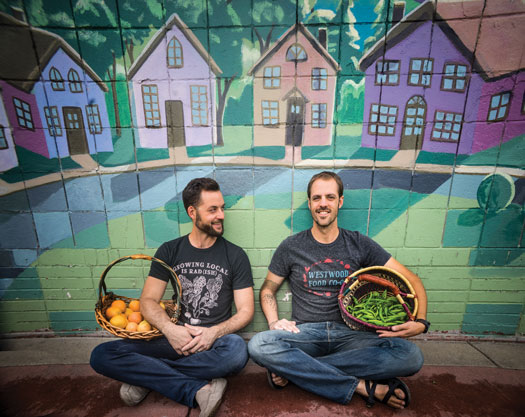
Healthy food activists Erick Kornacki and Joseph Teipel have a phrase to call the 81% Latino neighborhood of Westwood in Denver. A "food desert." For decades, Westwood residents have struggled to access healthy food. There are no nearby grocery stores or farmers markets. People lack transportation to find healthy options elsewhere to bring back. Kornacki, Teipel, and Westwood neighbors decided to take matters into their own hands. They began to build backyard vegetable gardens. They talked about how to create a food cooperative. They wanted to build the first community-owned and -run grocer as an oasis in this food desert.
Food Deserts Isolate Latinos from Healthy Food
In 2007, Kornacki and Teipel co-founded Re:Vision, a nonprofit that works on social justice and food ...
Latinos are less likely to seek health screenings or preventive care than their black and white peers, according to a new survey, American Heart Association News reports in English and Spanish. The Healthy Americas Survey indicates that: Only 55% of Latinos say they are vigilant about getting health screenings and checkups, compared with 68% of blacks and 60% of whites.
Latinos were more likely than blacks and whites to say they don’t have significant control over their health.
Only about 25% of Latinos say they earned more than $50,000 a year, compared with 47% of whites and 30% of blacks. “This is dangerous for the long-term health of U.S. Latinos,” Amelie G. Ramirez, Dr.P.H., a health disparities researcher at UT Health San Antonio and director of the Salud ...
Imagine a world where every person has the opportunity to attain full health potential—with no disadvantages due to race, money, etc. That is health equity. Unfortunately, Latinos and other people of color often struggle with health inequity as a result of poverty, structural racism, and discrimination. This causes gaps in how long Latinos live and how they struggle with disease and health, compared to their peers, according to the new Communities in Action: Pathways to Health report from thew National Academies of Sciences, Engineering, and Medicine. The new report does have some good news: Communities have agency to promote health equity. However, community-based solutions are necessary but not sufficient.
Supportive public and private policies at all levels and ...