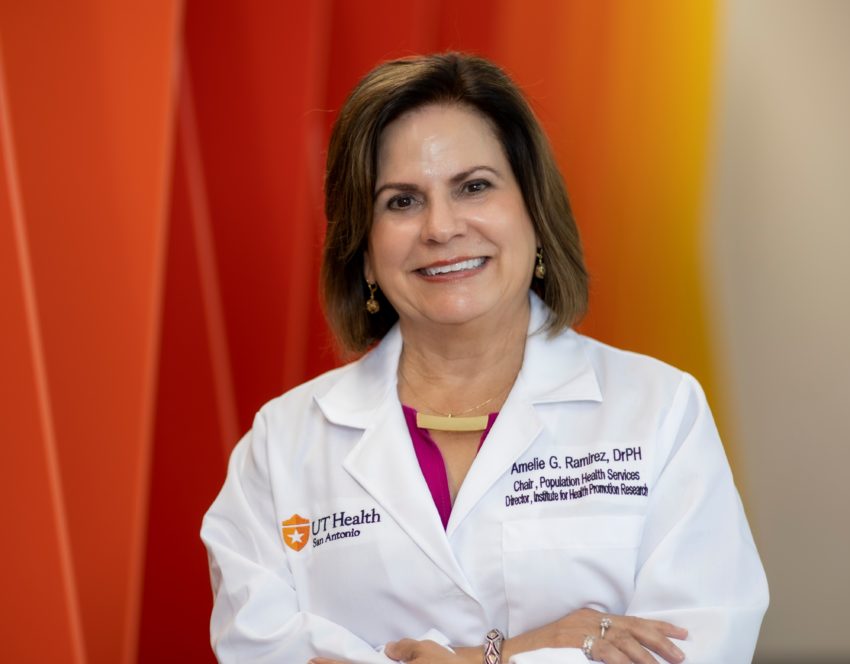
What do we know about cancer trends in Latino communities? Find answers in the new episode of the Cancer Health podcast from the Office of Community Outreach & Engagement at Fred Hutch Cancer Center in Seattle. The episode, "Cancer Trends in Latino Communities," features Dr. Amelie G. Ramirez, leader of Salud America! and cancer health researcher at the Mays Cancer Center at the University of Texas at San Antonio Health Science Center, Ysabel Duron from The Latino Cancer Institute, and Gladys Arias from the American Cancer Society Cancer Action Network Washington. Together, they discuss cancer trends impacting communities in Washington, California, and Texas. They cover liver, cervical, pediatric leukemia, and more. Listen online, Apple Podcasts, or other podcast ...
Hispanic Heritage Month is a month when we celebrate the milestones and achievements of Hispanic and Latinos. Some of those individuals overcame countless hurdles, such as health issues, societal unfairness, and mistreatment to carve out a better path for future generations. One of the ways we honor the past is to preserve the future. Hispanic/Latino cancer survivors can honor those who came before them by paving the way for future survivors by joining the Avanzando Caminos Hispanic/Latino Cancer Survivorship Study at UT Health San Antonio. JOIN AVANZANDO CAMINOS!
What Is the Avanzando Caminos Study?
The Avanzando Caminos Hispanic/Latino Cancer Survivorship Study takes a deeper look at some of the factors that survivors experience that may influence long-term ...
Year after year, scorching temperatures rock countries across the globe. With the last few summers some of the hottest on record, weather and health experts alike are warning people about the dangers of prolonged exposure to heat. The World Health Organization (WHO) and the World Meteorological Organization (WMO) are advising individuals, organizations, and companies on how to navigate the heat waves. The latest guidance and report issued by the organizations focuses on the health and safety of manual laborers, particularly outdoor workers, who are exposed to heat conditions. “Heat stress is already harming the health and livelihoods of billions of workers,” said Dr Jeremy Farrar, WHO Assistant Director-General, Health Promotion, Disease Prevention and Care. ...
In the last 15 years, U.S. mortality rates have leveled off or worsened, according to a new report from the National Institutes of Health. One of the lesser-known reasons for this trend is educational level. “Notably, research has found that mortality is [better] among people with a higher level of education,” according to NIH. Let’s dig deeper into this research and what it means for our communities.
What Research Found on Educational Levels
The NIH cites a recent study, published in JAMA Health Forum and led by Boston University School of Public Health. The study examined U.S. mortality rates by educational attainment before, during, and after the COVID-19 pandemic. Along with data from the CDC’s National Center for Health Statistics and the U.S. Census ...
Your liver is a key to overall health, performing hundreds of essential functions in your body. Find out the latest in liver health issues and solutions at UT Health San Antonio’s webinar, “What You Should Know about Your Amazing Liver,” which occurred at 11 a.m. Central on Wednesday, Oct. 8, 2025. This webinar featured expert panelists from Mays Cancer Center, UT Health San Antonio, Texas Liver Institute, Genentech, and more to explore the state of liver health in South Texas. Panelists examined the oversized impact of liver disease and liver cancer and its causes among South Texas residents, who are predominantly Latino, and beyond Texas. Understanding the reasons why this is happening can reveal how to address this health issue and prevent liver cancer among Latinos and ...
Jewel Ng has always had an interest in studying medicine. However, when her mother was diagnosed with breast cancer, Ng started to look at a career in medicine differently. “I think seeing how her oncologist handled things, and just like the general process of dealing with something as difficult as that,” Ng said. That’s why Ng has a goal of not only treating people, but for truly taking care of them. Today, she is pursuing medicine as a second-year student at the Virginia Commonwealth University School of Medicine and served as a Robert A. Winn clinical investigator intern at UT Health San Antonio’s Institute for Health Promotion Research. “It's completely different to actually and be part of that experience of having to drive them to, like chemotherapy, having ...
In the United States, cancer is a significant public health challenge. For example, among Latinos, who are 19.5% of the population, rates are higher and prognoses are poorer than other groups. The Latino cancer burden is driven by complex interactions in 13 key areas, according to a new publication from the Task Force: Latino Researchers Against Cancer in the journal Frontiers in Public Health. The task force, led by Dr. Amelie G. Ramirez of UT Health San Antonio and comprised of specialists in oncology, public health, and behavioral sciences, spent a year meeting together to unpack the influences contributing to cancer, from genetics to societal practices. "Findings highlight environmental hazards, genetic susceptibilities, stigmas, and linguistic barriers as significant ...
A recent study from the University of Michigan found that extended family members, such as siblings, cousins and grandparents, are the most influential mentors for Latino emerging adults and can simultaneously empower and constrain young people's efforts to create social change. “It is essential to understand how adults can partner with youth to create social change,” the study states. Let’s dig deeper into this study and what the results mean for families and communities.
The Impact of Extended Family
“Our research reveals that adults play complex, multifaceted roles in these young people’s civic development,” said Wendy de los Reyes, U-M postdoctoral research fellow in the Combined Program in Education and Psychology.” For the study, de los Reyes and her ...
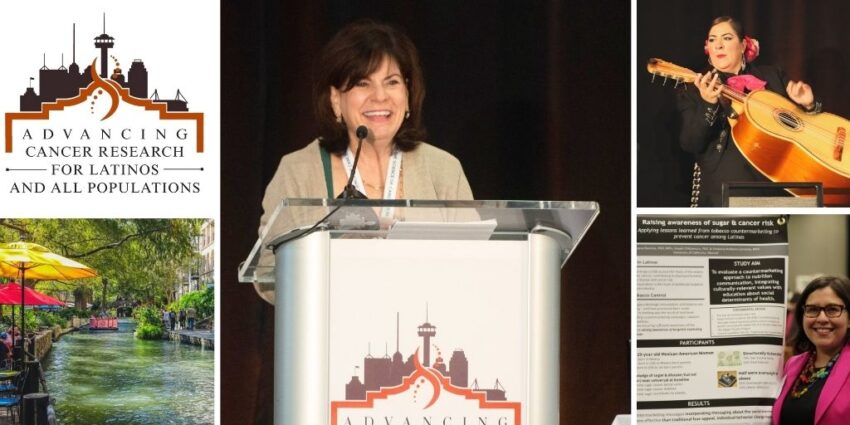
Cancer is tied with heart disease as the top cause of death for Latinos. To help us address cancer in Latinos and all people, register now for the 2026 Advancing Cancer Research for Latinos and All Populations conference on Feb. 18-20, 2026, at the Plaza San Antonio, Texas, led by the Institute for Health Promotion Research and Mays Cancer Center at UT Health San Antonio. The 2026 ACR conference will unite cancer survivors, caregivers, researchers, doctors, and others to discuss the latest in cancer research, knowledge, and action. The health of Latinos is important for the nation, where nearly one in three people are expected to be Latino within 30 years, and cancer advances made for this population has applicability for all people. "We hope to present timely research on every ...