by
by 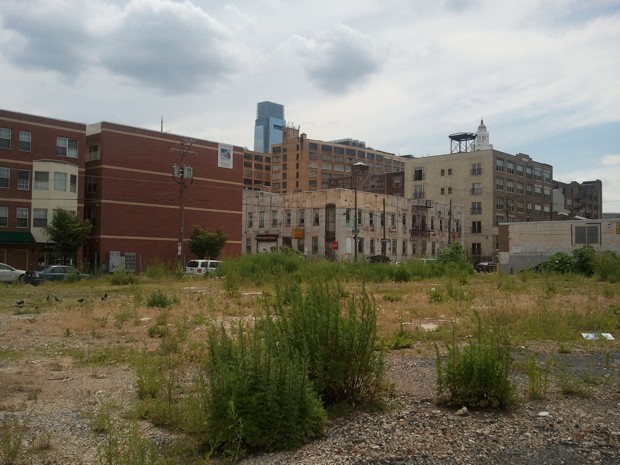
Share On Social!
When communities consider projects to reduce crime, promoting green space is gaining popularity. And credibility.
There is evidence that vacant lots play a role in the health and safety of nearby residents. Although the specific mechanism by which green space-trees, shrubs, and lawns-affects behavior is unclear, adding green space to vacant or blighted areas is linked to reduced crime. It may be through the “broken windows” theory, the “cues to care” theory or through informal surveillance of having more “eyes on the street,” a concept developed by Jane Jacobs.
In 2010 the city of Youngstown, Ohio (9.3% Latino) launched a program to transform vacant areas, which was about 31% of the city’s land area. Contractors were hired to transform some vacant lots through mowing and fences, and neighborhoods were provided funding to transform other vacant lots through gardens, orchards, and monuments.
This program essentially created a three-armed natural experiment, with two arms receiving different “greening” treatment-contractor improved and community improved-and one arm receiving no treatment, “ungreened.”
In 2015, a team of researchers examined crime data around these sites and found that the greened lots had lower rates of crime than the ungreened lots. The contractor improved lots had lower rates of property crime, and the community improved lots had lower rates of violent crime.
Cities with high rates of vacant lots often initiate new, but unproven, projects and programs to to revitalize their neighborhoods, whether from the point of view of reducing remediation and demolition costs, generating tax revenue, improving public safety, or improving public health.
Often, disadvantaged neighborhoods are burdened by higher rates of vacant lots and crime, which negatively impacts kids’ and families’ physically activity levels and contributes to health disparities. Improving public safety is a critical piece to addressing this inequity, and is linked to economic development, which benefits both cities and residents. Additionally, improving public safety is critical to ensuring that kids have safe places to walk, bike, and play-in their own neighborhood-to reduce their risk of chronic disease.
Wouldn’t it be great if a second team of researchers followed this natural experiment in Youngstown, Ohio and examined physical activity data around these sites to see if kids living near the greened lots were more physically active and had decreased rates of chronic disease? What if they also examined adults’ physical activity data to see if adults living near the greened lots had reduced rates of heart disease, diabetes, stroke, and mental illness.
Learn more about how Youngstown, Ohio transformed vacant lots and reduced crime here.
Copy and Share: Community-initiated greening of vacant lots reduces more serious, violent crimes. #Safety #ActiveSpaces @SaludToday salud.to/28PsNFp
Explore More:
Healthy Families & SchoolsBy The Numbers
142
Percent
Expected rise in Latino cancer cases in coming years