by
by 
Share On Social!
This content is from UT Health San Antonio’s book, “Advancing Cancer Research for Latinos and All Populations: 2026 Conference Proceedings,” which highlights results of the same-named conference in February 2026.
Tailored Care for Older Adults with Cancer
Enrique Soto Perez de Celis, MD, PhD, is Associate Director for Global Oncology at the University of Colorado Cancer Center.
Challenges faced by older adult patients with cancer
Dr. Soto began by noting that older adults face many disparities when accessing high-quality cancer care, especially those who are members of underrepresented populations. Conducting a geriatric assessment is essential to understanding patients and providing personalized care. Shared decision making should include patient preferences and priorities to generate better therapies and better evidence to treat older patients with cancer from all backgrounds.

The world is aging. Data from 2015 revealed that countries located in Europe and North America had a higher proportion of residents aged 65 and older. However, by 2050 the entire world will have higher populations of older residents, with much of this change occurring in low- and middle-income countries which are less prepared for geriatric cancer care.
Almost two thirds of cancer cases are diagnosed in people aged 65 and above. In the United States, around 50 to 60 million people are 65 years of age or older, a number that is predicted to grow to nearly 90 million by 2060. Of those, 25% currently identify as members of racial and ethnic minority populations. Racial and ethnic minority populations 65 years of age or older are predicted to increase by 83% in the next 15 years. In the US, there are higher rates of poverty among African American, Hispanic, and Asian individuals aged 65 and above compared with non-Hispanic White geriatric populations.
Ageism is a major problem in healthcare. Ageism is defined as age-based discrimination, which can come from the healthcare system, from physicians, from the patients themselves, and from society in general. Clinical trials tend to have very low participation rates of older patients in trials of novel therapies. Even in high income countries like the United States, there is a lack of personnel with geriatric training.
The geriatric assessment
Improved care of older adult patients with cancer depends on an improved understanding: who they are, what they can do, and how we should treat them. Patient preferences, values, and the trade-offs of treatment in decision making must also be understood. Importantly, enrollment of older adults from underrepresented populations is vital, both in clinical trials and in implementation initiatives across the cancer care continuum.
One way to obtain relevant information is through a geriatric assessment. A geriatric assessment goes beyond the typical assessment of a patient with cancer that includes age, stage of cancer, comorbidities, organ function, and functional status. A geriatric assessment includes a more in-depth functional status, analyzing cognition, social support, nutrition, finances, medications, and emotional status to obtain a more complete view of the patient. In this way, a treatment plan can be based on the patient rather than on the tumor. A geriatric assessment can identify supportive care needs, identify competitive risks, predict the risk of treatment-related adverse events, and help with shared decision making. In 2018, the American Society of Clinical Oncology (ASCO) began publishing guidelines for geriatric oncology, including the recommendation of the ASCO Practical Geriatric Assessment, which is self-administered and can be completed in less than 15 minutes.
In order to better understand older adult patients with cancer, Dr. Soto and colleagues performed a study of older patients with cancer in the Los Angeles area who were starting chemotherapy. Even though 61% of participants reported that staying alive as long as possible was the most important outcome for them, almost 40% chose other priorities over survival. In fact, 83% said that death was preferable to losing their cognitive abilities.
Older adults in clinical trials
Older adults are underrepresented in clinical trials because of strict eligibility criteria, accessibility and transportation issues, and financial toxicity. These factors are compounded in non-White populations. In 2014, only 17% of people included in breast cancer cooperative group studies were 70 and above. In order to rectify this problem, researchers must select relevant endpoints for older adults, enroll vulnerable and frail older patients across populations, and include geriatric assessment tools.
Dr. Soto concluded the presentation by stressing that older adults face many disparities when accessing high-quality cancer care, a difficulty even more pronounced in underrepresented populations. Geriatric assessments, however, are a powerful tool in understanding the needs of older adult patients with cancer, and are essential to providing personalized care. Patient preferences and priorities should always be included in evaluating the advantages or the benefits of care. Finally, clinical trials must include not only older patients, but also older patients across all backgrounds.
Optimizing Cancer Care Delivery for Older Latine Patients
Dr. Melody K. Schiaffino is Associate Professor in the Department of Radiation Medicine and Applied Sciences at the University of California San Diego School of Medicine, and member of the CHEER and Moores Cancer Center.
The heterogeneity of older cancer patients
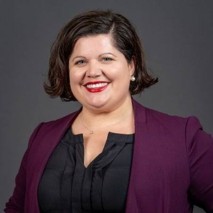
Dr. Schiaffino began by discussing the increasing heterogeneity among older adults with cancer, including variable age, race/ethnicity, language, and comorbidities. In light of this heterogeneity, improved methods to identify age-related risk and improved assessment for optimal care are needed. Geriatric cancer risk is multi-level and cross-disciplinary. The US population is aging, increasingly representing different backgrounds, and becoming more clinically complex, while cancer treatment has become more complicated. Further, the healthcare system reinforces disadvantages at each stage in the continuum while unintentionally constraining patient preferences.
Tools for assessment
One potent tool for understanding older cancer patients is the use of a geriatric assessment, which is recommended by the American Society of Clinical Oncology (ASCO) guidelines. However, geriatric assessments still lack widespread use, and are largely used only in cancer centers with geriatric oncology service lines.
Another potential tool is the use of the medical record itself. While the structured portion of clinical notes may not mention age-related risk factors, unstructured clinical notes often contain this information, as well as comments on nutrition, function, and language barriers. Due to the length and complexity of unstructured clinical notes, manual analysis is resource intensive. However, scalable artificial intelligence (AI)-driven abstraction is possible.
Artificial intelligence and unstructured notes
Dr. Schiaffino and colleagues recently undertook a study with 2 goals: to identify age-related risk factors in electronic medical record (EMR) notes, and to identify and address deficits that could lead to over- or under-treatment. The study also sought to develop a natural language processing (NLP) pipeline for unstructured EMR notes and to assess the feasibility of this approach for a health system scale-up.
The study included 135 patients aged 65 or older with a diagnosis of head and neck cancer. Medical records for these patients included structured data (age, diagnosis date, etc.) and unstructured data, which included progress notes, oncology notes, geriatrics consults, and discharge summaries. Overall, 47% of participants were over 75 years of age, 74% were male, 22% were Latino, and 17% spoke Spanish.
Each study domain was assigned a binary yes/no classification. Domains were designed to evaluate nutrition (appetite loss, dysphagia, weight loss), functional status (falls, frailty, mobility limitations), and language barriers (limited English proficiency, interpreter use, family interpreter, communication barriers, cultural needs). The AI model was trained, and results were compared with the gold standard, manual abstraction by trained reviewers. Three different models were evaluated for precision and recall, F1 score, and area under the receiver operating characteristic curve (AUC): a logistic regression model, a random forest model, and a large language model.
Although all of the models showed good AUC and F1 scores in the area of nutrition, these high scores may be an indication of overfitting, meaning the algorithm performed well on this specific dataset but may not generalize to a broader population. F1 scores in the areas of functional status and language barriers were more realistic. This study represents a first step in demonstrating that AI can be used to help optimize care for older adults with cancer by flagging areas that require screening and potential intervention.
The study also highlighted a greater burden in the areas of functional status in Latino and Asian participants. Furthermore, Latino participants had a higher burden in the area of language and culture. Meanwhile, English speaking participants had fewer conversations about function with their healthcare provider.
The future of geriatric cancer care
Further steps for this project include the need for external validation, including the integration of AI with structured EMR data, and larger and more heterogeneous data sets. Findings should also be linked to outcomes such as hospitalization and treatment interruption. Finally, implementation trials are needed for both algorithmic dissemination and geriatric assessment deployment.
Every older adult experiences a cancer diagnosis differently. Unstructured EMR text contains critical age-related risk information which can be used in the absence of a geriatric or other structured assessment. AI enables the scalable abstraction of these unstructured notes in a way that supports geriatric and oncology initiatives.
By The Numbers
142
Percent
Expected rise in Latino cancer cases in coming years