by
by 
Share On Social!
This content is from UT Health San Antonio’s book, “Advancing Cancer Research for Latinos and All Populations: 2026 Conference Proceedings,” which highlights results of the same-named conference in February 2026.
Bridging International and National Latino Research to Serve its Populations
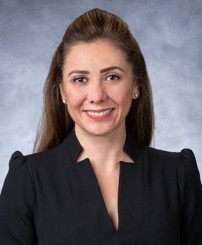
Dr. Mariana Chávez Mac Gregor is Chair ad interim and Professor in the Health Services Research Department and in the Breast Medical Oncology Department at University of Texas MD Anderson, as well as Executive Officer for International Affairs at the SWOG Research Network.
Latin American and US Latino populations
Dr. Chávez Mac Gregor began the presentation by describing the need to bridge cancer research in the United States and Latin America. According to Global Cancer Statistics, over 32 countries, territories, and regions are a part of the “Latin American and Caribbean” population. According to this definition, over 662 million people reside in Latin America. However, the incidence of many cancers is lower in Latin America compared with the US.
In the US, the Latino population is greater than 68 million. The median age of those born in the US is 21.4, while the average age of immigrant Latinos is 43.6. The majority of the Latino population is concentrated along the southern border and in the northeastern metropolitan areas. However, over 2.7 million Latinos live in rural counties, reflecting the extreme heterogeneity of the Latino population.
US-based Latino individuals are uniquely affected by obesity and physical inactivity, low rates of cancer screening, late stage at cancer diagnosis, younger age at diagnosis, structural and non-medical drivers of health, and lack of insurance coverage. In fact, 25.3% of Latino individuals in the US are uninsured, compared with 7.8% of non-Hispanic White individuals. Uninsured adults have lower rates of being up‑to‑date on screening, and are far more likely to delay or forgo care because of cost.
A lack of cancer research in Latin America
Although cancer is a global disease and a global problem, cancer research is not global. The overwhelming majority of oncology trials are conducted in North America and Europe, meaning the evidence base that informs global oncology practice reflects a relatively narrow slice of the world’s cancer experience. Latino populations, both in the U.S. and across Latin America, are not adequately represented in the research that guides cancer treatment, compromising both internal and external validity.
Although the Latino population has a cancer prevalence of 7%, it comprises only 3% of trial participants. Limited English proficiency (LEP) is a barrier to trial access and results in a reduction in participation. Lack of health insurance also limits access to care, further limiting access to clinical trials. Although the incidence of cancer is greater in metropolitan areas, rural representation is vitally important in oncology clinical trials. Many Latinos live in rural areas, where they face greater travel distance for both cancer care and trial participation.
In Latin America and the Caribbean, progress has been made in cancer care through national and regional cancer control initiatives, which have proved useful in reducing diagnostic and treatment initiation delays. However, there are still significant gaps, including a lack of oncology clinical trials. Of all global randomized clinical trials from 2014-2017, only 8% occurred in low- and middle-income countries. In Latin America, only 0.65% of gross domestic product is being invested toward research and development, 3.4 times less than in developed countries.
The SWOG Latin America Initiative
As a major part of the US publicly funded cancer research infrastructure, SWOG designs and conducts multi-institution clinical cancer trials with the mission of significantly improving lives through cancer clinical trials and translational research. Over the last 6 decades, SWOG research has resulted in over 3.34 million years of life saved. The SWOG Latin America Initiative (SLAI) seeks to build a bridge between US and Latin American cancer research. Because the Latino population is the largest minority in the US, SWOG expansion in Latin America allows for insight into the future of the US population.
SLAI’s initiatives in Latin America are based on 4 pillars: strengthening the research infrastructure, increasing trial access and activation, enhancing investigator development, and reducing barriers to accrual. In order to strengthen the research infrastructure, SLAI is focused on improving bilingual training and education, hosting annual cancer research conferences, engaging in professional exchanges and collaboration, and promoting leadership in research networks.
Increasing trial access and activation begins with clinical trial design and inception, identifying trials that are feasible and relevant to the region, engaging with investigators to allow protocol modifications, and encouraging committee engagement. Streamlined trial activation, mentorship and training programs for team members, and enhanced regional collaboration are also important.
SLAI’s training and mentorship programs for investigators are enhanced through structured mentorship programs, formal training courses, communication initiatives, and the building of future leaders. Regulatory barriers are reduced by addressing legal, financial, and operational challenges.
Dr. Chávez Mac Gregor ended the presentation by reiterating the differences in cancer outcomes faced by the Latino population in both the US and Latin America. Representation in clinical trials can translate to better care for all populations. Building capacity and infrastructure across borders improves science and ultimately, leads to better outcomes for Latino patients in the US and Latin America.
By The Numbers
142
Percent
Expected rise in Latino cancer cases in coming years