by
by 
Share On Social!
This content is from UT Health San Antonio’s book, “Advancing Cancer Research for Latinos and All Populations: 2026 Conference Proceedings,” which highlights results of the same-named conference in February 2026.
Tobacco Use and Lung Cancer in Latinos in the U.S.
Dr. Eliseo J. Pérez-Stable is Professor Emeritus at the University of California, San Francisco School of Medicine (UCSF) and Former Director of the National Institute on Minority Health and Health Disparities (NIMHD).
Tobacco use in the US

Dr. Pérez-Stable began by providing some background information on tobacco use in the US. Tobacco smoke is the main cause of lung cancer in the US with an attributable risk of 0.85. However, smoking rates have decreased in most populations over the past 35 years, and second-hand smoking is limited to private spaces in most of the country. Lung cancer treatment has also improved 5-year survival to 15%. Although a large clinical trial completed over 10 years ago showed that screening for lung cancer with low-dose computed tomography (CT) decreases overall mortality by 20%, only about 18% of individuals are screened. Efforts to promote lung cancer screening are needed.
Frequency of smoking is an important and often overlooked factor affecting lung cancer risk. Dr. Pérez-Stable and colleagues have been using data from the Population Assessment for Tobacco and Health (PATH) study to assess daily vs nondaily smoking rates in various populations. Over 30% of current Latino smokers and 20% of all US smokers report nondaily tobacco use. More work is needed to understand rates of quitting, progression to daily smoking, or maintenance of nondaily patterns among nondaily smokers. This is especially important because even smoking one cigarette raises the risk of cancer and the elevated risk of 30% of coronary disease in this population of nondaily smokers.
Smoking susceptibility and future risk
Dr. Pérez-Stable and colleagues also evaluated 8,899 youth in PATH who were never smokers to examine whether smoking susceptibility predicted future smoking among youth of different backgrounds. The youth were asked 4 questions to evaluate if they were ever curious about smoking, if they thought they would smoke a cigarette in the next year, if they thought they would try a cigarette soon, and if they would try a cigarette if a friend offered. During the study, among those not susceptible to smoking at evaluation, 11.4% became experimental smokers, 5.1% became current smokers, and 1.1% became established smokers. Participants who answered “yes” to 1 of the questions had a higher probability of becoming an experimental smoker, with an adjusted odds ratio of 2.0. Participants who answered “yes” to 3 or 4 questions had an adjusted odds ratio of 6.9. These odds were even more pronounced among African American and Latino youth compared with White youth. The data were also examined for the role of vaping which attenuated the risk of using combustible cigarettes.
The genetics of smoking
Another study found that smoking habits and levels of tobacco-related chemicals in the body differ among Latino smokers depending on their specific heritage. In this study, 13,578 individuals were evaluated for 2 biomarkers: serum cotinine, and 4-methylnitrosamino-1-[3-pyridyl]-1-butanol (NNAL). Latino individuals, who made up 16.3% of the study population, had the lowest levels of cotinine and NNAL. Therefore, the optimal cotinine cut point to distinguish current smokers was 0.69 ng/mL for Latinos, which contrasts with higher cut points for Black individuals (7.0 ng/mL) and White individuals (4.0 ng/mL). Cuban and Puerto Rican participants had biomarker levels 3 times higher than other Latino participants.
A genome-wide association study of smoking in the Hispanic Community Health Study/Study of Latinos (HCHS/SOL) evaluated genetic associations with smoking behavior in 12,741 participants. This study found that CHRNA5, which encodes the α5 cholinergic nicotinic receptor subunit, was associated with heavy smoking at genome-wide significance. An unconfirmed association with nondaily smoking could not be validated because no other study had collected data on this question. There is an ongoing study to evaluate the levels of cotinine and NNAL in 2000 HCHS/SOL participants who reported smoking.
Consolidating gains
Lung cancer mortality has decreased in all populations by 30% to 40% over the last 20 years, largely due to the success of tobacco control efforts and advances in screening and therapy. However, this success is somewhat attenuated in females. Recent research has provided data on the estimated burden of lung cancer and health disparities in the US at the county level, stratified by racial and/or ethnic group. This data could allow for targeted interventions in counties with higher mortality.
By continuing important research into predictors of smoking susceptibility, biomarkers, and lung cancer burden by location, at-risk populations can be identified and targeted. In this way, decreases in lung cancer mortality can be consolidated and used as a springboard for even better outcomes.
Integrating Research, Education, and Clinical Trial Access: Leveraging Efforts Across Southern Arizona
Dr. Alejandro Recio Boiles is Associate Clinical Professor of Medicine, Associate Program Director of the Hematology and Medical Oncology Fellowship Program, and Assistant Director of Community Outreach & Engagement at the University of Arizona Comprehensive Cancer Center.
Cancer initiatives in Southern Arizona
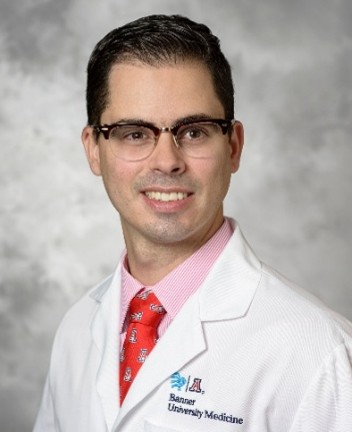
Dr. Recio Boiles’s presentation focused on prostate cancer outreach and engagement through the lens of several initiatives: Community Assessment of Southern Arizona (CASA), outreach activities like Let’s TACO Bout Cancer, Research Outreach of Southern Arizona (ROSA), the Community Academic Partnership Program (CAPP), Learning with Oncology and Community Arizona Leaders (LOCAL), the Arizona Clinical Trial Network (ACTN), and cancer policy engagement.
The catchment area for the University of Arizona Cancer Center is in Southern Arizona. A recent study by Dr. Recio Boiles and colleagues through the CASA program evaluated reasons why individuals would opt out of clinical trial participation in that catchment area. Approximately 53% of Latinos interviewed indicated that they simply did not know anything about clinical trials, compared with 36% of White and 37% of Black participants.
The Let’s TACO Bout Cancer program offers a Clinical Trial 101 educational initiative focused on prostate cancer. After the presentation, surveys on prostate cancer awareness are collected. Recent results showed that 84% of respondents were female, suggesting substantial participation from relatives and caregivers. Over 75% of respondents indicated that their knowledge “increased a lot” through the presentation. In contrast to the Let’s TACO Bout Cancer program, the ROSA cafe focuses on research education over cancer education.
Variation in prostate cancer markers
A review of the National Cancer Database revealed that Latino prostate cancer patients have higher prostate-specific antigen (PSA) levels, higher Gleason scores (which indicate aggressive prostate cancer), and higher metastatic rates than White patients. After analysis of Latino patients by country of origin, Mexican patients were found to have the highest PSA levels, the highest metastatic rates, and among the highest Gleason scores. Local work by Dr. Recio Boiles and colleagues in Arizona have confirmed these findings.
Research by Dr. Recio Boiles and colleagues assessed the molecular characterization of prostate cancer in Latino Americans and non-Hispanic White Americans, finding differences in the frequency of certain mutations and fusions. TMPRSS2 fusions, for example, were more frequently found in Latino prostate cancer patients, leading to more aggressive and locally advanced cancers. Crosstalk between Hedgehog, Notch, and Wnt/β-catenin signaling pathways was more pronounced in Latino patients compared with non-Hispanic White patients.
Collaboration and policy engagement
The LOCAL symposium was another recent initiative bringing together 33 organizations and discussing topics such as patient access, the location of research efforts, and participation in clinical trials. Key takeaways included the value of promotoras, the power of lived experience, commitment to health fairness, the need for resource access, structural and system-level innovation, and collaboration.
ACTN focuses on reaching cancer patients who are typically underserved. Most cancer patients in Arizona are not in Phoenix or Tucson, the major metropolis areas, and therefore care must be provided at regional cancer centers. However, many of these regional hospitals have limited access to clinical research for cancer patients. ACTN is committed to conducting clinical trials across the state.
Another ACTN priority is prostate cancer policy engagement. The organization is tracking several bills in the Arizona legislature, including policies about prostate cancer and breast examination cost sharing with insurance companies, retail licensing for electronic smoking devices, and pharmacy benefits and coverage.
Through initiatives like CASA, Let’s TACO Bout Cancer, ROSA, CAPP, LOCAL, and ACTN, Dr. Recio Boiles and his colleagues at the University of Arizona Comprehensive Cancer Center are making a measurable impact on prostate cancer awareness. These programs support education, clinical trial enrollment, collaboration, resource access, and policy advocacy, contributing to improved outcomes for prostate cancer patients in Southern Arizona.
Clinical Trials in Under-resourced Environments
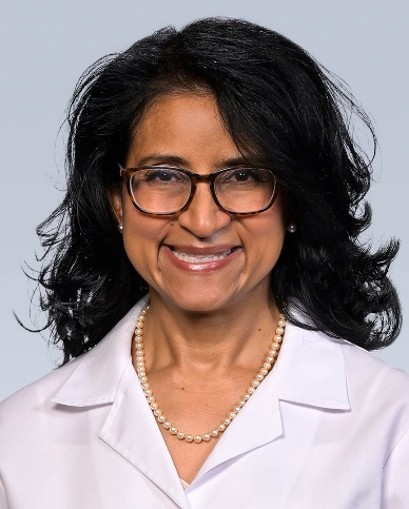
Dr. Carmen E. Guerra is the Ruth C. and Raymond G. Perelman Professor of Medicine at Perelman School of Medicine, and the Associate Director of Community Outreach & Engagement at the Abramson Cancer Center at the University of Pennsylvania.
Increasing clinical trial enrollment
Dr. Guerra’s presentation focused on the identification and development of strategies to mitigate barriers to clinical trial enrollment for under-resourced populations. Clinical trials are vital for testing new treatments aimed at reducing cancer morbidity and mortality. However, suboptimal participation has been well documented for all populations, especially those from racial and ethnic minority groups. Among 1,200 Commission on Cancer programs representing 70% of all cancer cases diagnosed in the US, only 7.1% of cancer patients participated in a clinical trial.
Underrepresentation in clinical trial participation from racial and ethnic minority groups causes problems by limiting access to new therapies for these groups, threatening the efficiency of research which increases costs, and limiting the generalizability of efficacy and safety results. Approximately 70% of US counties lack an active cancer treatment trial, meaning that 25% of adults over age 55 must travel more than 2 hours to access a trial. Cancer clinical trials are typically segregated to large metropolitan areas, with 44% of metro counties reporting no trials, compared to 86% of rural counties. In fact, only 10% of oncologists practice in a non metro area. Under-collection and under-reporting of race and ethnicity enrollment data in clinical trials is also a problem.
Outreach and engagement
Community outreach and engagement (COE) can disrupt clinical trial segregation by identifying patients with cancer, providing clinical trial education, and building trust. However, successful COE has several key requirements: a workforce reflective of the identities of the individuals served, the development of partnerships with local organizations, identification and response to the needs of the population, language- and culturally-tailored strategies for varying locations, and longitudinal investments and relationships.
Initiatives to remove barriers to patient participation in clinical trials must include revised educational materials that detail the cancer stories of the target population. Addressing the social needs of patients and clinical trial participants is also important. One such program, called Ride Health, has provided 8766 rides for cancer patients since 2020. Another program, called the Lazarex IMPACT Program, provides financial reimbursement to clinical trial participants. According to one study, 48% of patients in Phase 1 trials reported monthly out-of-pocket costs of at least $1,000.
Another barrier to participation is the language barrier. In the Abramson Cancer Center, Dr. Guerra and colleagues use My Accessible Real-Time Trusted Interpreter, or MARTTI, to help overcome this barrier. For use in clinical trials, Institutional Review Board short forms are available in 12 languages for non-English speakers.
Clinical trial design
Clinical trial design is also imperative for adequate trial participation and must be pragmatic and decentralized, leveraging regional health centers and networks and fostering local, trusted partnerships to improve recruitment and retention. Minority outreach and engagement and recruitment plans should be required in each clinical trial protocol. Informed consent forms should be in plain language and translated into multiple languages, and patient advisory boards should help shape the study design from the beginning.
The NCI Community Oncology Research Program (NCORP) includes 14 designated Minority/Underserved (MU) sites specifically focused on increasing cancer clinical trial access for populations in low-resource, rural, or underserved areas. These sites are located in regions with at least 30% racial/ethnic minorities or rural residents.
Provider bias
Dr. Guerra ended by discussing provider bias when dealing with patients of minority populations. Among Black patients with metastatic breast cancer, 40% reported no one on their care team discussed clinical trial options. Another study found that healthcare providers perceived recruiting minorities to cancer clinical trials to be more challenging due to less background knowledge and language barriers. Minority patients were also perceived to have poorer protocol adherence, be less altruistic than White populations, and have low interest and high mistrust due to a legacy of mistreatment in research. However, research shows that under-represented minority patients are not less likely to agree to participate in treatment trials.
Barriers to participation in cancer clinical trials can be overcome by developing strategies that address these barriers at the institutional, patient, provider, and policy levels. Multilevel, multi-dimensional strategies are more likely to have an impact. Effective strategies include establishing COE, implementing patient navigation, addressing social needs, developing a trial portfolio that meets the needs of the catchment area, modernizing trial eligibility criteria including eliminating the English requirement, mitigating research team member bias, and developing policies that support access to and reduce the burden of participation in clinical trials.
By The Numbers
142
Percent
Expected rise in Latino cancer cases in coming years