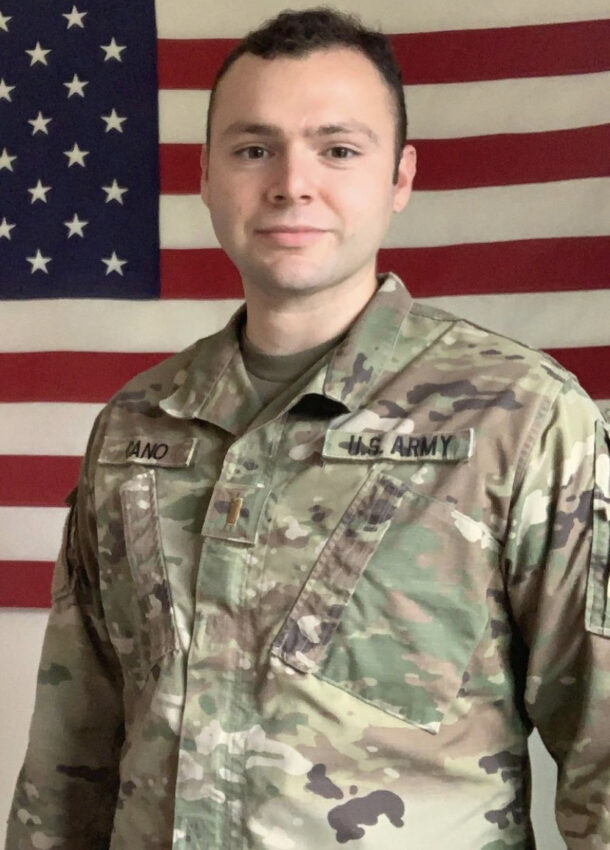
“You just keep pushing. You just keep pushing.” That’s something Diego Cano has told himself throughout his life. When he failed a health certification test on the first try. When he struggled to balance work, study, and military service. When he wasn’t sure what direction to pursue. Today, Cano has pushed through many hardships and is following his passion of helping others as a rising second-year medical student at the Paul L. Foster School of Medicine at Texas Tech University Health Science Center El Paso and as a Robert A. Winn clinical investigator intern at UT Health San Antonio’s Institute for Health Promotion Research. While he is accomplishing a lot of great things, rarely did it come easily.
Cano’s Early Life and Finding a Passion
Cano grew up in ...
Stomach cancer accounts for about 1.5% of all new cancers diagnosed in the US each year, and Latinos have a high risk, according to the American Cancer Society. With this in mind, it’s important for communities to learn about stomach cancer risk and have resources and tools to support themselves or loved ones experiencing this issue. To raise awareness about stomach cancer, Debbie’s Dream Foundation: Curing Stomach Cancer will host the first-ever Gut Check for Stomach Cancer 5K Run & 1 Mile Walk from 9 a.m. to noon on Saturday, Nov. 8, 2025 at Greenline Park in San Antonio, Texas. The event will include activities, such as health and wellness booths, local medical resources, a DJ and music, youth dance teams, face painting, and more. Register here for the ...
On July 11, 2025, researchers and community members joined together for the first Pancreatic Cancer Retreat to explore the impact of this disease in South Texas. The retreat, at UT Rio Grande Valley in South Texas, was a collaboration among the community outreach and engagement team (COE) and the community advisory board (CAB) at Mays Cancer Center at UT Health San Antonio, and the Canopy Cancer Collective, a nonprofit focused on pancreatic cancer. At the event, clinicians, researchers, patient liaisons, and industry leaders had collaborative discussions on topics including clinical trials, tumor boards, biobanks, educational resources, and screening initiatives on pancreatic cancer. Event participants from Mays Cancer Center included Dr. Lei Zheng, director, and Mary Jimenez, ...
Born in Los Angeles to a Guatemalan mother and Mexican father, Josue Diaz-Melendez grew up in a vibrant Latino neighborhood, shaped by heritage and community. From a young age, Diaz-Melendez had a clear mission—to help his people and all people. That drive led him to pursue dentistry, where he could help people achieve healthier smiles. But he soon saw a chance to transform lives beyond the dentist’s chair.
Making a Switch
Diaz-Melendez worked hard to earn his bachelor’s in biology at the University of Southern California (USC) and later his doctorate in dental surgery at Columbia University. He moved to Philadelphia and began working as a dentist at St. Christopher's Hospital for Children, fulfilling his goal of helping people. However, as Diaz-Melendez ...
A recent study from the University of Michigan found that extended family members, such as siblings, cousins and grandparents, are the most influential mentors for Latino emerging adults and can simultaneously empower and constrain young people's efforts to create social change. “It is essential to understand how adults can partner with youth to create social change,” the study states. Let’s dig deeper into this study and what the results mean for families and communities.
The Impact of Extended Family
“Our research reveals that adults play complex, multifaceted roles in these young people’s civic development,” said Wendy de los Reyes, U-M postdoctoral research fellow in the Combined Program in Education and Psychology.” For the study, de los Reyes and her ...
Community can play a large role shaping who a person can become. For William Manriquez, who was born and raised in the bustling and vibrant borough of Manhattan in New York, he was deeply inspired by his community. In Manhattan, there is far more than just the fast-paced hum of people from backgrounds from around the world. You’ll find people walking their dogs, bicycling through Central Park, shopping in the corner bodegas, and sharing conversations with neighbors. “I was fortunate enough to grow up in a neighborhood where there was a sense of community,” Manriquez said. Now, as a second-year medical student at the CUNY School of Medicine at The City College of New York, Manriquez hopes he can one day provide well-rounded health care and infection prevention and control ...
Infection control can protect frontline workers, patients, and colleagues from the spread of germs in healthcare settings. However, challenges like a foreign language gap can hinder healthcare workers from effectively applying infection control measures. With this in mind, Salud America! and the National Hispanic Medical Association (NHMA) have translated and created the English-to-Spanish Medical Terminology Fact Sheet as part of the U.S. Centers for Disease Control and Prevention (CDC) Project Firstline program. This English-to-Spanish Medical Terminology Fact Sheet aims to enhance communication of common medical terms related to infection control to improve provider-patient interactions, patient safety and understanding in healthcare settings. Download the fact ...
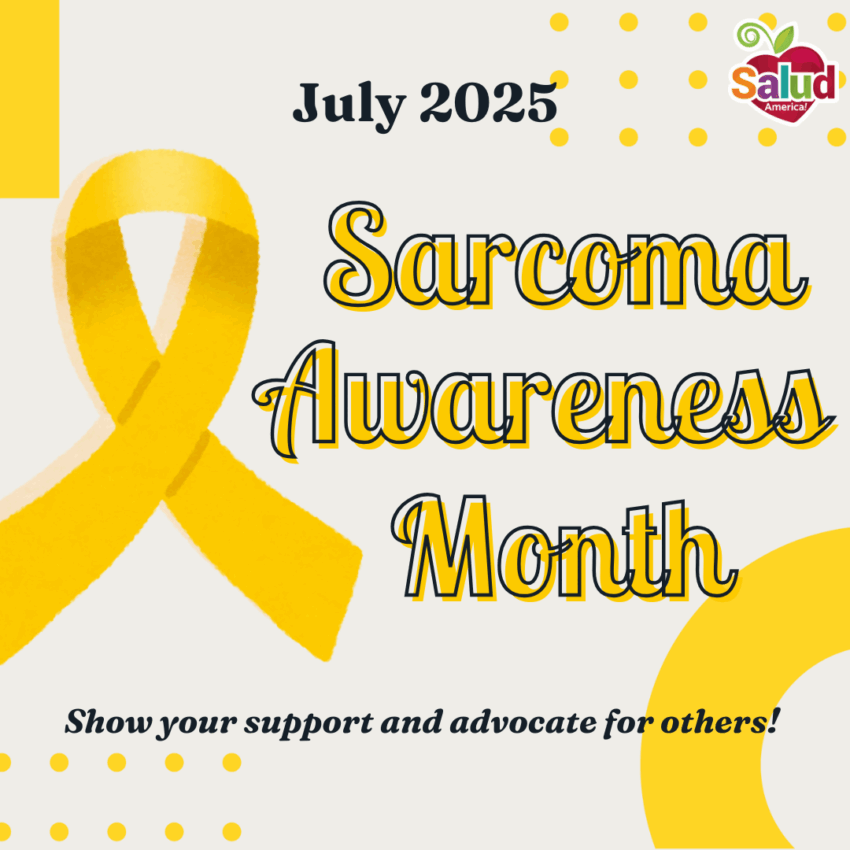
July is recognized as Sarcoma Awareness Month, which encourages communities to raise awareness and show support for those affected by sarcoma. Let’s explore resources for you and your loved ones to support!
What is Sarcoma?
Approximately 17,000 people are diagnosed with sarcoma each year in the United States. Sarcoma is a rare type of cancer that “begins in bone or in the soft tissues of the body, including cartilage, fat, muscle, blood vessels, fibrous tissue, or other connective or supportive tissue,” according to National Cancer Institute. With over 100 different subtypes, sarcomas are categorized as soft tissue or bone sarcomas, depending on where they develop in the body. Most sarcomas are within the limbs because this is where most of the body’s connective ...
Texas Gov. Greg Abbott recently signed a law that mandates the first-ever warning labels on foods like chips and candies that contain dyes and additives not allowed in other countries. “The law mandates disclosures for more than 40 ingredients, including food dyes and additives commonly used in food processing to help with texture, taste or shelf life,” according to AP News. Let’s dig deeper into what this law means and how it impacts families and communities.
What Does This Law Entail?
The newly signed law will require foods made with any of more than 40 dyes or additives to have warning labels starting Jan. 1, 2027. The labels will include verbiage saying the products’ contain ingredients “not recommended for human consumption” in Australia, Canada, Europe, or ...