About the Author

Author Picture

Amanda Merck

Merck completed her MPH with a concentration in Physical Activity and Health. She curates content for Salud America! (@SaludAmerica), a Latino childhood obesity prevention project based at the Institute for Health Promotion Research at UT Health San Antonio. She focuses on the latest research, resources, and stories related to policy, systems, and environmental changes to enhance equitable access to safe places for kids and families to walk, bike, and play.


Connect with Amanda:
Twitter Link

Articles by Amanda Merck

Physical Activity Releases Brain-Healthy Protein


brain health physical activity

A growing body of research suggests that physical activity is associated with maintaining a strong and healthy mind, boosting memory and learning, and possibly delaying age-related cognitive decline. A new study supported by the National Institute for Health (NIH) and published in Cell Metabolism found a specific protein secreted by skeletal muscle cells during physical activity that enters the bloodstream and can cross the blood-brain barrier, which is noteworthy because not all proteins cross it. In mice, this protein is thought to be neuro-protective and associated with the production of new neurons in part of the brain associated with memory, thus physical activity induced secretion of this protein may prevent or delay Alzheimer's disease.. Adults who exercise more ...

Read More
Webinar: Exploring Local Ballot Initiatives to Advance Active Transportation Projects


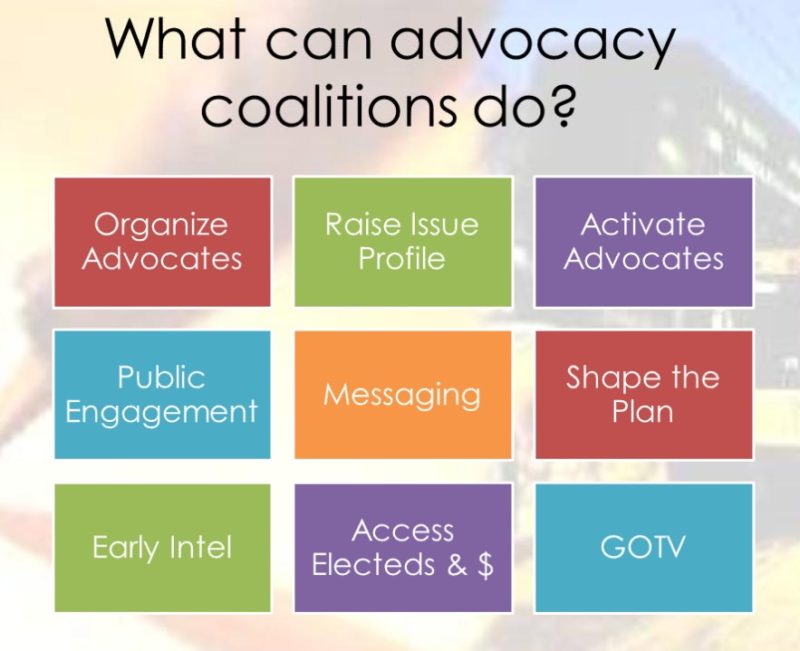
America Walks hosted a webinar, "Exploring Local Ballot Initiatives" to advance active transportation projects, showcasing the tools and resources available at the Center for Transportation Excellence. Three professionals talked about the various ways local ballot initiatives can be used to support and develop projects related to active transportation to make America a great place to walk. Watch the webinar here. Copy and Share: .@AmericaWalks Webinar: "Exploring Local Ballot Initiatives" advance active transportation #ActiveSpaces @SaludToday ...

Read More

New York to Invest $110 Million in Pedestrian Safety


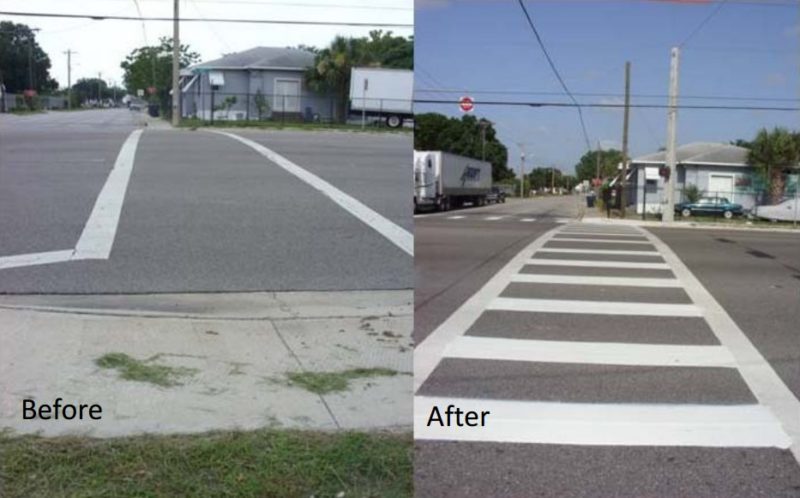
Over half of the 4,303 fatal and injury crashes in Upstate New York and Long Island between 2011 and 2015 occurred at an intersection. In June 2016, New York (18.8% Latino) Governor Andrew M. Cuomo announced that the New York State Departments of Transportation and Health teamed up with the Governor’s Traffic Safety Committee to provide $110 million over the next five years to improve pedestrian safety across Upstate New York and Long Island through engineering improvements, education efforts, and an enforcement campaign based on the Three E's of Safety-Engineering, Enforcement, and Education. Examples of engineering improvements include: narrowing of traffic lanes, new and widened sidewalk connections, intersection improvement projects, adding crosswalks, improving lighting ...

Read More

Urban Green Space Fights Crime


When communities consider projects to reduce crime, promoting green space is gaining popularity. And credibility. There is evidence that vacant lots play a role in the health and safety of nearby residents. Although the specific mechanism by which green space-trees, shrubs, and lawns-affects behavior is unclear, adding green space to vacant or blighted areas is linked to reduced crime. It may be through the "broken windows" theory, the "cues to care" theory or through informal surveillance of having more "eyes on the street," a concept developed by Jane Jacobs. In 2010 the city of Youngstown, Ohio (9.3% Latino) launched a program to transform vacant areas, which was about 31% of the city's land area. Contractors were hired to transform some vacant lots through mowing and ...

Read More

Breastfed Babies Behave Better in School, Study Finds


Research has proven numerous times that breastfeeding reduces obesity, helps babies fight infections, and lowers the risk of asthma. According to new research, children that were breastfed also behave better in school, Time Live reports. Researchers from Glasgow University conducted the study among 1,500 children from South Africa between the ages of 7 and 11 and concluded that those who drank breast milk for six months or more had an easier time behaving in school than those who were breastfed for less than a month. “The duration of exclusive breastfeeding of an infant has greater importance than previously realized in several areas of development," Tamsen Rochat of the Human Science Research Council in Durban told Time Live. Learn more about breastfeeding and Latinos ...

Read More

Neighborhood Map Project to Develop Neighborhood Ownership and Advocacy


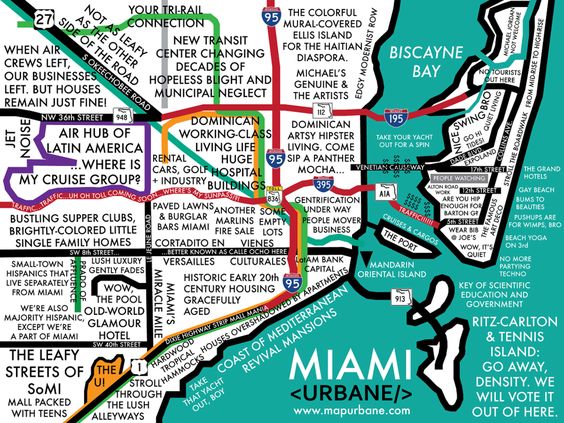
In response to consistent misidentification of minority-majority neighborhoods in Dallas by local media, Lizzie MacWillie, senior design manager at buildingcommunityWORKSHOP (bc), a nonprofit community design center, launched an effort to get Dallas residents (42.4% Latino) to draw maps of their neighborhoods. In the current national political climate-Clinton and Trump-neighborhood politics tends to fall by the wayside; however, neighborhood organization and advocacy is incredibly powerful. "Neighborhoods are the smallest organizing element in any city," MacWillie said. "A strong city is made up of strong neighborhoods, where the residents can effectively advocate for their needs." In order for residents to effectively advocate and shape their neighborhood's future, they must ...

Read More

Minneapolis School Board and Park Board Approve MOU for City Swims Program


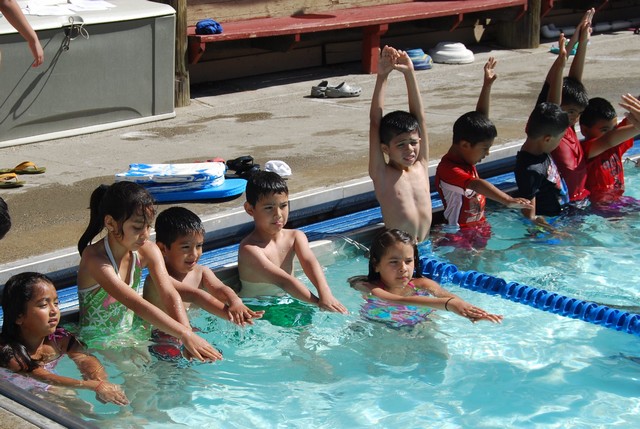
Grassroots efforts to improve equitable access to swimming facilities in a low-income neighborhood in Minneapolis, Minn. (10.5% Latino), spurred a formalized Memorandum of Understanding (MOU) between the school board and parks board to more efficiently provide accessible, inclusive, high quality athletic and fitness opportunities and facilities for all children in Minneapolis. On June 14, 2016 the Minneapolis Public Schools, Special School District No. 1 (MPS) and on June 15, 2016, the City of Minneapolis Parks and Recreation Board (MPRB) approved an MOU which includes the establishement of a "City Swims" program to promote swimming lessons and classes for all Minneapolis children. This MOU follows decades of informal collaboration and 18 shared use agreements between the two ...

Read More

Race is a Risk Factor for Not Accepting Donor Milk


Health Dangers Breast Milk

At times, mothers of preterm infants are unable to supply adequate amounts of human milk. In neonatal intensive care units (NICU), very low birth weight infants are eligible to receive donor milk. The Surgeon General’s Call to Action to Support Breastfeeding in 2010 emphasized the importance of donor milk use in the NICU, and many NICUs now offer donor milk as the preferred alternative. However, the acceptability of donor milk among parents is associated with maternal education, marital status, cultural context, and race. In a recent study in Breastfeeding Medicine, researchers found that families with white mothers were more likely to provide consent for donor milk, 61.9% compared to 50.5% of non-white mothers. Understanding cultural and racial differences in ...

Read More

Disparities in Adolescents Living in Neighborhoods that Support Physical Activity


Disparities in exist in the proportion of adolescents who live in neighborhoods that support physical activity, defined as neighborhoods that are perceived as safe and have sidewalks or walking paths and parks, playgrounds, or recreation centers. In the June 17, 2016 Morbidity and Mortality Weekly Report (MMWR), the Centers for Disease Control and Prevention (CDC) analyzed data on U.S. adolescents and found that fewer Latino adolescents live in neighborhoods that support physical activity compared to the national average. Additionally, fewer overweight or obese adolescents, and fewer adolescents from households with lower socioeconomic status live in neighborhoods that support physical activity. Inequity in neighborhood support for physical activity is likely the root ...

Read More