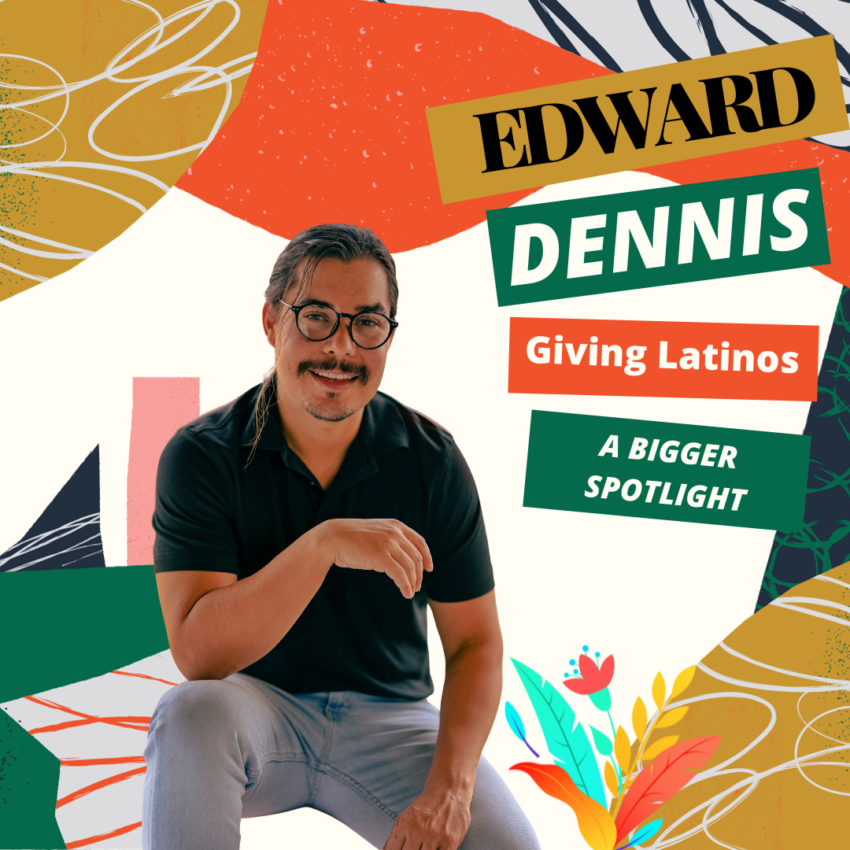
Despite Latinos making up over 19% of the United States population, Latinos are vastly under utalized in the media and have been for decades. In honor of Hispanic Heritage Month, we’re exploring this issue and highlighting one Latino who is working toward change.
It’s About Time
In summer 2023, the smash hit Blue Beetle made its debut at movie theaters nationwide. The movie, which depicts a Mexican-American superhero, is one example of how Latinos being incorporated on the big screen and behind the scenes via directors, writers, etc., is improving. While many rave about the significance of the movie, one question remains: “It's 2023. What took so long?” said Edward Dennis, artist and children’s book author. Edward is right to ask this question. Latinos ...
Hispanic Heritage Month is here! This annual U.S. observance, from Sept. 15 to Oct. 15, celebrates the histories and contributions of Americans whose ancestors came from Spain, Mexico, the Caribbean and Central and South America. We at Salud America! invite you to celebrate Hispanic Heritage Month in these surprising ways.
1. Learn How Hispanic Heritage Month Began
U.S. Congressmen Edward R. Roybal of Los Angeles and Henry B. Gonzales were among those who introduced legislation on the topic in 1968. President Lyndon Johnson implemented the observance as Hispanic Heritage Week that year. U.S. Rep. Esteban E. Torres of Pico Rivera proposed the observance be expanded to cover its current 30-day period. President Ronald Reagan implemented the expansion to Hispanic ...
Despite the heaviest spending on healthcare, the United States has the highest maternal mortality rate among developed nations. Sadly, this historic trend has worsened over time and impacts many women in overlooked populations. The reasons for America’s maternal health crisis is multi-faceted, but a new Centers for Disease Control and Prevention (CDC) Vital Signs survey highlights one potential reason for this worsening health trend – mistreatment of women by healthcare workers during pregnancy and delivery care. Let’s explore the survey results and how mistreatment during maternity care affects Latinas and all women.
Mistreatment During Maternity Care
The survey, which included data from 2,402 women, found that 1 in 5 women (20%) experienced mistreatment by healthcare ...
Many healthcare facilities require healthcare staff to complete regular sensitivity trainings on competency, bedside manner, and similar topics. These trainings can help providers deliver compassionate care for overlooked patients. But, as more healthcare systems go the extra mile to create a non-medical drivers of health (NMDoH) screening program to care for patients’ non-medical needs, staff may need additional resources to guide conversations that are often deeply personal for some patients. Here’s how healthcare staff can build rapport with patients and gain confidence in discussing NMDoH, from housing to income.
Put Yourself in the Patient’s Shoes
Think about your patient’s demographics. What non-medical challenges to health do they face? What needs do they ...
About half of Latinos who enroll in a four-year college do not end up graduating, according to a new analysis from ¡Excelencia in Education! Latinos’ college graduation rate (52%) also is lower than their White peers (65%). How can we increase Latino college graduation rates? Let’s dive into to the numbers and explore how to close the Latino education gap, and better support Latino students.
Latino College Graduation by the Numbers
28% of Latino adults (age 25 and older) currently have an associate degree or higher, compared to 48% of White adults. To better understand that gap, the new analysis from ¡Excelencia in Education! highlights 4 measures that track degree completion: 1. Graduation Rate: Total percentage of students who graduated within ...
As a child in Puerto Rico, Alberto Martin dreamed of playing professional soccer. He knew that becoming a soccer pro meant lots of hard work, practice, and willpower to get better even when you’re tired and want to give up. Today, Martin is using those lessons to become a different kind of pro – a doctor. Martin is a second-year medical student at the Universidad Central del Caribe in Bayamón, Puerto Rico, and an intern at UT Health San Antonio’s Institute for Health Promotion Research. He is motivated to share his story to demonstrate how following your dream – on the soccer field or the doctor’s office – can be reality. “Stories and information you get, they just become such a powerful source of drive or inspiration. Because you want to see you, ...
The Latino population increased to 63,664,346 in 2022, representing 19.1% of the total U.S. population, according to new Census data. Here is everything you need to know about the growing number of Latinos.
Latinos by The Numbers
The number of Latinos in the U.S. grew by 1,017,302, a 1.7% increase, from 2021 to 2022. California (15,732,180), Texas (12,068,549), and Florida (6,025,030) continue as the US states with the largest Latino populations. New York (3,867,076) was the only state to experience a drop (-0.7%, -27,522) in the Latino population. South Dakota had the fastest-growing Latino population (2,835 residents), with an increase of 6.8%. By county, Los Angeles County had the largest Latino population (4,766,616), followed by Harris ...
We have updated our Salud America! Report Card to cover your county’s child opportunity score, environmental justice score, location affordability, and transit access. The Report Card, first launched in 2017, auto-generates Latino and local data with interactive maps and comparative gauges, which can help you visualize and explore local inequities in housing, transit, poverty, health care, food, education, and more. You will see how your county stacks up in these health improvement issues — now including child opportunity, location affordability, and transit access — compared to your state and the nation. Then you can share the Report Card with your local leaders to shift from individualist thinking to advocating for systemic community change for health equity! Get your ...
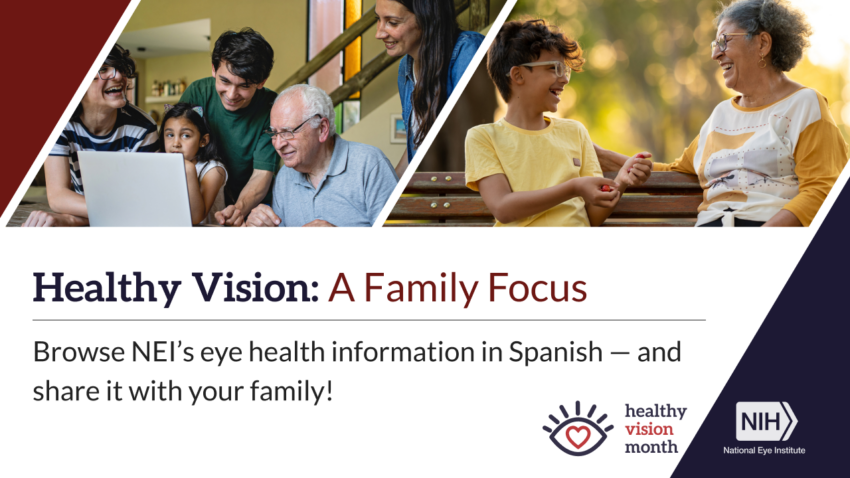
For this year’s Healthy Vision Month, the National Eye Institute (NEI) is highlighting the theme of “Healthy Vision: A Family Focus” (“Visión saludable: ojos sanos para su familia”). To ensure that everyone gets important eye health information, the NEI is sharing its helpful resources in Spanish – made through transcreation. Transcreation is the process of taking a concept in one language and completely recreating it in another language, adjusting the literal translation to align with the context of the intended audience. “A successfully transcreated message (either written or visual) evokes the same emotions and carries the same implications in the target language as it does in the source language, but in a way that resonates with the target audience,” ...