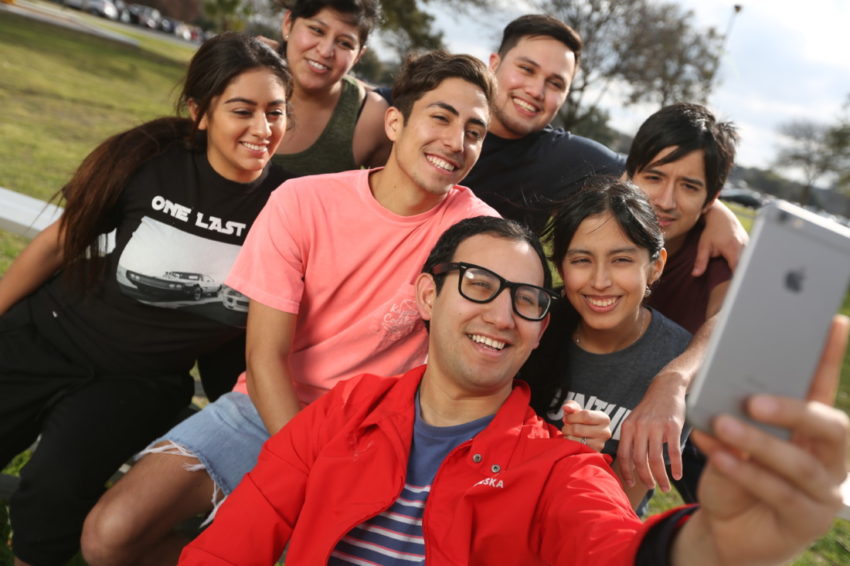
Dr. Amelie G. Ramirez of UT Health San Antonio today received a new $1.3 million grant to expand Quitxt, her bilingual service that sends texts with culturally and regionally tailored support to help South Texan young adults quit smoking. The new grant is from the Cancer Prevention Research Institute of Texas. The new funding will enhance the Quitxt service—currently designed to turns a user’s phone into a personal quit coach by providing texts and links to online support, educational content, music, and videos—with a new social media support component. Quitxt also will extend beyond South Texas to include English and Spanish speakers in rural counties, and Spanish speakers in urban areas of South, West and Central Texas. To quit smoking now, join Quitxt in English or ...
Two critical parts of every bus trip are the walk there and the walk back. Sadly, many streets are designed for cars, not families, making for some very sorry bus stops. Safe routes and safe bus stops are critical for people to access basic necessities, like schools, work, grocery stores, parks, healthcare, and other cultural and historical community resources. Streetsblog USA is calling attention to sorry bus stops during their 2017 Sorriest Bus Stop in America tournament. The goal is to motivate action from the streets and transit agencies who are responsible for designing and constructing the bus stops. You can enter the competition by submitting a photo of the sorriest bus stop with the exact location (preferably tagged in Google Maps) and a short description of what ...
BIG ANNOUNCEMENT! Dr. Amelie Ramirez, leader of Salud America! at UT Health San Antonio, is spearheading the Advancing the Science of Cancer in Latinos conference Feb. 21-23, 2018, in San Antonio. Latinos are expected to face a 142% rise in cancer in coming years. There is consistent evidence that higher amounts of body fat are associated with increased risks of a number of cancers, especially among Latinos. The inaugural Advancing the Science of Cancer in Latinos conference will unite health researchers, professionals, and leaders to tackle Latino cancer on many fronts. Register for the conference today! Submit an abstract for a poster presentation by Nov. 30, 2017. "We have seen substantial advancement in cancer prevention, screening, diagnosis and treatment over ...
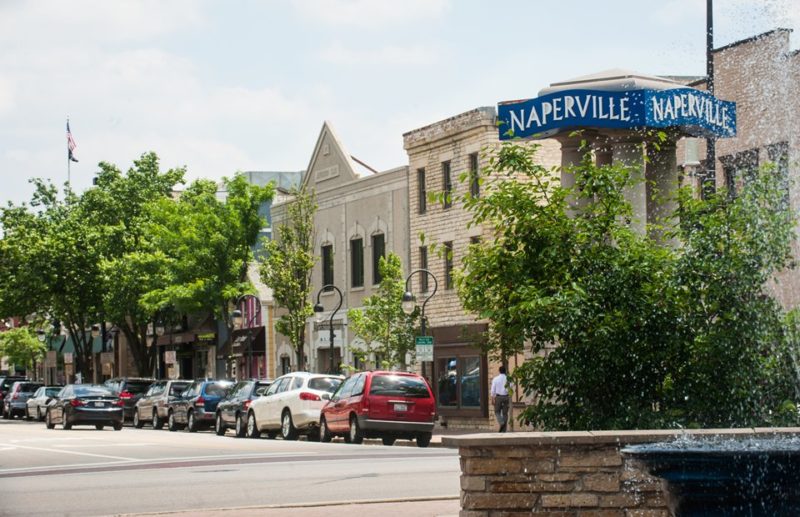
It’s a fact. Where you live greatly affects your health. Live near a major road? A power plant? Or a densely populated neighborhood? Are you close to a supermarket? All of these factors – and more – impact your health on a day-to-day basis. For many low-income and Latino families, live in areas that have been classified as food deserts, with little to no access to healthy food options, safe places for physical activity, or access to quality health care. Many of these highly segregated areas are high in crime and poverty. The data analyzation web site, Niche, has compiled a ranking of the “Safest Places to Live” for 2017. How does this list impact Latinos?
Most and Least Safe Cities in the U.S.
By studying FBI reports on numerous crime factors in cities (9,932 of them) ...
As temperatures blaze this summer, don't forget the water and the sunscreen! Latinos, who face a shockingly high risk of skin cancer, should wear head covering, sunglasses, and sunscreen to protect against the sun. What if you can't afford find or afford sunscreen, though? A cool new initiative in New York City (28.9% Latino population) offers free sunscreen dispensers in all five city boroughs, CityLab reports. “The mix of raising awareness about the problem of melanoma and providing a free preventive measure [sunscreen] is an easy step towards reducing skin cancer,” said Bright Guard CEO and Co-Founder Ryan Warren told CityLab. The Myth of Latinos and No Skin Cancer It is true that skin damage from the sun, which can lead to skin cancer, affects those with lighter ...
Latinos are the nation’s largest racial/ethnic minority group. They are expected to grow from 1 in 6 people today to 1 in 4 by 2035 and 1 in 3 by 2060. As their numbers continue to grow, the overall health of the Latino population is going to be vitally important to everyone in the United States. While Latinos made great strides in obtaining health care since the implementation of the Affordable Care Act, they are still the largest uninsured population in the country and face numerous barriers and health inequities. In the heavily Latino-populated city of Yuma, Arizona (58.07% Latino population) a new champion and partner has emerged with a goal of increasing Latino access to health care. The Mexican Consulate of Arizona, based in Yuma, has donated over $35,000 in funds to the ...
Guest Blog by Smokefree Apartments Los Angeles Today, due to lack of affordable housing, more Latinos are renting instead of owning homes, and make up nearly 20% of the renter population nationwide. Exposure to secondhand smoke (SHS) is occurring as more Latinos are moving into multi-unit housing. One out of three renters reporting SHS drifting into their homes, according to a recent UCLA study by the Center for Health Policy Research. Even more troubling: comparatively the Latino community is disproportionately exposed to SHS at work and at home. The same UCLA survey indicated 41% of Latino renters responding SHS was an issue in their apartments. Many are unaware SHS can drift into your apartment through vents, windows, and doors—even when closed—as well as pipes, ...
Latinos are already the nation’s largest racial and ethnic minority group. They are also the youngest and fastest growing. As communities change to reflect these new and evolving dynamics, Latino health is going to be critical to the country overall for generations to come. Despite their numbers, many Latinos face numerous inequities and barriers that keep them from obtaining the best healthcare possible. These include lack of access, lack of health insurance, language barriers, and cultural stigmas. “As the nation’s largest and fastest growing ethnic group, it's important that all Latinos have access to affordable healthcare,” said Jose Calderon, president of the Hispanic Federation in a news release. In an effort to remove some of these barriers, communities across the ...
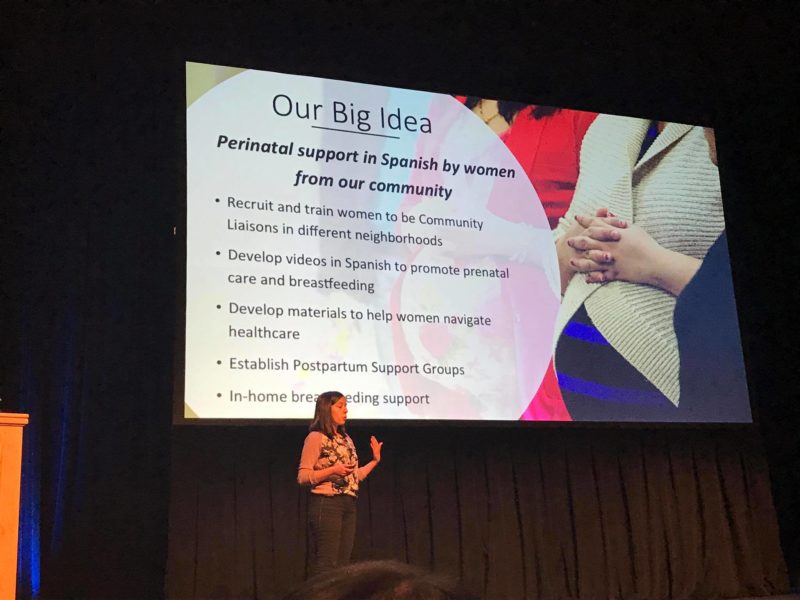
There are many barriers that exist that keep some Latinos from achieving the best health possible. Cultural stigmas, language barriers, and a lack of access are just some of these barriers. For Latinas, the problems can be even more frightening. Lack of insurance, lack of transportation, and even isolation are common problems that keep many Latinas from receiving medical treatment. At the Latino Community Center in Pittsburgh, PA (2.72% Latino population), has recognized this growing problem and has decided to do something about it, as reported by The Pittsburgh Post-Gazette. Using an idea based on the promotores de salud concept, the center has recruited and trained women to become “liaisons” in heavily Latino-populated neighborhoods in the city. These liaisons will ...