De acuerdo con los resultados de un estudio en EE.UU., la utilización de redes sociales ampliamente utilizadas por homosexuales, bisexuales y personas transgénero para promover la prueba del VIH puede incrementar el numero de pruebas, AIDSmap informa. Para el estudio, promotores de salud crearon perfiles públicos y publicaron información en dos foros sin intervención (Craigslist y Gay.com) e utilizaron intervención en dos comunidades en línea (Adam4Adam y BlackGayChat). "Nuestros resultados son sorprendentes porque no estábamos seguros de que los hombres y las personas transgénero aceptarían fácilmente información de las pruebas del VIH dentro de las redes sociales y que ellos utilizan", dijo el autor principal Scott D. Rodas de Wake Forest School of Medicine de ...
High Schools in St. Joseph, Missouri are now able to help students make the healthier choice the easier choice with the school's new water bottle stations. To help encourage students to chose water over sugary beverages, local health departments helped purchase the new water bottle filling fountains for various local schools and put up sugar shocker signs to help students know how much sugar is in various sugary beverages. The grant came through the Missouri Department of Health and Senior Services and then the new fountains were purchased by the City of St. Joseph Health Department to help encourage students to drink more water. Quick-fill water bottle stations that transform regular water fountains into bottle filling stations were put into various local schools including ...
Smoking has been associated with cancers and other chronic diseases, but a new study from Stanford School Medicine now links smoking with earning less and having a harder time finding a job, Science Daily reports. For the study, researchers studied job hunters in the San Francisco area between 2013 and 2015. About half were smokers and half were not. According to the study, after a year, twice as many nonsmokers had jobs. “Among smokers re-employed at one year, on average, their hourly income was $5 less relative to reemployed nonsmokers: $15.10 versus $20.27, a 25.5 percent difference," said Judith Prochaska of Stanford University and colleagues wrote in their report, published in the Journal of the American Medical Association's JAMA Internal Medicine. According to ...
Smoking has been associated with cancers and other chronic diseases, but a new study from Stanford School Medicine now links smoking with earning less and having a harder time finding a job, Science Daily reports. For the study, researchers studied job hunters in the San Francisco area between 2013 and 2015. About half were smokers and half were not. After a year, twice as many nonsmokers had jobs. “Among smokers re-employed at one year, on average, their hourly income was $5 less relative to reemployed nonsmokers: $15.10 versus $20.27, a 25.5 percent difference," said Judith Prochaska of Stanford University and colleagues wrote in their report, published in the Journal of the American Medical Association's JAMA Internal Medicine. According to researchers, the average cost ...
More and more people are making strides in obtaining health care coverage, partly in response to the passing of the Affordable Care Act. For Latinos, they are still the largest uninsured population in the country. All across the country, Latinos are the fastest growing population. This is no exception in the state of Nebraska. However, Latinos in Nebraska lag far behind in both medical care and health insurance coverage. Over 35% of all Latino adults between the ages of 18 and 64 do not have a personal physician. This has been shown to lead to a host of potentially serious medical conditions. “Lack of medical care. Latinos do not have access to health or mental health services, they don't have a medical home or primary care facility,” said Dr. Aida Maisonet Giachello, research ...
The U.S. Department of Health and Human Services (HHS) has recently offered resources on getting the most out of your healthcare coverage. Four essential tips can be utilized to successfully manage health insurance all year long. Pay your first month’s premium. You have to pay your premium each month to keep your health insurance benefits.
Turn in your paperwork. All of your information must be submitted for your coverage to take effect.
Update your personal and financial information. Make sure you take note of any “life changes” (change of income, change of household size, residence, etc.) as soon as they happen.
File your income taxes. If you had a tax credit in 2015, you must file your 2015 federal income tax return. Open enrollment for 2017 health plans begins on ...
Eating high sugar diets have been known to cause health risks for many years, but a new study based on nearly 3,200 U.S adults whose diet habits and cancer rates were tracked for more than 2o years, show that 565 people were diagnosed with cancer. In the study, results showed that women whose diets consisted of healthy carbohydrates like vegetables, fruit, whole grains and legumes, had a 67 percent less likelihood of developing breast cancer, compared to women who favored refined carbs like white bread, potatoes and white baked goods. The study also revealed that men who drank sugary juices or beverages were more than three times as likely to develop disease verses men who didn't drink sugary juices or beverages. The lead researcher, Ph.D. candidate in nutrition at New York ...
According to the U.S. Military Processing Exam, 62,000 new recruits to the military were turned away in joining the military due to their weight. Juan Cardenas, a member of the Marine Corps junior Reserve Officers' Training Corps (ROTC) at Northridge High School, offered fellow students a presentation on healthier foods, nutrition, calories, and label reading. Sixteen year old Cardenas said in a local article, that he wasn't always the strongest and fastest kid, but was always the bigger kid, but now he is the kid that can "hold his own" and compete. Cardenas knows that eating healthy and exercising has helped him and hopes to show that to his peers. Latino kids are at higher risks for diet-related dieseases like obesity and diabetes, and according to the the local article, ...
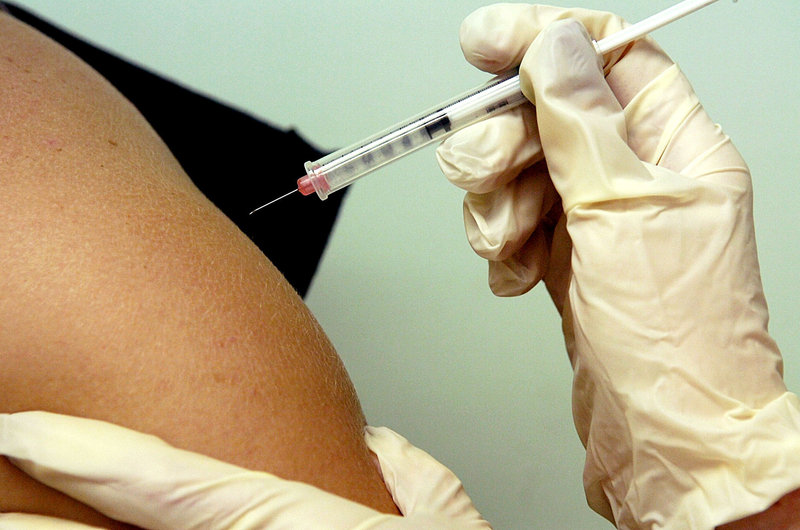
Data from the Centers for Disease Control and Prevention (CDC) suggests this year’s flu vaccine is one of the most effective in years, Pulse Headlines reports. According to the CDC, those “who got the vaccine were 59% less likely to get sick with influenza than people who didn’t.” "This means that getting a flu vaccine this season reduced the risk of having to go to the doctor because of flu by nearly 60 percent," said the CDC's Dr. Joseph Bresee. "It's good news and underscores the importance and the benefit of both annual and ongoing vaccination efforts this season." The CDC recommends annual vaccination for everyone 6 months or ...