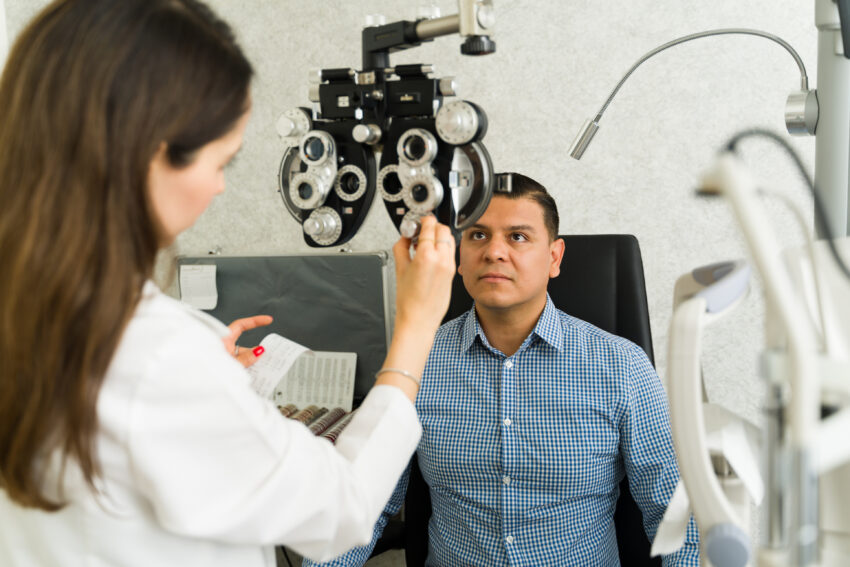
The month of May is Healthy Vision Month, a time to consider how our vision impacts our overall health and understand the importance of eye health. “When you make healthy lifestyle choices, like eating a balanced diet and staying physically active, you are also protecting your vision. In fact, there are several health conditions, like diabetes or high blood pressure, that can increase your risk of some eye diseases,” according to the National Eye Institute (NEI). With the help of NEI, let’s prioritize our eyes for Healthy Vision Month.
Get an Eye Exam
A comprehensive dilated eye exam helps check for eye diseases early on. “Even if your eyes feel healthy, you could have a problem and not know it. That’s because many eye diseases don’t have any symptoms or warning ...
Cuando envejecemos, nuestro cuerpo cambia. Los alimentos que nos gustan nos pueden caer mal, nos es más difícil movernos o podemos tener dificultad de recordar ciertas cosas. Aunque estos son síntomas comunes del envejecimiento, existen otros factores menos conocidos que contribuyen a cómo envejecemos y a qué tan rápido algunos de estos problemas aparecen. Un factor sorprendente es la sequía. Por ejemplo, un estudio reciente encontró que los factores estresantes del medio ambiente, como los periodos largos de sequía, pueden causar un deterioro cognitivo más rápido. Consulte nuestra nueva hoja informativa, ¿La Sequía Impacta la Salud Cerebral de los Latinos Mayores?, para ayudar a nuestros abuelos y abuelas a comprender cómo los ...
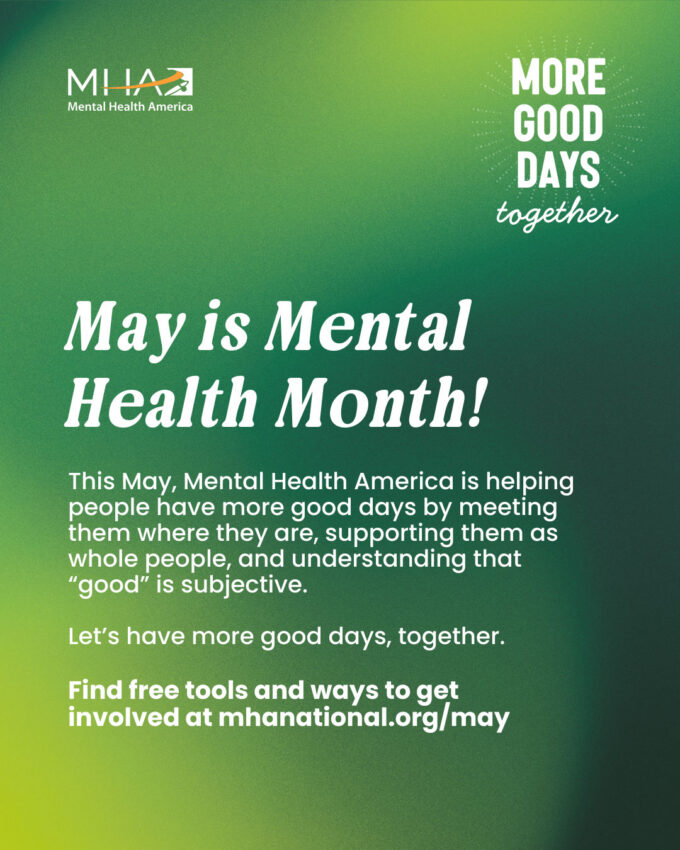
May is Mental Health Awareness Month, a time to spread awareness on the importance of mental health and promote helpful resources. With this in mind, Mental Health America created the Mental Health Month Action Guide. “There’s no right or wrong way to use this guide. Start where it feels helpful, skip what doesn’t fit, and come back as needed,” Mental Health America states. Let’s look closer into this guide and how it can help you and others.
Defining Good Days for Mental Health
The action guide aims to help users reflect on “good days.” “‘Good’ doesn’t have to mean happy or productive. It might mean calm, manageable, or something else,” according to Mental Health America. Through the action guide, Mental Health America provides several resources ...
Health care providers are the most common source of health information for Americans, who view them as more accurate than other sources, according to data from the Pew Research Center. Pew research shows that 85% of Americans say they get health information from health care providers at least sometimes. Next up, 66% of Americans learn from others going through similar health experiences, 36% get health information from social media, and 22% from AI chatbots. Let’s dig deeper into this data and learn more about how this can impact health of others.
Sources of Health Information
Pew Research Center surveyed 5,111 U.S. adults from Oct. 20 to 26, 2025, to better “understand how Americans make sense of today’s crowded health information environment in a moment in which the ...
May is recognized as Bladder Cancer Awareness Month, a time to learn about the impact of bladder cancer and spread awareness about bladder cancer resources. The American Cancer Society estimates about 84,530 new cases of bladder cancer. Bladder cancer is the fourth-most common cancer in men and 1 of 4 bladder cancer patients are women. Have you or someone in your family recently been diagnosed and aren’t sure where to start? Check out the following helpful resources from the Bladder Cancer Advocacy Network (BCAN). 1. Bladder Cancer Support Line (Bilingual) BCAN’s Bladder Cancer Support Line offers support by connecting patients with professional oncology social workers. “The call center’s staff will address the emotional, practical and informational ...
When we get older, our body changes.
The foods we like don’t respond quite the same way, it may be harder to get around, or it might even be difficult to recall certain memories.
While these are all symptoms of aging, there are also lesser-known factors that contribute to how we age and how quickly some of these issues are brought on.
One surprising factor is drought.
For instance, a recent study has found that environmental stressors like long periods of drought can cause faster cognitive decline.
Check out our new fact sheet, Does Drought Impact Brain Health in Older Latinos?, to help our abuelos and abuelas understand how environmental stressors can impact their brain health.
This fact sheet was created by Dr. Amelie G. Ramirez of Salud America! and UT Health San Antonio based ...
Healthcare workers are constantly on the go. But it’s important for them to have access to infection control training and information on issues like whooping cough. With this in mind, the CDC’s Project Firstline developed Infection Control Micro-Learns – a series of guided discussions on infection control that can be easily incorporated into team meetings facilitated by an experienced team member with infection control expertise. These short, easy-to-understand learning opportunities can help healthcare workers recognize and minimize infection control risks to protect themselves, coworkers, and patients from infectious diseases. Let’s explore the topic of Whooping Cough (Pertussis).
What Does Whooping Cough (Pertussis) Look Like?
Whooping cough, formally known as ...
You can share your voice to influence health by filling out the 2026 Community Health Needs Assessment (CHNA) from the South Texas Area Health Education Center, which is headquartered at UT Health San Antonio. The CHNA is a brief, anonymous survey that asks South Texans to share their experiences, needs, and priorities related to health and wellbeing. “Your input helps shape health strategies, services, and partnerships in our communities,” according to the South Texas AHEC program. take the community survey!
Why is the CHNA Survey Important for South Texas?
The CHNA survey can help healthcare professionals better understand what is happening in the communities by gathering information about several factors: health concerns
access to care and services
social ...
The US has an aging population, as the number of US adults aged 65 and older is set to increase from 58 million to 82 million by 2050, according to the Census Bureau. With aging comes many challenges, including cognitive decline. For example, as you age, your mind may take longer to recall names or words. Sometimes certain parts of the brain shrink, affecting memory and overall function. That’s one of the reasons that the Demography & Economics of Aging Coordinating Center (DECC) was created by the National Institute on Aging (NIA). The DECC is headquarters for 18 centers, including the San Antonio CAPAS Program at UT Health San Antonio, to help advance research on aging and Alzheimer’s disease. Let’s meet the centers and how they are working ...