by
by 
Share On Social!
Just north of the Mexico-California border, the San Ysidro community is where nearly 1 in 5 people enter the U.S. by land to work, shop, learn, and see family.
The result is a dynamic cultural exchange and a vibrant binational economic hub.
Yet amid the hustle and bustle, environmental change has crept into this predominantly Latino community, adding pollution from heavy traffic, sewage contamination, and more.
That is why community members came together to protect and educate their neighbors, leading to accomplishments in environmental justice that are chronicled in English and Spanish “story maps” by Community Voices for Action, a storytelling project from the AAMC Center for Health Justice.
Let’s explore how community power led to a big change.
What Is Environmental Justice?
The CDC defines environmental justice as the fair treatment and meaningful involvement of all people, regardless of differences, to develop, implement, and enforce environmental laws, regulations, and policies.
“This goal will be achieved when everyone enjoys the same degree of protection from environmental and health hazards, and equal access to the decision-making process to live, learn, and work in a healthy environment,” according to the CDC.
A lack of environmental justice can be caused by pollution, poor environmental conditions, pre-existing health conditions, access to quality healthcare, and more.
Many Latino communities face these issues, which are worsened by superfund sites and the impact of climate change.
This is the situation for the San Ysidro neighborhood in California,
“As a result [of a lack of environmental justice], the community’s access to clean air, parks, beaches, and other community amenities is different from that of residents in wealthier San Diego neighborhoods,” according to the AAMC Center For Health Justice
Collaboration with Casa Familiar for Clean Air
Seeing the need for assistance when it comes to environmental justice, the San Diego organization Casa Familiar stepped in to lend support.
“Casa has evolved into a community-development organization focused on improving quality of life in San Ysidro for future generations. The organization recognizes that environmental health and community well-being are deeply connected,” according to the AAMC Center For Health Justice.
To better understand how pollution from border traffic and industrial sources affects community health, Casa Familiar teamed up with local universities to conduct research and study air quality.
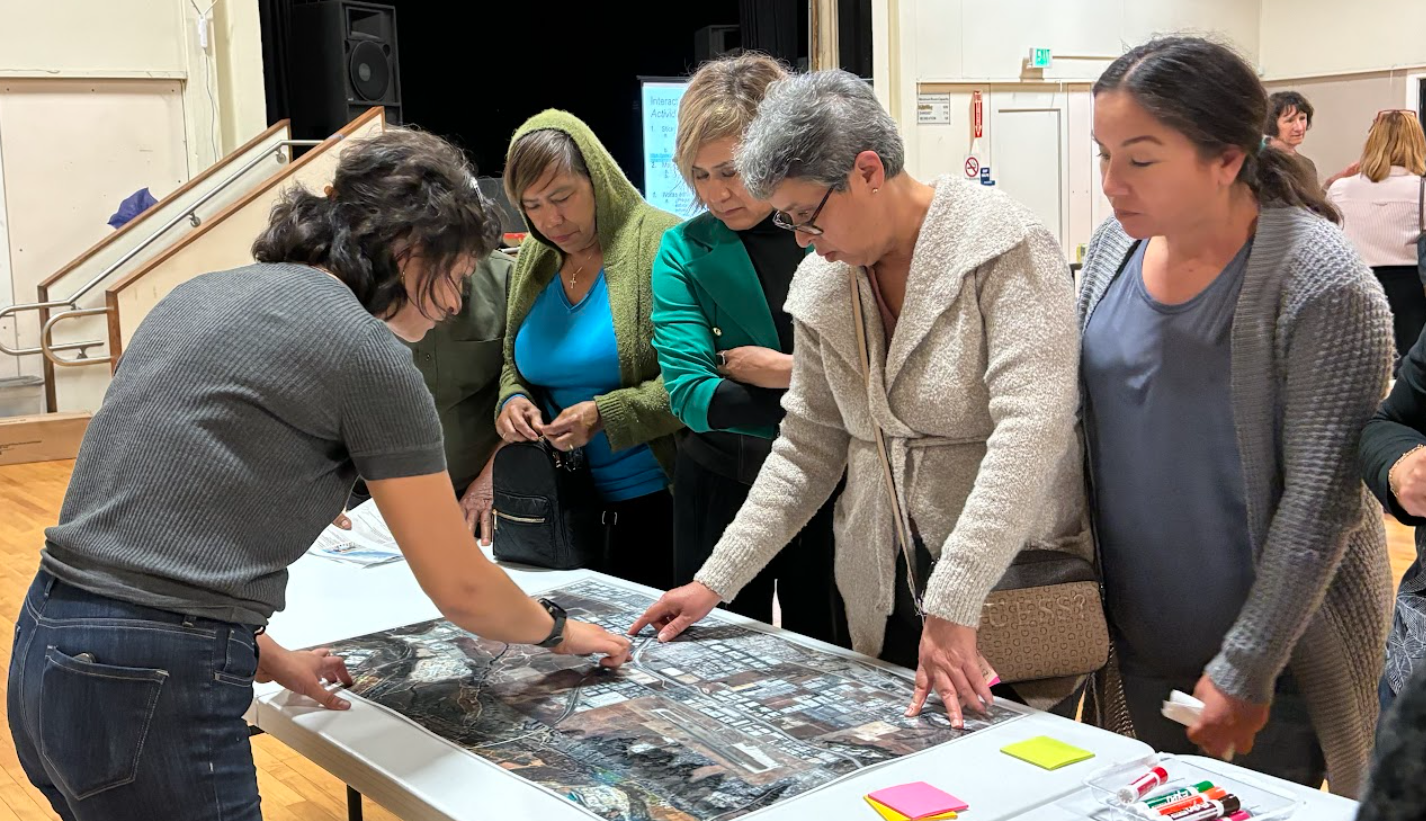
Additionally, important work was done by Promotoras (community health workers) who lead outreach, informed their community, and assisted neighbors with better understanding how environmental conditions shape their lives.
Leading the charge, the Promotoras led wellness programs and built relationships with the community through educational gatherings, promoting community involvement, and meeting residents where they are to shape and build community trust.
“I love my job. I love to help my community. Whatever I can do, even something small such as giving someone a little information or a flyer, if they say that it helped them, that’s enough,” said Ana, a Promotora in the San Ysidro neighborhood.
The Road to Environmental Justice and Cleaner Air in San Ysidro
Pollution in San Ysidro comes from many different places.
Elevated rates of asthma and reduced respiratory function from the traffic burden, industrial activity in nearby Otay Mesa, and environmental contamination from the Tijuana River are just a few of the environmental issues impacting the community.
“Many reported headaches and allergies limited their outdoor activities and were deeply worried about the impact of prolonged exposure on children’s health,” the AAMC Center For Health Justice reports.
This ultimately led to the promatoras and other participants collaborating with California’s Community Air Protection Program (CAPP), established under Assembly Bill 617 (AB 617).
CAPP is a statewide initiative to protect the public from the harmful effects of air pollution. It helps develop programs and actions to fight climate change.
Through CAPP, residents, community organizations, and local air districts can come together to develop community air-monitoring plans and community emissions-reduction programs.
“With guidance from Casa, Wendy (a Promotora) and other cohort members brought their lived experiences into city council meetings, community workshops, and regional forums — advocating for solutions to the air-quality challenges in San Ysidro,” according to the AAMC Center For Health Justice.
Environmental Results Through Dedication and Teamwork
Through all the hard work of the community cohort, the California Air Resources Board officially designated the International Border Community Steering Committee.
“This designation reflected the sustained effort of residents, community organizations, and regional partners to ensure that community perspectives shaped the process from the start,” according
to the AAMC Center For Health Justice.
Additional wins from the collaboration include:
- San Ysidro Civic Center, which served as a trusted gathering place where residents come together to learn, connect, and engage in the programs created by Casa Familiar. “Led by volunteer Promotoras, alongside their neighbors, the classes are spaces for relationship-building, trust, and belonging,” according to the AAMC Center For Health Justice.
- Nola Apartments, a former hotel purchased by Casa and converted into affordable housing for families and older adults. In 2025, Casa launched a home air filter distribution initiative in the community, prioritizing Nola due to its close connection to community programs.
- La Semilla is currently being developed with the goal of being a community-centered learning space focused on environmental justice and climate resilience. “La Semilla represents a shared vision for San Ysidro — one rooted in hope for neighborhoods where people can live, work, and play in healthier, more sustainable conditions,” the AAMC Center For Health Justice
Accounts from Promatoras, interns, and complete story map of the project can be accessed here.
Read the full story in English and Spanish.
Exploring the Health of Your Community
Seeing examples of communities come together to better the health of their neighbors can be inspiring.
You can take the first step in doing the same with the Salud America! Health Report Card.
Enter your county name and get auto-generated local data with interactive maps and comparative gauges on several health indicators. This can help you visualize and explore local issues in education, housing, transportation, food, health, and more.
See how your county stacks up compared to the rest of your state and nation.
Then email the Report Card to local leaders to raise awareness, include the data in a presentation or grant proposal, or share it on social media to drive healthy change in your community!
By The Numbers
50
percent
of big U.S cities have a local board of health