by
by 
Share On Social!
The USDA’s newest Dietary Guidelines for Americans, 2025–2030 focus on eating more real foods and less highly processed ones.
The guidelines, released on Jan. 7, 2026, also contain a refreshed food pyramid.
Let’s look at 10 recommendations in the new guidelines and how it can impact everything from and how it can impact everything from how to shop at the grocery store to how you cook at home.
1. Eat Real Food
The new dietary guidelines have a simple foundation: eat real food.
That means more diets built on whole, nutrient-dense foods like protein, dairy, vegetables, fruits, healthy fats, and whole grains.
Pair that with a “dramatic reduction” in highly processed foods laden with refined carbohydrates, added sugars, excess sodium, unhealthy fats, and chemical additives.
“We are putting real food back at the center of the American diet,” write Robert F. Kennedy, Jr., secretary of the U.S. Department of Health and Human Services, and Brooke L. Rollins, secretary of the USDA, in the opening statement of the new guidelines.
“Real food that nourishes the body. Real food that restores health. Real food that fuels energy and encourages movement and exercise. Real food that builds strength.”
2. Eat the Right Amount for You
The guidelines highlight that caloric intake depends on one’s age, sex, height and level of physical activity.
“Pay attention to portion sizes, particularly for foods and beverages higher in calories,” according to the guidelines.
The USDA also uplifts the importance of hydration, with a recommendation of choosing water and unsweetened beverages over sugary drinks.
3. Prioritize Protein at Every Meal
The dietary guidelines also prioritize high-quality, nutrient-dense protein.
Protein serving goals include 1.2 – 1.6 grams of protein per kilogram of body weight per day, adjusting as needed based on your individual caloric requirements.
“Consume a variety of protein foods from animal sources, including eggs, poultry, seafood, and red meat, as well as a variety of plant-sourced protein foods, including beans, peas, lentils, legumes, nuts, seeds, and soy,” the guidelines state.
Previously, scientists proposed removing beans, peas, and lentils from the “vegetable” category, leave them solely in the “protein” category, and list them as prioritized proteins.
However, research shows that consumption of red meat could be less beneficial.
“According to the scientific report, evidence indicates that cardiovascular disease risk can decrease when reducing butter, processed and unprocessed red meat, and dairy when replaced or substituted with a wide range of plant-based food sources,” according to a previous Salud America! resources.
Additionally, it is recommended to consume meat with no or limited added sugars, refined carbohydrates or starches, or chemical additives, noting that flavoring with salt, spices, and herbs are preferred.
Some health groups such as the American Heart Association have cited concern with parts of the recommendation.
“We are concerned that recommendations regarding salt seasoning and red meat consumption could inadvertently lead consumers to exceed recommended limits for sodium and saturated fats, which are primary drivers of cardiovascular disease,” according to the American Heart Association.
4. Consume Full-Fat Dairy with No Added Sugars
Research shows that about 90% of Americans do not get enough dairy.
Dairy can provide many health benefits and nutrients including:
- Calcium
- Magnesium
- Zinc
- Potassium
- Vitamins A, D, and B12
Dairy serving goals as recommended by the guidelines include 3 servings per day as part of a 2,000-calorie dietary pattern, adjusting as needed based on someone’s individual caloric requirements.
5. Eat Vegetables & Fruits Throughout the Day
Recommendations on fruits and vegetables include:

- Eating a variety of colorful, nutrient-dense vegetables and fruits.
- Eating whole vegetables and fruits in their original form.
- Frozen, dried, or canned vegetables or fruits with no or very limited added sugars can also be good options.
- 100% fruit or vegetable juice should be consumed in limited portions or diluted with water.
The guidelines encourage washing fruits and vegetables thoroughly prior to eating raw or cooking and if preferred, flavor them with salt, spices, and herbs.
Serving goals for vegetables and fruit consist of a 2,000-calorie dietary pattern, adjusting as needed based on a person’s individual caloric requirements with 3 servings of vegetables per day and 2 servings of fruit per day.
6. Focus on Whole Grains
When it comes to whole grains, the dietary guidelines call for significantly reducing the consumption of highly processed, refined carbohydrates.
This can include food like white bread, ready-to-eat or packaged breakfast options, flour tortillas, and crackers.
Health benefits from fiber-rich whole grains can bring improved digestions and reduced risk of chronic diseases like type 2 diabetes, among others.
“They are packed with essential nutrients, fiber, and antioxidants that are important for overall health and wellness,” according to the National CACFP Association.
Whole grains serving goals include 2–4 servings per day, adjusting as needed based on one’s individual caloric requirements.
7. Limit Alcoholic Beverages
Consuming less alcohol for better overall health is recommended by the guidelines.
The guidelines also encourage certain groups to avoid alcohol such as pregnant women, people who are recovering from alcohol use disorder or are unable to control the amount they drink, and people taking medications or with medical conditions.
“For those with a family history of alcoholism, be mindful of alcohol consumption and associated addictive behaviors,” the guidelines state.
The overconsumption of alcohol can bring about many harsh consequences.
Limiting alcohol can bring about improvements in factors like weight loss, blood pressure, and liver function, according to UT Southwestern Medical Center.
8. Incorporate Healthy Fats
Recommendations call for prioritizing oils with essential fatty acids, such as olive oil, butter or beef tallow when cooking with or adding fats to meals.
“Healthy fats are plentiful in many whole foods, such as meats, poultry, eggs, omega-3–rich seafood, nuts, seeds, full-fat dairy, olives, and avocados,” the dietary guidelines state.
“In general, saturated fat consumption should not exceed 10% of total daily calories.”
The guidelines highlight that significantly limiting highly processed foods will help meet the 10% goal. However, high-quality research is needed to determine which types of dietary fats best support long-term health.
“The new guidelines also simultaneously promote foods such as red meat, full-fat dairy, butter, and beef tallow,” according to the Stanford Prevention Research Center. “Following these food-based recommendations would make it difficult, if not impossible, for many Americans to remain below the recommended upper limit for saturated fat threshold, making these guidelines internally inconsistent.”
9. Limit Highly Processed Foods, Added Sugars, & Artificial Additives
The guidelines encourage nutrient-dense foods and home-prepared meals while avoiding highly processed packaged, prepared, ready-to-eat, or other foods that are salty or sweet.
“Limit foods and beverages that include artificial flavors, petroleum-based dyes, artificial preservatives, and low-calorie non-nutritive sweeteners,” according to the guidelines.
Sugar-sweetened beverages, such as sodas, fruit drinks, and energy drinks should be avoided.
“When selecting snack foods, added sugar limits should follow FDA “Healthy” claim limits,” the guidelines state.
The dietary guidelines encourage shoppers to look for ingredients that include the word “sugar” or “syrup” or end in “-ose and different names like including high-fructose corn syrup, agave syrup, corn syrup, rice syrup, fructose among others to when trying to identify added sugars.
10. The New Food Pyramid
A fresh look to the food pyramid was also published alongside the Dietary Guidelines for Americans, 2025–2030, known as The New Pyramid.
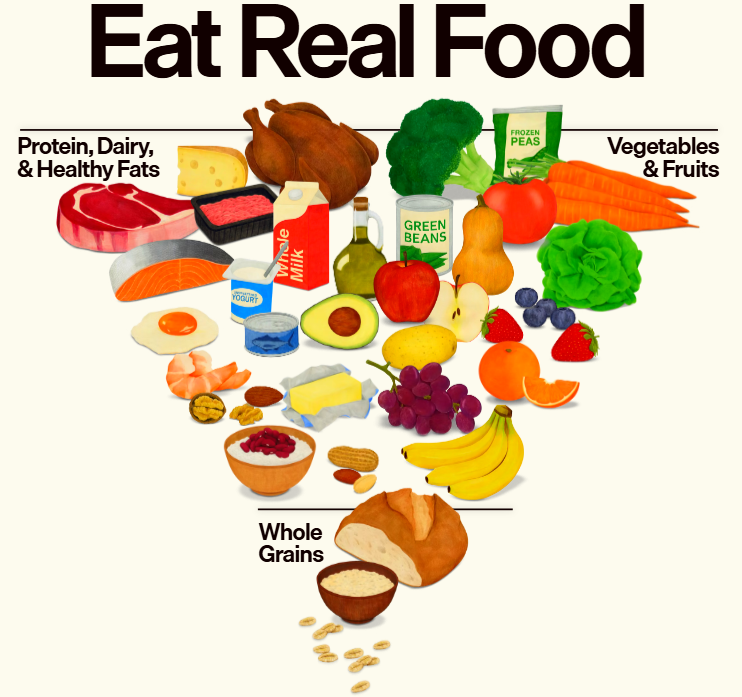
“The New Pyramid is a simple guide designed to help Americans eat real, whole foods more consistently. It prioritizes nutrient-dense food and reduces reliance on highly processed products, using modern nutrition science to support everyday health,” according to the USDA.
The 3 categories that make up The New Pyramid include:
- Protein, Dairy, & Healthy Fats
- Vegetables & Fruits
- Whole Grains
While the pyramid does support protein and vegetables, researchers note contradictions between the guidelines and The New Pyramid.
“The mixed messages surrounding saturated-fat-rich foods such as red meat, butter, and beef tallow may lead to confusion and potentially higher intake of saturated fat and increased LDL cholesterol and cardiovascular risk,” said Frank Hu, professor of nutrition and epidemiology and chair of the Department of Nutrition at the Harvard T.H. Chan School of Public Health.
Additional information about The New Pyramid can be accessed here.
Having Access to Healthy Food
While it is important to ensure families and communities are buying, cooking, and eating healthy, good quality food, it’s also crucial to consider their accessibility to these foods.
“As the administration moves forward in implementing these guidelines, it will be critical that people have the resources needed to afford healthy food, and also for programs such as school meals to have the additional federal funding and support needed to implement the new guidelines. The Trump administration has signaled interest in using the guidelines to shape how the Supplemental Nutrition Assistance Program, also known as SNAP, operates,” said Crystal FitzSimons, president of FRAC.
For many people in South Texas, including Latinos, having access to healthy, nutritious foods can be a challenge, with many living food deserts.
With many children and families experiencing food insecurity, assistance programs like SNAP and WIC are important resources.
How Healthy Is Your Area?
Find out by downloading a Salud America! Health Report Card for your town!
Enter your county name and get auto-generated local data with interactive maps and comparative gauges on several health indicators. This can help you visualize and explore local issues in education, housing, transportation, food, health, and more.
See how your county stacks up compared to the rest of your state and nation.
Then email the Report Card to local leaders to raise awareness, include the data in a presentation or grant proposal, or share it on social media to drive healthy change in your community!
By The Numbers
1
Supermarket
for every Latino neighborhood, compared to 3 for every non-Latino neighborhood