by
by 
Share On Social!
Researchers are working hard to find new ways to treat triple-negative breast cancer (TNBC), an aggressive disease.
However, many Latina and Hispanic women face challenges in TNBC diagnosis, treatment access, and supportive care. Patients and caregivers from these communities often navigate complex health systems and deal with non-medical drivers of health.
To address these issues and apply findings to all populations, Medlive, a digital health education platform, with the support of Gilead Sciences, Inc., partnered with Salud America! and Surviving Breast Cancer.org to design an educational initiative to align TNBC learning experiences for clinicians, patients, and caregivers.
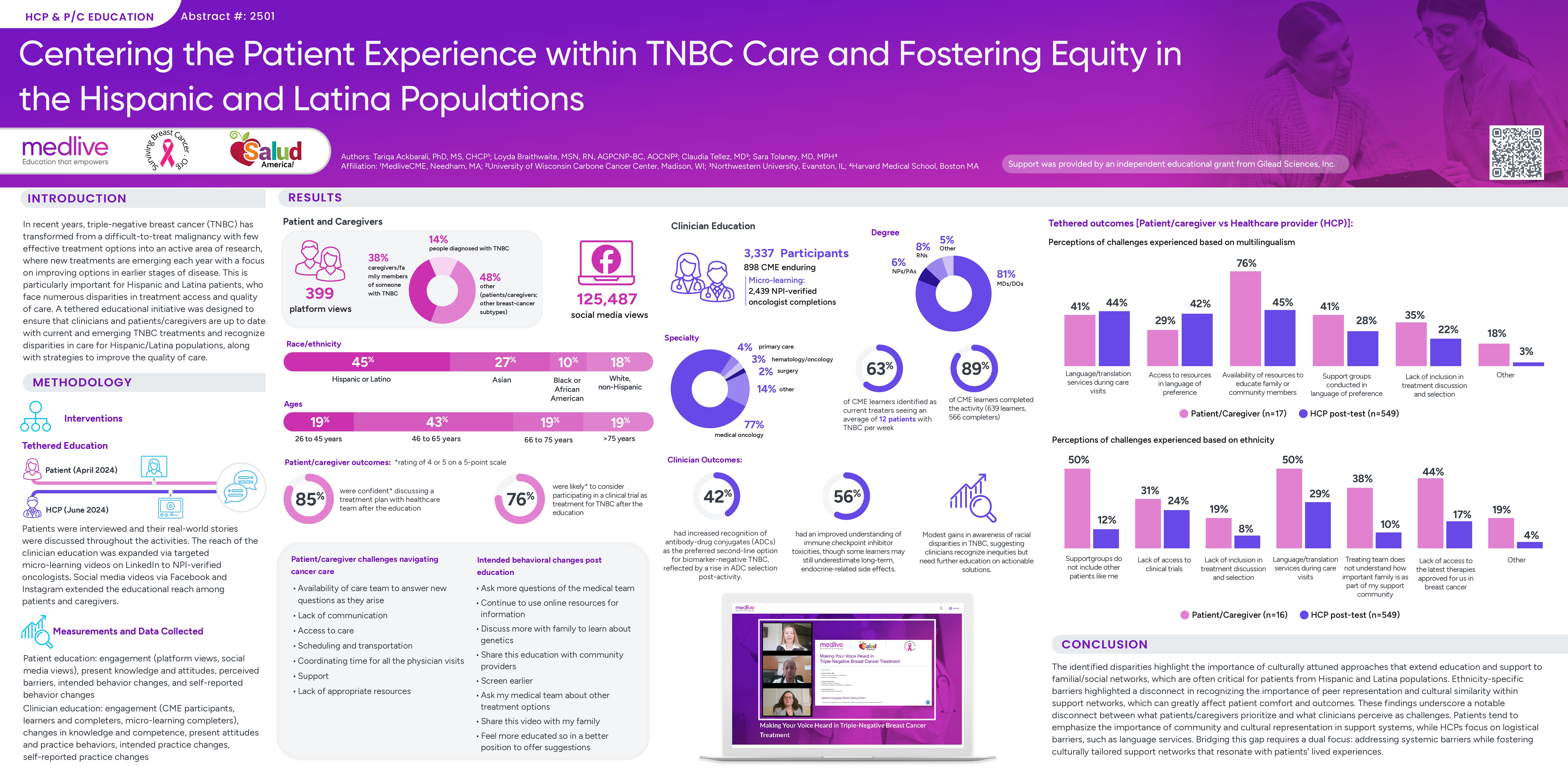 Medlive published their results in an abstract for the 2025 San Antonio Breast Cancer Symposium (SABCS).
“The goal was to improve awareness of current and emerging TNBC treatments, illuminate disparities affecting Hispanic and Latina patients, and provide actionable strategies to strengthen communication and shared decision-making,” according to Medlive.
What Did the TNBC Educational Initiative Seek to Do?
The Medlive effort featured two online events on triple-negative breast cancer (TNBC):
- A patient education event showed real-world stories of navigating cancer care. Salud America! shared the event frequently on its website, social media, and email.
- A clinician education event, including micro-learning videos, showcased therapeutic innovation, toxicity management, and more.
“[This] ensured that both patients/caregivers and clinicians received complementary guidance to strengthen communication, improve trust, and support … treatment pathways,” according to Medlive.
What Did the TNBC Educational Initiative Achieve?
In all, 3,337 clinicians and caregivers participated in Medlive’s online events on triple-negative breast cancer (TNBC).
According to Medlive, the program resulted in increased clinical readiness.
“Post-education, 56% of clinicians demonstrated improved understanding of immune checkpoint inhibitor toxicities, and 42% recognized antibody-drug conjugates (ADCs) as preferred second-line options for biomarker-negative TNBC,” according to results.
The program also resulted in behavioral changes.
“After the program, patients intended to ask more questions, discuss genetic risks with family, and explore clinical trial options,” according to Medlive. “Clinicians reported increased awareness of [issues] and a need for more actionable strategies to support Hispanic and Latina patients.“
“Findings revealed a significant gap between what Hispanic and Latina patients value in their care experience and what clinicians perceive as barriers. Patients prioritized cultural representation, peer support, and family involvement, while clinicians emphasized structural and language-related challenges.“
How Can You Support Patients, Communities?
To promote healthier people, we need healthier communities.
How is the state of health in your community?
Find out by downloading a Salud America! Health Report Card for your town!
Enter your county name and get auto-generated local data with interactive maps and comparative gauges on several health indicators. This can help you visualize and explore local issues in education, housing, transportation, food, health, and more.
See how your county stacks up compared to the rest of your state and nation.
Then email the Report Card to local leaders to raise awareness, include the data in a presentation or grant proposal, or share it on social media to drive healthy change in your community!
Editor’s Note: Main image from Medlive.
By The Numbers
142
Percent
Expected rise in Latino cancer cases in coming years