by
by Share On Social!
Arnoldo Rodriguez prides himself in keeping a professional appearance.
Whether it be in his position as an educator, school administrator, executive, or in educational sales, the McAllen, Texas, resident always dressed to impress.
That’s why Arnoldo knew when he put on a crisp suit and the once-clinging fabric hung loosely at his arms, he knew something wasn’t quite right.
Around this time, he would also get excessively tired despite his penchant for exercise.
Everything pointed in one direction, and his swollen lymph nodes confirmed the worst ¾ he had cancer.
Months of unsuccessful lymphoma treatment led him to participate in a clinical trial and it was that decision that led him on the path to patient leadership.
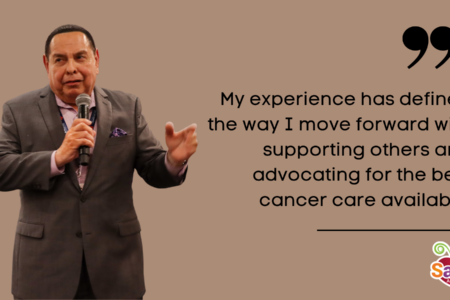
“The clinical trial was my lifeline,” he told Salud America! “My experience has defined the way I move forward with supporting others and advocating for the best cancer care available.”
Arnoldo’s First Fight with Cancer
Lymphoma wasn’t Arnoldo’s first brush with cancer.
His introduction to cancer came many years earlier in 2010 when he was diagnosed with prostate cancer.
During his annual checkup, Arnoldo’s doctor noticed that his protein levels were abnormally high and referred him to an oncologist, who performed a biopsy.
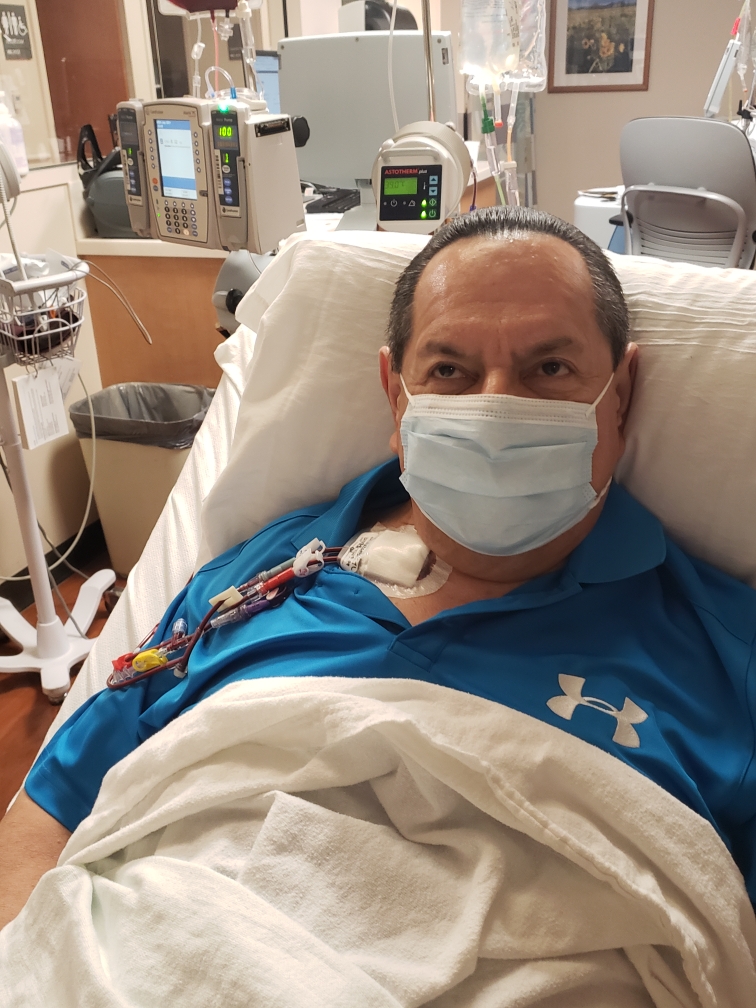
When Arnoldo got called in to review the results of the biopsy, he was told pointblank that he had cancer.
“He just said, ‘Well, you got cancer,’ just like that. And that really hit me,” Arnoldo said. “It was like, ‘Oh my God. This guy has no bedside manner whatsoever.’ And he said, ‘Now we’ll just do some radiation. You’ll be fine,’ just like that.”
The experience left a bad taste in his mouth. He searched for answers with other doctors.
“I remember I went to one oncologist, and he just looked at me like, ‘What happened?’ Like I caused it. What happened? I said, ‘You can tell I have prostate cancer,’ but he was looking at me like it was my fault,” he said.
Arnoldo knew he would have to dig a little deeper to find quality cancer care.
“It became very evident to me that my doctors were not being advocates for my treatment,” he recalled.
That’s when he found UT MD Anderson, one of the premiere cancer care centers in Texas.
Through UT MD Anderson, Arnoldo found a provider willing to explore cutting edge treatments and therapies.
Arnoldo flew out with his wife to undergo a prostatectomy, which involves removing part of the prostate gland.
He spent one night in the hospital and a week in a hotel recovering nearby before flying back to McAllen.
For nearly 10 years, Arnoldo was cancer-free. Then 2019 hit.
Arnoldo’s Lymphoma Battle
Having experienced cancer years ago, Arnoldo felt better equipped to handle his journey being diagnosed with lymphoma in 2019.
But battling lymphoma would test everything he knew about cancer treatment and care.
Arnoldo wasted no time and went straight to UT MD Anderson.
After being diagnosed with stage 3 follicular lymphoma, the providers at UT MD Anderson went over his treatment options and, in the end, offered him a clinical trial.
“They were trying the best of what had worked with some new model treatments,” he said.
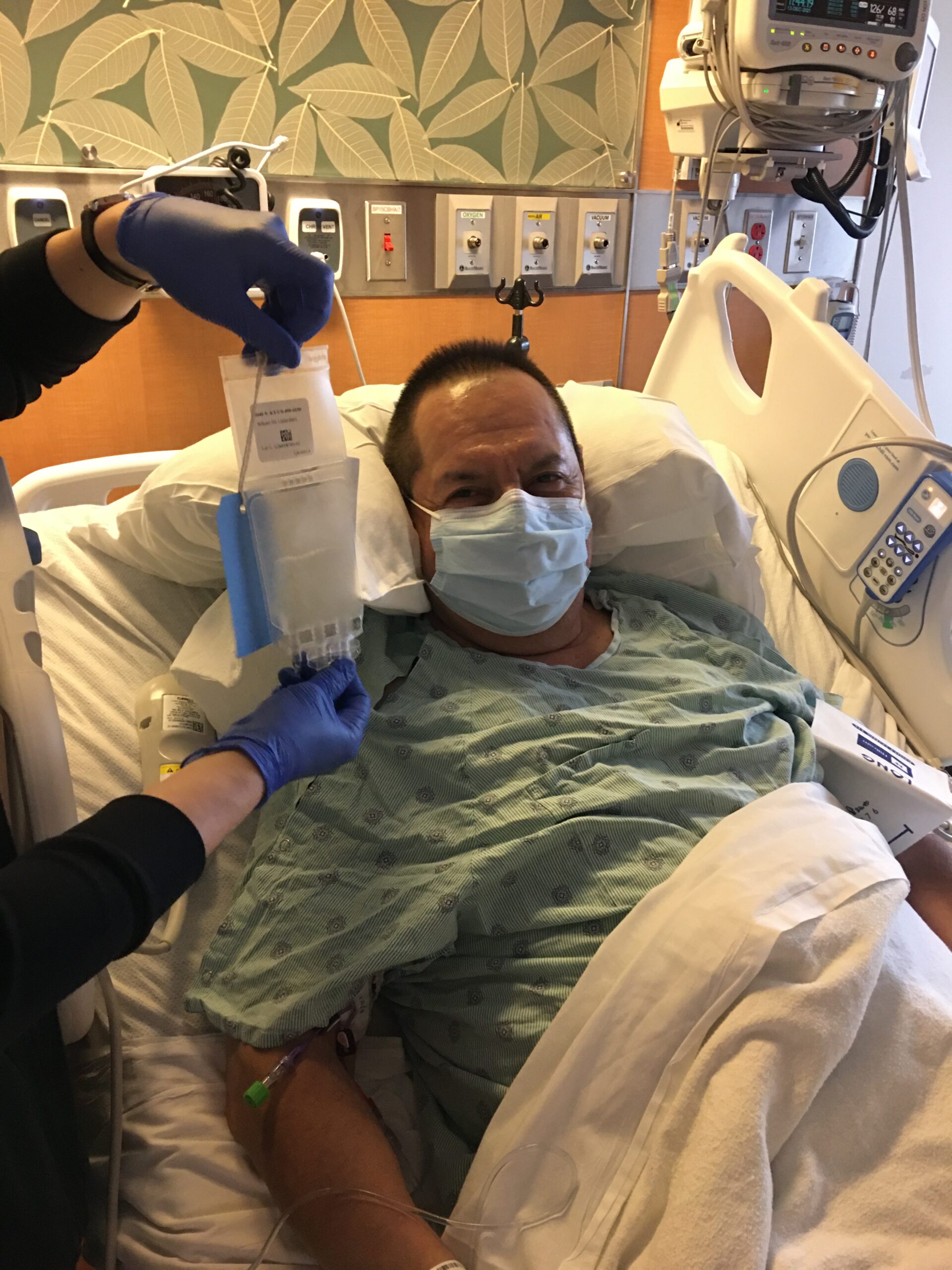
The clinical trial involved using proven strategies while testing new medications to treat the cancer.
But Arnoldo would not be going through this clinical trial alone.
Around the same time Arnoldo was diagnosed with lymphoma, so was his wife.
He and his wife, who was diagnosed at an early stage 1, participated in the treatment together.
The treatment proved successful for his wife.
Arnoldo wasn’t as fortunate in his reaction to the treatment.
The clinical trial severely weakened his immune system and Arnoldo’s health took a turn for the worse when he contracted pneumonia and pre-pandemic 2019 novel coronavirus.
These two illnesses hit Arnoldo like a freight train, and he was rushed to the emergency room at UT MD Anderson.
As a result of the pneumonia accompanied by the effects of the treatment, Arnoldo’s abdomen was filling with fluid.
The treatment for this was to drill a whole on both sides of the abdomen and drain the fluid daily.
“That was a painful experience, because you drain and you can’t drain too much because your lungs will collapse. But I could feel it, and when I felt that, it was so painful,” he recalled.
Arnoldo persevered and recovered from both the illness and the disease.
He was in remission for almost a year when he relapsed.
“We know that cancer stays there. There’s no cure. It’s under control, and that’s what we call remission. There’s no evidence of the disease, but we know it’s in there … It’s in your body, just hasn’t been activated,” he explained.
A few months later, Arnoldo suffered another relapse and underwent two different chemotherapies to treat the cancer only to have it return later that year.
Arnoldo and Participating in a Clinical Trial
After the third relapse, Arnoldo’s care team knew they needed to take a different approach.
They suggested a drug.
It was a drug his insurance refused to cover, and the out-of-pocket cost would run him $10,000 a month.
The pharmaceutical company offered to sell it for $2,000 a month but Arnoldo wouldn’t have it.
“I did not want to do that. I told him, ‘You’re a research hospital. There’s got to be something else’ … It was more a matter of principle for me than anything else. I could have paid that, it wasn’t like I didn’t have the resources for it, it was just not everybody does.”
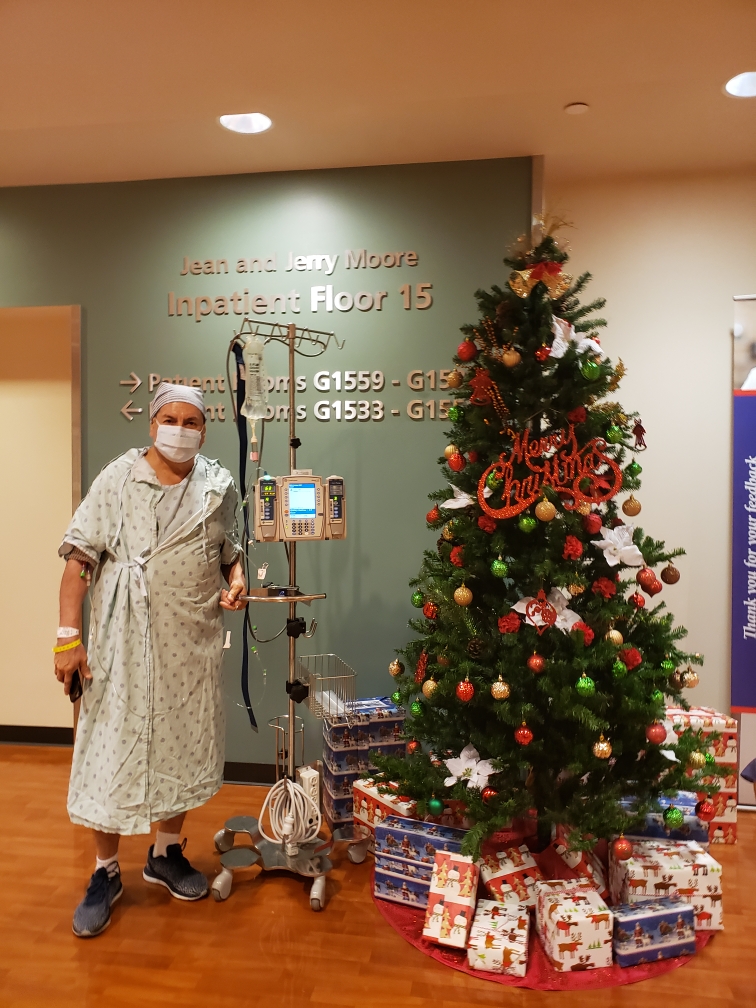 That’s when his doctor told him about a new CAR T-cell therapy clinical trial they were about to launch.
It turns out Arnoldo was the perfect candidate due to his relapses and the severity of the disease.
Not even two weeks later Arnoldo got a call to let him know they had cleared him for the trial.
Arnoldo had to undergo a series of tests before he could start the treatment, which would require him to stay within a two-mile radius from the hospital in case there were complications.
Being from out of town meant Arnoldo would need to find temporary accommodations for the duration of the treatment, which was six to eight weeks.
He was referred to organizations with programs that could set him up with lodgings, but the wait list put him in a place six months away, which would postpone potentially life-saving treatment.
Prolonging treatment was not an option he could afford, and he was able to rent a place not even a mile away from the hospital.
However, not everyone can afford to make that choice.
Finding lodgings while undergoing treatment continues to keep many from participating in clinical trials.
Whether the out-of-pocket costs or being placed on a wait list, many can’t afford to not take the gamble of participating in a clinical trial that could be the difference between life and death.
“The demand is so great that it’s hard to find an opening. So, it’s like, you either schedule it six months from now when hopefully there’s an opening, or you die,” he said.
Luckily, Arnoldo suffered no serious side effects.
Arnoldo completed the treatment regimen and was declared no evidence of disease.
That was four years ago.
“[Clinical trials] are not a last resort; it’s a lifeline,” he said. “Do the clinical trial. The evidence right now is showing that perhaps the clinical trial could become the standard of care for lymphoma patients.”
Path to Patient Leadership
Arnoldo’s cancer experience taught him many lessons, like how to maintain health records and the importance of advocating for yourself.
These were difficult lessons to learn, but worth repeating if it means he could help others navigate the cancer experience.
Inspired to make an impact in his local community, Arnoldo made the leap into patient leadership.
It started when he received an email from the National Cancer Coalition, now Cancer Nation, to share his survivorship story.
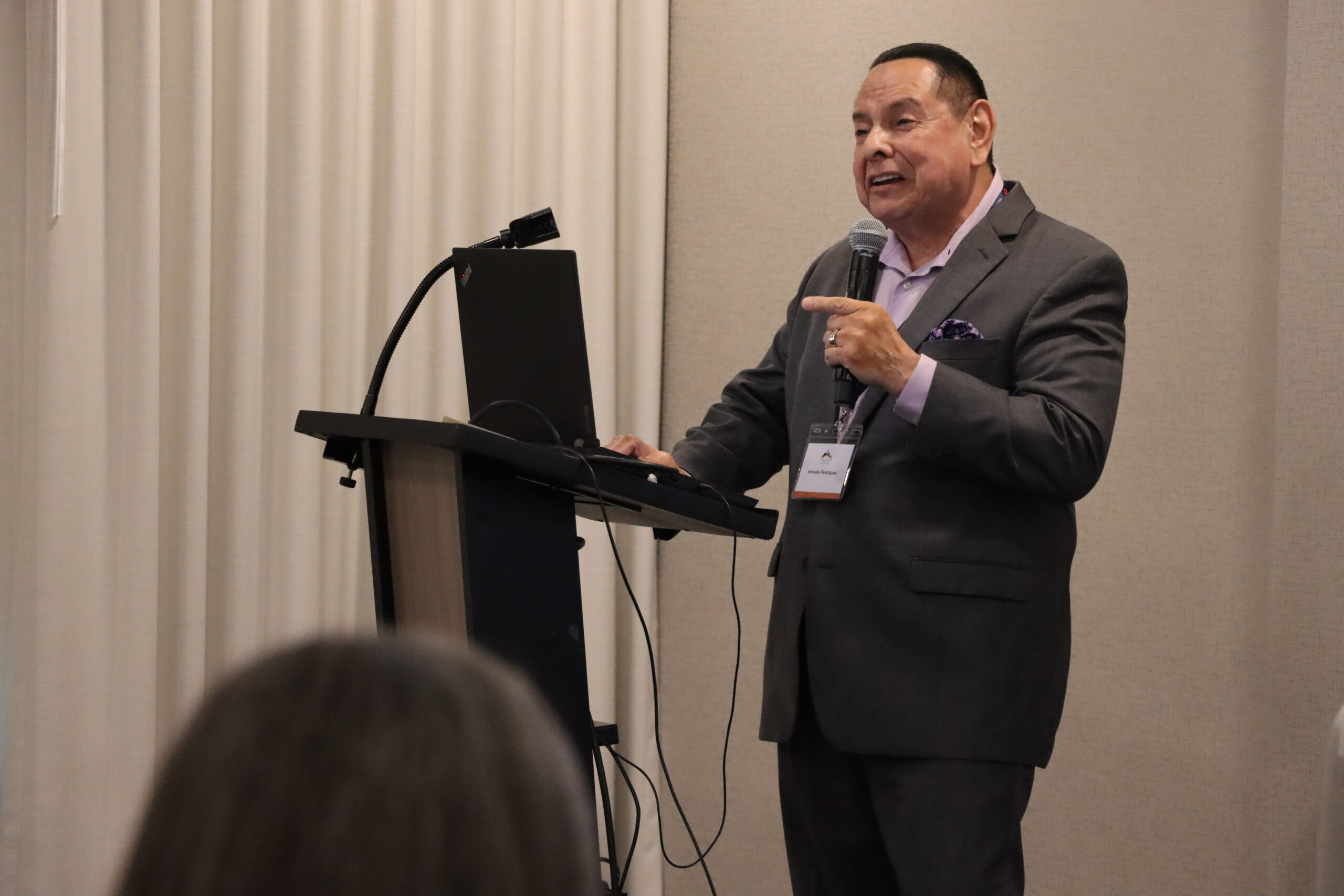
“I told them my interest is in supporting other cancer survivors, particularly in my community, because I come from a background, and just by virtue of the demographics of where I live, we’ve got a lot of people that just don’t the resources. They might not have the linguistic ability to go in and ask, ‘What do we do?’ … so, I would like to advocate for the Latino community,” Arnoldo said.
The organization took notice and saw the value of Arnoldo’s story and how it can impact the Latino community, and he accepted the invitation to speak in a series of bilingual webinars, including one on CAR T-cell therapy.
He was also contacted by Cancer Support Community to help them create a CAR T-cell survivors resource book.
But he knew there were more opportunities for him to help make a difference.
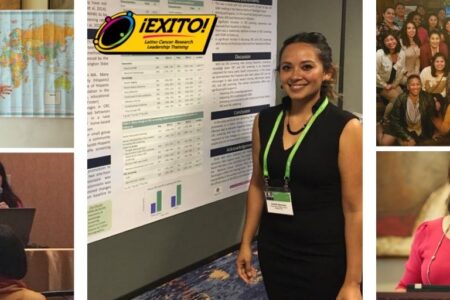
So, he applied for the 2026 Latino Cancer Patient Advocate Program, which took place ahead of the Advancing Cancer Research in Latinos and All Populations Conference held biennially in San Antonio, Texas.
The program, co-led by Barbara Segarra-Vázquez of the University of Puerto Rico and Sandi Sandford of the Alamo Breast Cancer Foundation, teaches cancer survivors to become research patient health advocates who help others navigate the healthcare system and raise the Latino voice in research.
“Programs like these are important because we know more and more folks to not have access to health care. And more and more the types of cancer that our people have are increasing. There’s a lot of quality care out there, we just need to get the right resources out there and provide them with some good information,” Arnoldo said.
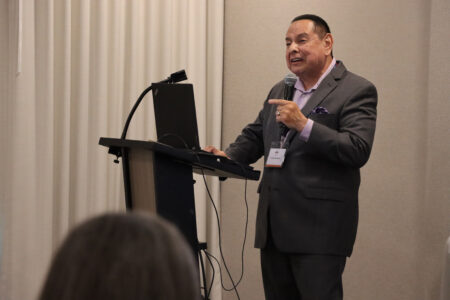
He was also asked to share his story during the conference during the survivorship panel.
It was a combination of all these experiences that reinforced the power that story telling has.
Arnoldo plans to use what he’s learned from his own experience and from his opportunities in patient leadership to help others, starting with those in his community in the Rio Grande Valley.
“As a cancer survivor who learned quite a bit about finding quality, research-based driven care, I felt that it was incumbent on me to help other cancer patients find the best possible cancer care for their particular type of cancer,” Arnoldo told Salud America!
“In particular, [helping] those in my community, who don’t have access to insurance or because of language [hurdles], or not able to acquire the information on their own.”
Share Your Survivorship Story with Avanzando Caminos
Arnoldo often shares his story to help cancer survivors in his South Texas community.
But he also recently shared his story in hopes of making a much greater impact as part of the Avanzando Caminos Hispanic/Latino Cancer Survivorship Cohort Study. The study examines the influence of the social, cultural, environmental, and biological factors on the cancer survivorship experience.
By sharing his story, Arnoldo is hoping to provide insight that can be used to help inform interventions that will help new generations of survivors.
“[I] learned a lot [from the Latino Cancer Patient Advocate Program] about the challenges that Latinos have with cancer care,” he stated. “[When] I was asked to be part of the study Avanzando Caminos I had no hesitation because we need all the data that we can gather to provide the best possible care and treatment for Latino patients.”
The Avanzando Caminos research study at UT Health San Antonio is looking to enroll 1,500 Hispanic/Latino cancer survivors in South Texas.
Participants must have completed primary cancer treatment for breast, lung, liver, stomach, colorectal, kidney, prostate, and uterine cervical cancers in the last 10 years.
Recently, the study announced it would now be enrolling participants who are bladder, melanoma, ovarian, thyroid, and lymphoma cancer survivors like Arnoldo.
The study is comprised of seven study visits over five years, which consists of assessment interviews, and some blood draws.
Volunteers are eligible to receive $50 per visit.
To inquire about volunteering for Avanzando Caminos, please contact a member of the study team at the Institute for Health Promotion Research at UT Health San Antonio at 210-562-6514 or email caminos@uthscsa.edu.
You can also visit the Avanzando Caminos website in English or Spanish for more information or fill out a short eligibility survey and a member of the study team will be in touch.
By The Numbers
142
Percent
Expected rise in Latino cancer cases in coming years
This success story was produced by Salud America! with support from the Robert Wood Johnson Foundation.
The stories are intended for educational and informative purposes. References to specific policymakers, individuals, schools, policies, or companies have been included solely to advance these purposes and do not constitute an endorsement, sponsorship, or recommendation. Stories are based on and told by real community members and are the opinions and views of the individuals whose stories are told. Organization and activities described were not supported by Salud America! or the Robert Wood Johnson Foundation and do not necessarily represent the views of Salud America! or the Robert Wood Johnson Foundation.