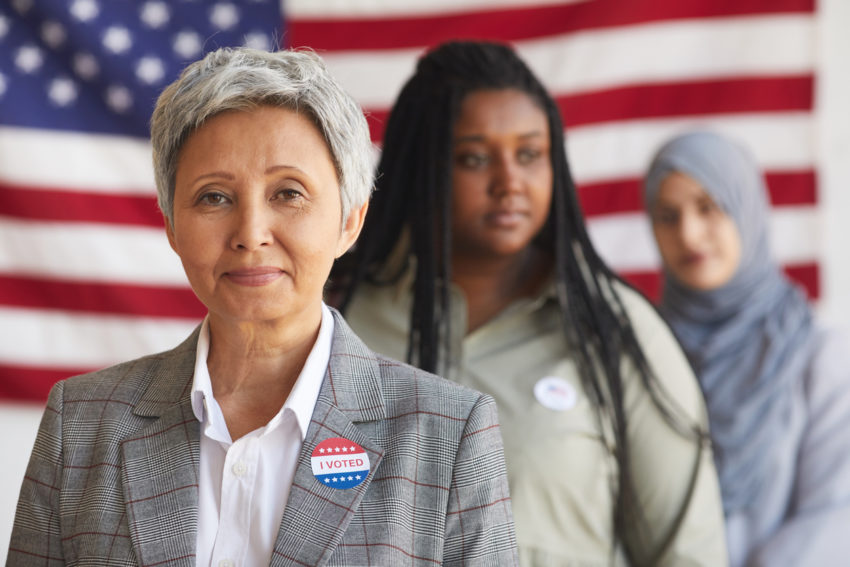
Fake news. Alternative Facts. Propaganda. In an election year, disinformation is rampant. Political candidates and organizations may aim to mislead the public about their opponents to get voters in their favor. In recent years, we’ve seen an increase in disinformation from foreign countries seeking to confuse Americans even more. Latinos are particularly at risk of being victims of disinformation in an election year. Many false claims about voting and candidates take aim at Latino voters. It’s important that we learn what disinformation is, how it affects Latinos, and how to avoid it this election season.
What is Disinformation?
Disinformation is false information deliberately and often covertly spread in order to influence public opinion or obscure the truth, according to ...
If you interact with Salud America! in any way, we want to hear from you! Take the 2020 Salud America! Survey to let us know what you think about our digital communications for awareness and action around Latino health equity.
1. Take the Survey to Enter to Win an iPad!
Why not get something free?! If you take the survey by Nov. 8, 2020, you can enter a raffle for a free iPad! TAKE THE 2020 SALUD AMERICA! SURVEY
2. Take the Survey Because You Care!
You're on our website right now. We know you care about health, whether you got here from a tweetchat or email or web page or video. If you take our survey, it can help us better understand how our digital content motivates and impacts efforts to promote Latino health equity. We want a society where everyone has a just ...
Almost 60% of Americans believe that racism can impact the health care an individual receives, according to the National Cancer Opinion Survey conducted by the American Society of Clinical Oncology (ASCO). The survey also found that about two-thirds of Americans have skipped or delayed scheduled cancer screenings due to the COVID-19 pandemic, which is disproportionately harming Latinos. These results have wide-ranging implications for preventative care and the perception of health care disparities in the United States.
About the Survey on Racism, Health Care
The National Cancer Opinion Survey is conducted annually. This year, ASCO surveyed over 4,000 U.S. adults older than 18, with over 1,000 of them former or current cancer patients. “This survey assesses Americans’ ...
As we continue the battle against COVID-19, public health authorities are urging cities to increase their contact tracing efforts. “Contact tracing is key to slowing the spread of COVID-19 and helps protect you, your family, and your community,” according to the Center for Disease Control and Prevention. But identifying people who have tested positive for COVID-19 and tracking their whereabouts and potential infection sources has its challenges. People may be skeptical to release information to contact tracers calling on the phone if they’re wary of scams. And because COVID-19 disproportionately affects Latino and other minority communities, there may be a language barrier or sense of fear when discussing health information with state employees. What can be done to face ...
Among the countless disparities Latinos face, the way in which people's brains age might differ based on their race. That is what researchers at University of North Texas Health Science Center at Fort Worth will study after reciving increased funding for large-scale Alzheimer's biomarker study from the National Institute of Health (NIH). Mainly, they will be looking into health gaps in brains aging between Mexican Americans compared to their white peers. "To successfully battle and ultimately prevent or treat a complex disease such as Alzheimer's, we need to understand how this disease and other forms of dementia affect our nation's diverse communities differently," Dr. Eliezer Masliah, director of the NIA Division of Neuroscience, said in a press release. This award was made ...
Among the horrific forms of treatment undocumented individuals face, a new report claims that Immigration and Customs Enforcement (ICE) performs hysterectomies on immigrant women. The shocking details, obtained through a complaint filed by Project South, assert that a gynecologist at the Irwin County Detention Center (ICDC) in Georgia performed these procedures — without providing a full understanding of the operation. Sometimes, they didn't even give these details in their native language, according to the report. Dawn Wooten, a former nurse at the detention center and the whistleblower of this complaint provided insight into the alleged practice. "Everybody [that the accused gynecologist] sees has a hysterectomy — just about everybody," Wooten said in the complaint. ...
Bias. We see it in the media every day. We see how police officers disproportionately target people of color. We see how COVID-19 affects Latino and Black people more than white people, which has brought racial disparities in healthcare to light. How do we address this bias? Many states are turning to mandatory implicit bias training for state employees.
What is implicit bias?
Implicit bias is defined as preconceived notions, or stereotypes, that affect our understanding, actions, and decisions about others—at a level beyond our conscious control, according to a Salud America! research review. This kind of bias happens when stereotypes influence your brain processing. Stereotypes like these then influence your actions and judgments: A widely held, simplified, and ...
The COVID-19 death toll has nearly reached 200,000 in America — a number that, at one time, was one of the highest estimates from health professionals. Nevertheless, America still finds itself in the grips of a pandemic. Worse, Latinos and other people of color who face the toughest social and health inequities are also experiencing the hardest coronavirus impacts and outcomes across the nation. This is true in California, where the death rate among working-age Latinos has skyrocketed, according to a recent report from UCLA. “As the coronavirus works its deadly way into every nook and cranny of California’s population, its victims’ profiles become clearer and clearer: they are the unsung essential workers,” researchers from the University’s Center for the Study of ...
Health has become a huge priority in the wake of the coronavirus pandemic. People of color, who face COVID-19 disparities as the virus worsens systemic social and economic inequities, are increasingly worried about holistic health. More Black and Latino Texans believe that the areas of life not typically associated with medical care—housing, education, racism, and other social determinants—directly impact their overall health than their white peers, according to a recently published survey from the Episcopal Health Foundation (EHF). "Texans across racial backgrounds agree that many non-medical factors like good air quality and clean water, community safety, and amount of stress are vital to a person's health," EHF writes in a recent press release. "But researchers ...