by
by 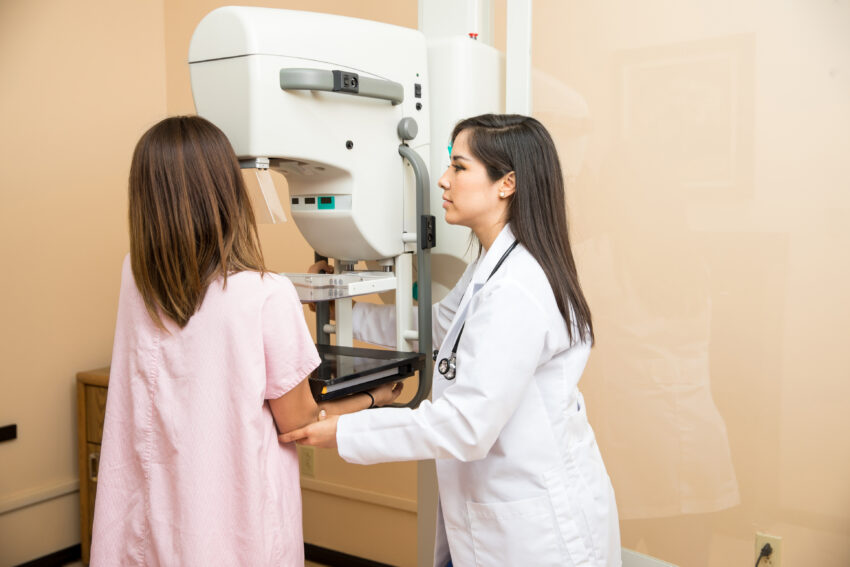
Share On Social!
Turning 40 is a big milestone for many women in their career, lifestyle, and familia.
It’s also a big year for health – like scheduling your first mammogram.
An annual mammogram, starting at age 40, is important because it can tell you a lot about your breast health, including if you have dense breasts.
Women with dense breasts, including Latinas, have a higher risk for breast cancer and may require more screenings.
What do you need to know about breast density?
Check out our new guide, The Breast Density Road Map, to help you navigate breast density and what it means for your breast health.
The guide was created by Dr. Amelie G. Ramirez of UT Health San Antonio with expertise from Dr. Jessica Treviño Jones, a breast medical oncologist at Mays Cancer Center at UT Health San Antonio, and support from Novartis, a top pharmaceutical company.
What is Breast Density?
Half of US women have dense breasts.
But many might not be aware they have it or what it means for their breast health.
Dense breasts are categorized by having more fibroglandular tissue, which is the connective tissue that holds the breast in place, compared to fat.
Radiologists may have a difficult time getting a clear reading on women with dense breasts due to the tissue’s appearance on a mammogram, which is the only way to diagnose dense breast tissue.
For this reason, women with dense breasts may need more screening than someone without dense breasts and pose a higher risk for breast cancer.
That’s why it’s so important to understand your density.
Check out our latest blog post for more information about breast density and cancer risk!
The Breast Density Road Map
The Breast Density Road Map is your companion to navigating your mammogram results as it pertains to breast density.
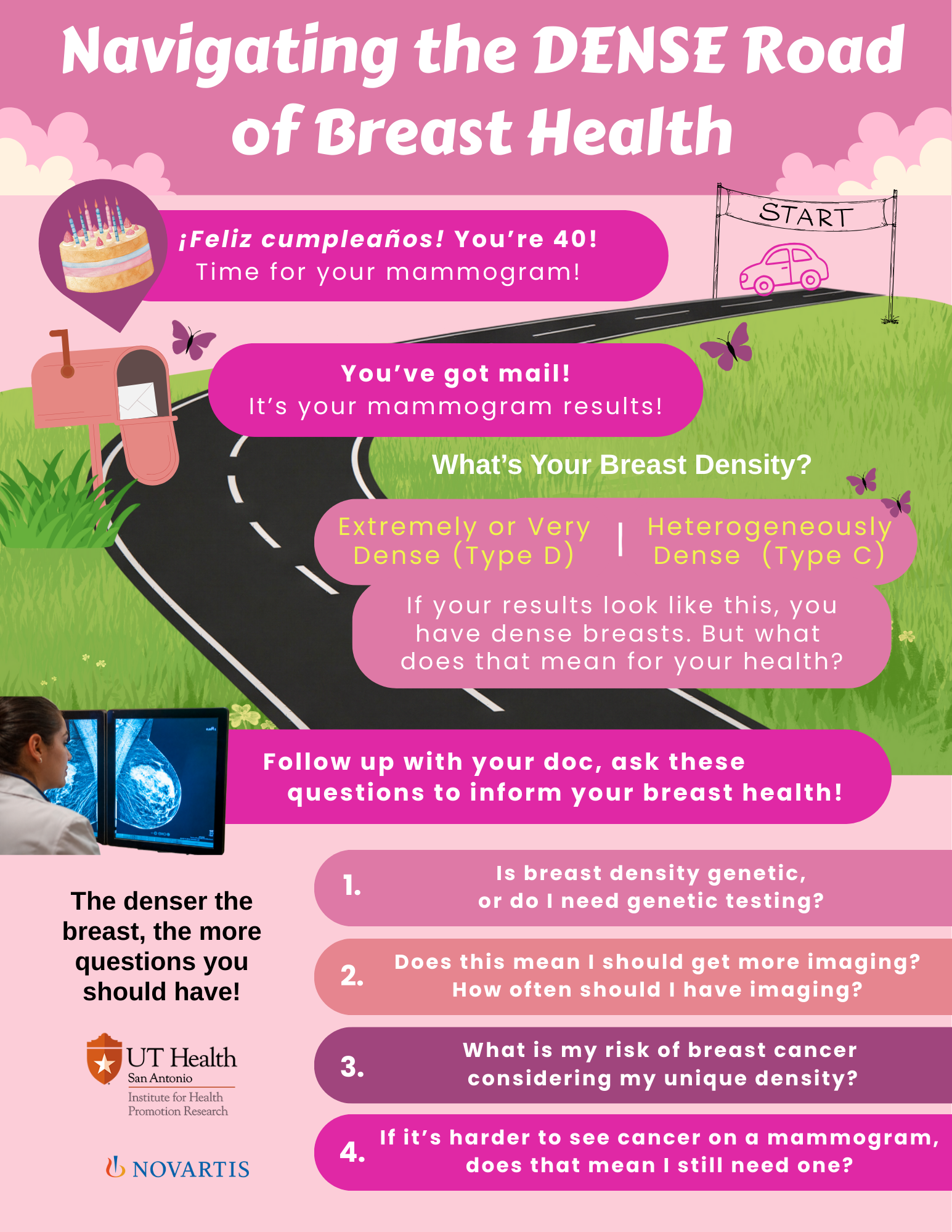
It goes over how breast density appears on your results and the follow-up conversation you should have with your doctor.
Top questions to ask your doctor following a dense breast diagnosis include:
- Is breast density genetic, or do I need genetic testing?
- Does this mean I should get more imaging? How often should I have imaging?
- What is my risk of breast cancer considering my unique density?
- If it’s harder to see cancer on a mammogram, does that mean I still need one?
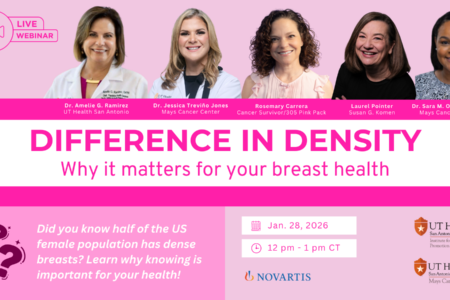
If you have more questions about breast density, tune into our live webinar on Jan. 28, 2026, where experts from UT Health San Antonio, Mays Cancer Center, and Novartis will discuss breast density, mammography, and how it relates to cancer.
Let the road map to breast health be your guide.
Print it out and take it with you to your upcoming appointment or share it with your familia or friends. Or, if you’re a doctor or radiologist, print a few to pass out at your office!
Raising Breast Cancer Awareness with Novartis
As one of the most commonly diagnosed forms of cancer in the US, 1 in 8 women will be diagnosed with breast cancer at some point in their lives.
However, it’s also one of the easiest to treat when caught early.
That’s why Novartis is sounding the alarm on breast health.
As part of its commitment to closing the gaps on breast cancer care, Novartis is raising awareness about the importance of understanding your risk for breast cancer and getting screened early.
It even partnered with the NFL to share the message of getting screened for breast cancer.
Another way Novartis is leading the charge on breast health is by developing revolutionary cancer treatments and therapies.
When it comes to breast cancer, Novartis is targeting one of the most common types of breast cancer tumors — HR+/HER2-subtype, which affects nearly 70% of breast cancer patients, according to their website.
Salud America! Is proud to be partnering with Novartis to help address the hurdles that many women, including Latinas, face in getting access to quality breast cancer care.
For more information about Novartis and breast cancer, please visit their website.
Editor’s note: This blog post was curated and published with grant funding from Novartis. To learn more about Novartis’ commitment to breast cancer innovations and prevention, please visit their website.
Explore More:
CancerBy The Numbers
142
Percent
Expected rise in Latino cancer cases in coming years