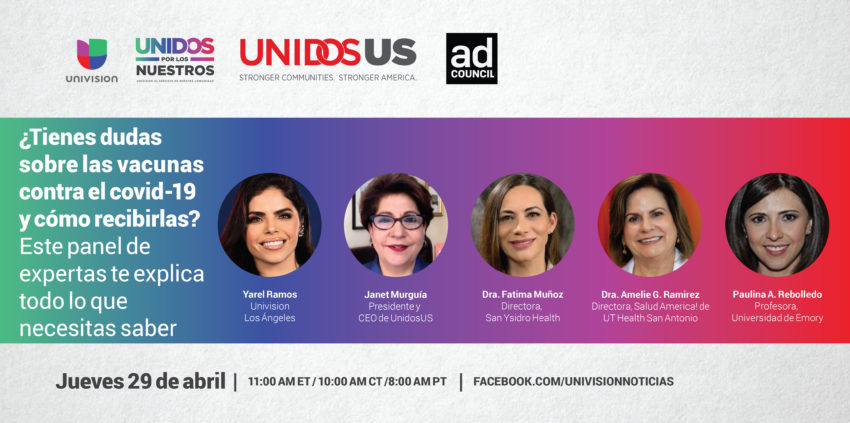
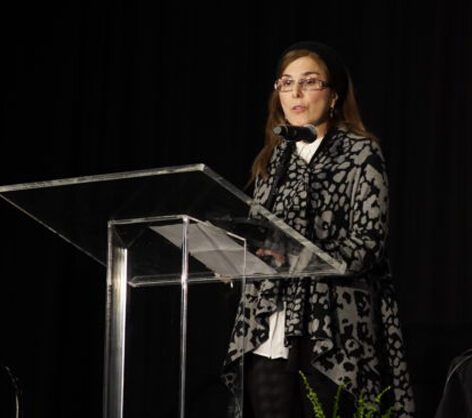
COVID-19 has a disparate impact on people of color. Latinos, for example, suffer higher case and death rates than their White peers. At the same time, Latinos are getting vaccinated for the COVID-19 vaccine at much lower rates, due to distrust and misinformation. This is the focus of Univision's Facebook Live event in Spanish, “¿Tienes dudas sobre las vacanuas contra el covid-19 y comom recibirlas?" The panel is set for 11 a.m. ET / 10 a.m. CT on Thursday, April 29, 2021. Update 4/29/21: In case you missed it, here is the video link. Panelists include: Yarel Ramos, Univision Los Angeles
Janet Murguia, UnidosUS
Dr. Amelie G. Ramirez, Director of the Salud America! program and its multi-level efforts to promote action and information about COVID-19 and Latinos, ...
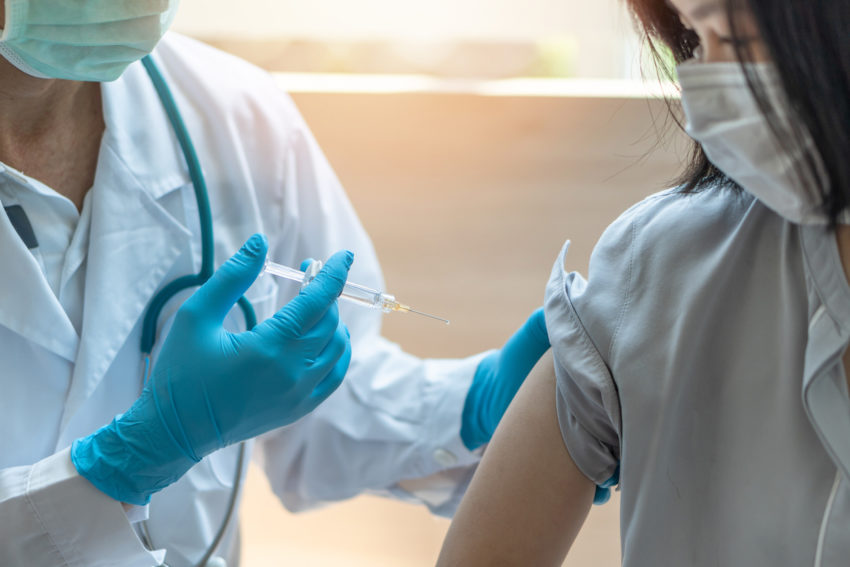
As the Pfizer-BioNTech, Moderna, and Johnson & Johnson COVID-19 vaccines continue to be distributed across the country, we’re getting closer to herd immunity and ending the pandemic. One obstacle on this path is vaccine skepticism. Vaccine skepticism is caused by a variety of sources, such as historical trauma from healthcare mistreatment and misinformation about vaccines that is circulated on social media. Misinformation about vaccines is especially dangerous as it will often target Latino and Black communities, which have been disproportionately affected by COVID-19 and are communities that most need the vaccine. Let’s go over the most common questions about COVID-19 vaccines, who is causing the spread of misinformation, and how to address it and build trust in ...
Countless children across the country struggle with access to healthy, clean water at school. Schools that provide their students with water bottle refill stations can significantly improve their health over time. Cities and states throughout the U.S. are doing just that by installing these kinds of fountains in their schools. Legislators in Arkansas (7.7% Latino), with the help of the American Heart Association (AHA), recently passed a law to require all new schools built in the state to provide a water bottle fountain to their students. “We know drinking enough water can improve a child’s performance in school, making it easier for them to learn,” said Dave Oberembt, government relations representative for the AHA in Arkansas, in a statement. “Substituting water for ...
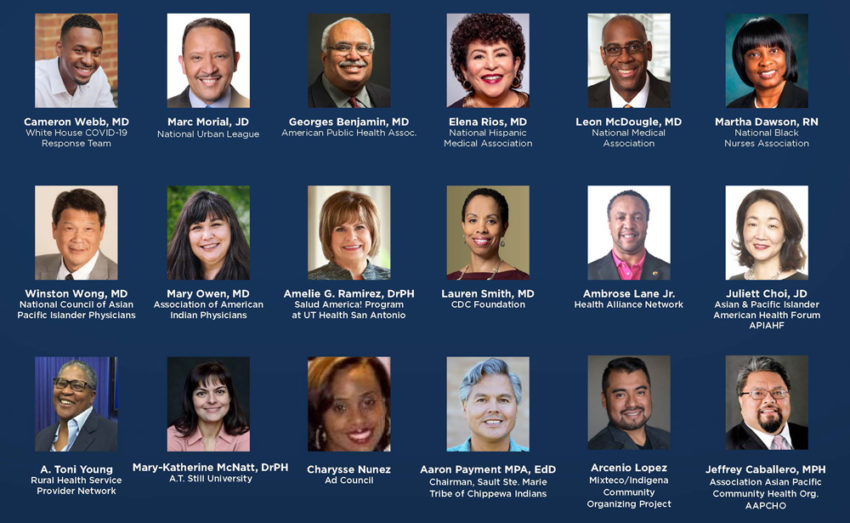
COVID-19 has a disparate impact on people of color. Latinos, for example, suffer higher case and death rates than their White peers. At the same time, Latinos are getting vaccinated for the COVID-19 vaccine at much lower rates. This is the focus of a Facebook Live town hall, "Making It Plain — Minority Health Professionals and Community Organizations Fight COVID Together," set for 7-8:45 p.m. ET, Wednesday, April 28, 2021. Update 4/29/21: In case you missed it, watch the video here. Panelists include: Amelie G. Ramirez, DrPH, is Director of the Salud America! program and its multi-level efforts to promote action and information about COVID-19 and Latinos, Professor and Chair of the Department of Population Health Sciences, and Director of the Institute for Health ...
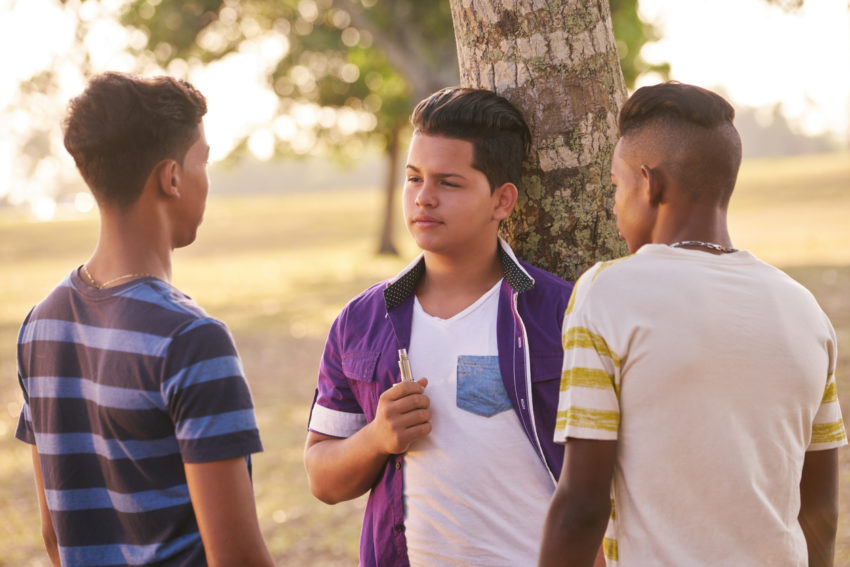
Millions of teens are hooked on vaping. In 2017, 1 of 10 U.S. high school students used e-cigarettes. In 2019, 1 of 3 U.S. high school students used e-cigarettes, according to CDC data. As the popularity of youth vaping and e-cigarettes has surged, so has the public's confusion over the health risks these products pose. The health risks are real. The U.S. Surgeon general called teen vaping a national health epidemic. The World Health Organization reports e-cigarettes are "not harmless" and "pose risks to users and non-users." Many groups are trying to get the word out. Several innovative campaigns, many of which are bilingual to help reach Latino audiences, are working to address health issues like youth use of e-cigarettes and vaping.
1. CDC: 'Protecting Young People from ...
Prostate cancer has a big impact on the Latino community. One reason is that Latinos face a lack of easy-to-understand, culturally competent information — which leads to poor outcomes for those experiencing prostate cancer, according to a recent study published in BMC Public Health. “Black and Latino focus groups revealed the existence of cultural beliefs, misunderstandings and fears pertaining to [prostate cancer] which could influence health-related behaviors,” according to the researchers from the University of Pennsylvania and MD Anderson Cancer Center. “Some themes were common across groups; others suggested racial and gender predilections. Future targeted efforts focused on directly addressing prevalent misperceptions among underserved communities in urban settings ...
Patricia Chalela has always loved working in public health and being a valuable member of a team. Chalela is an associate professor at the Institute for Health Promotion Research (IHPR) at UT Health San Antonio. Here she is an integral part of a team that studies how texting helps people quit smoking, trains students in research methods, and is learning the ins and outs of Latino cancer. Whatever the task, she is happy to help find ways to promote health in the Latino community, which suffers high rates of several diseases and cancer types. “I love what I do and I love to work with this team to make a difference for Latinos. It has been an amazing ride, really very rewarding,” Chalela said.
A Colombian Immigrant Who Came to Texas
Chalela was born in Colombia to a Lebanese ...
How can art help a community? Art and cultural practices can help boost social cohesion and overall community wellbeing, according to a new report, WE-Making: How Arts & Culture Unite People to Work Toward Community Well-Being, which explores this concept. “A cohesive culture for health equity is one where everyone works individually and as a group to ensure that each person has a fair, just opportunity for health and wealth, as well as equitable access to basic resources required for these goals according to a Salud America! research review. The WE-Making report was developed by the National Endowment for Arts and the Kresge Foundation, with support from the Robert Wood Johnson Foundation, Bush Foundation, and the John S. and James L. Knight Foundation.
The Report on Arts ...
COVID-19 has devastated the Latino community since the start of the pandemic. As researchers gain more insight into the impact of COVID-19 over time, they’re finding Latinos continue to experience harsh impacts. In fact, a recent study from the CDC shows that Latinos and other communities of color experienced higher rates of COVID-19 hospitalization than their white peers. This is not just a symptom of COVID-19, but an issue of systemic injustice that needs dedicated action, according to CDC Director Dr. Rochelle Walensky. "[There is a] critical need and an important opportunity to address health equity as a core element in all of our public health efforts,” Walensky said Monday during a White House Covid-19 briefing. “These disparities were not caused by the pandemic, ...