We know secondhand smoke is deadly. We also know that, inside places like apartments, people are exposed to secondhand smoke as it travels through doorways, halls, windows, ventilation systems, and electrical outlets. So what if we could cut secondhand smoke exposure in the home? Well, after a national media campaign to reduce cigarette smoking in homes in Scotland, hospital admissions of under-five-year-old children dropped 25%, according to a recent study in Lancet Public Health. "Our findings suggest that smoke-free home interventions could be an important tool to reduce asthma admissions in young children, and that smoke-free public space legislation might improve child health for many years, especially in the most deprived communities," according to the ...
Art can convey a story or a message. So what if you could use art to spark a conversation about issues in your community? That’s the question that Bobby Marines asked himself when realizing he could use his talent to lead important conversations in the Latino community. To find the answer, Marines launched Voces y Visiones, a web series that features Marines’ art to lead a conversation about hot topic issues within the Latino community, with the help of the Southeast Minnesota Arts Council (SEMAC) and Alliance of Chicanos, Hispanics and Latin Americans (ACHLA). “The overall goal is to use arts as catalysts for social and community discourse,” Marines said.
From Eighth Grade Dropout to Successful Visual Artist
It took hitting rock bottom for Marines to find his ...
Do you know fewer than 5% of Latinos participate in federal clinical trials? There is a historical lack of targeted research about Latino health inequities and how to address them, and a lack of diversity in clinical trials. Researchers thus have less chance to develop new treatments for this population, which suffers a heavy burden of certain cancers, dementia, obesity, and mental health issues. That's why we're excited to use #SaludTues on April 6, 2021, to tweet about how to increase Latino participation in clinical trials to prevent health disparities, to mark National Minority Health Month in April. WHAT: Tweetchat: “Latino Participation Is Vital in Clinical Trials"
TIME/DATE: 1-2 p.m. ET (Noon-1 p.m. CT), Tuesday, April 6, 2021
WHERE: On Twitter with hashtag ...
Latino parents are hopeful that their children will have more opportunities to succeed in life than they did, but recognize that inequities may limit them, according to a new study by the Robert Wood Johnson Foundation (RWJF). To create the Raising the Next Generation study, RWJF, together with the research firm PerryUndem, interviewed over 2,000 parents and caregivers (400 of which were Latino) on their perceptions of inequity and discrimination in the U.S. They also asked about optimism about the future and challenges their children might experience. The survey revealed many interesting findings about how Latino parents perceive inequities and how income and immigration affect their perceptions.
Findings from the Raising the Next Generation Study
When it comes to future ...
Toxic stress is endangering the current and future health of our society. Amid the mental, physical, and economic toll of the COVID-19 pandemic, there is even greater need to prevent the risk factors for toxic stress, which are severe, intense, or prolonged stress, trauma, or adverse childhood experiences (ACEs) like physical, sexual, and emotional abuse. The new Roadmap for Resilience: The California Surgeon General’s Report on Adverse Childhood Experiences, Toxic Stress, and Health is the nation’s first guide to address toxic stress by cutting ACEs in half in a generation. We at Salud America! are exploring the roadmap in an 11-part series. This is the final post in the series, with five upstream ways you can take action to address toxic stress. “To enable ...
Latinos are the least likely group to get help with mental health treatment, according to a recent survey. This is due to stigma against mental illness, systemic distrust in mental health services, or lack of access to and knowledge of treatment, all of which is worsened amid COVID-19. This is why the National Institute of Mental Health (NIMH) offers free brochures and fact sheets on mental health disorders and related topics for patients and their families, health professionals, and the general public — in English and Spanish. "NIMH offers basic information on mental disorders and related topics in Spanish for patients and their families, health professionals, and the public," according to NIMH information. "Printed materials can be ordered free of charge and are available ...
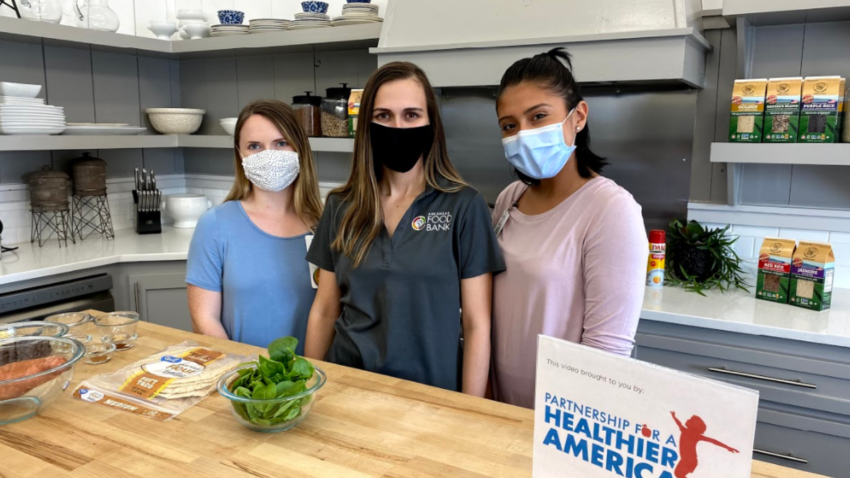
Too many families have struggled with food insecurity for too many years. Getting access to enough healthy food is a task that has only been made harder by the COVID-19 pandemic, which is especially harming Latinos. Worse, food insecurity is overburdening social services and nonprofit organizations that provide much-needed food—especially nutritious, healthy meals—to families, according to a recent report from the UCONN Rudd Center and the Partnership for a Healthier America (PHA). “The COVID-19 pandemic placed extreme hardship on American families and the food banks that help them put dinner on the table,” the report’s authors write. “Unemployment soared and people seeking food assistance, who were also those most severely impacted by COVID-19, dramatically increased ...
The COVID-19 pandemic isn’t the only catastrophe harming the health of Latinos and other communities of color. Natural disasters—such as the massive snowstorm that rocked the Texas’ energy grid in February 2021 or Hurricane Harvey that decimated South Texas in 2017—can have long-lasting impacts. These devastating weather events are directly linked to Climate Change, experts say. Many of the world’s most successful corporations are among the worst contributors to global warming. Worse, those corporations aren’t doing enough to help solve the issue, according to recent numbers from the international climate management group, whose report outlines the slow progress. “The Climate Action 100+ Net Zero Company Benchmark shows there is an urgent need for greater ...
Not all children in Texas have equal access to healthy food and quality healthcare, and stable economic security. Latino children and other children of color face disparities in these areas due to historic systemic racism. The details of these disparities are covered in a new report, “Texas KIDS COUNT: Health Equity for Every Texas Child,” led by nonprofit group Every Texan with support and funding from the Annie E. Casey Foundation and Methodist Healthcare Ministries of South Texas. The report explores three key areas ─ food insecurity, health insurance, and economic opportunity ─ and what public policy can address inequities so all Texas children can live healthier lives.
The ‘Texas KIDS Count’ Report on Food Insecurity
Food insecurity is prevalent in the United ...