COVID-19 has devastated the Latino community since the start of the pandemic. As researchers gain more insight into the impact of COVID-19 over time, they’re finding Latinos continue to experience harsh impacts. In fact, a recent study from the CDC shows that Latinos and other communities of color experienced higher rates of COVID-19 hospitalization than their white peers. This is not just a symptom of COVID-19, but an issue of systemic injustice that needs dedicated action, according to CDC Director Dr. Rochelle Walensky. "[There is a] critical need and an important opportunity to address health equity as a core element in all of our public health efforts,” Walensky said Monday during a White House Covid-19 briefing. “These disparities were not caused by the pandemic, ...
We know that health is influenced by our families, environments, communities, and much more. Health inequities occur when barriers prevent some groups from receiving access to healthcare and other resources that positively impact health. Community power is an emerging method for marginalized communities to enact systemic changes that address social and health inequities.
What is Community Power?
Community power is people’s ability to create systemic change through a mutual agenda to achieve a larger goal. “Building power is particularly critical for communities working hard to thrive despite generations of systemic challenges, including low-income and communities of color being excluded from decision-making on the policies and practices that impact their health and ...
By Maegan Molnar
Breast Cancer Survivor in San Antonio I was only 26 years old when I was diagnosed with stage 2 triple negative breast cancer. My world flipped upside down when I came across a lump during my very first breast exam just three weeks before my wedding. I had nine rounds of IV chemo before we realized it wasn’t working. I then had to stop treatment, have a lumpectomy, and then completely restart a different IV chemo regimen. I then had a double mastectomy with DIEP reconstruction followed up 9 rounds of an oral chemo therapy. To say I was exhausted when it was over would be a complete understatement. To say I was naive when I thought it was over would be completely accurate. This May will be 5 years since my diagnosis. I cannot imagine trying to add up the ...
Cultural competence is the ability to understand, appreciate, and interact with people from cultures or belief systems different from one's own. This is often lacking in health care. Latinos, for example, experience discrimination and implicit bias in the doctor’s office, and face a systemic lack access of social support. That's why we are excited to share new bilingual materials from various agencies the U.S. Department of Health and Humans Services (HHS) aiming to improve cultural competence and equitable access to care. "Providing culturally and linguistically appropriate services (CLAS) in health and healthcare is one way to improve the quality of services provided to all individuals, which will ultimately help reduce health disparities and achieve health equity," ...
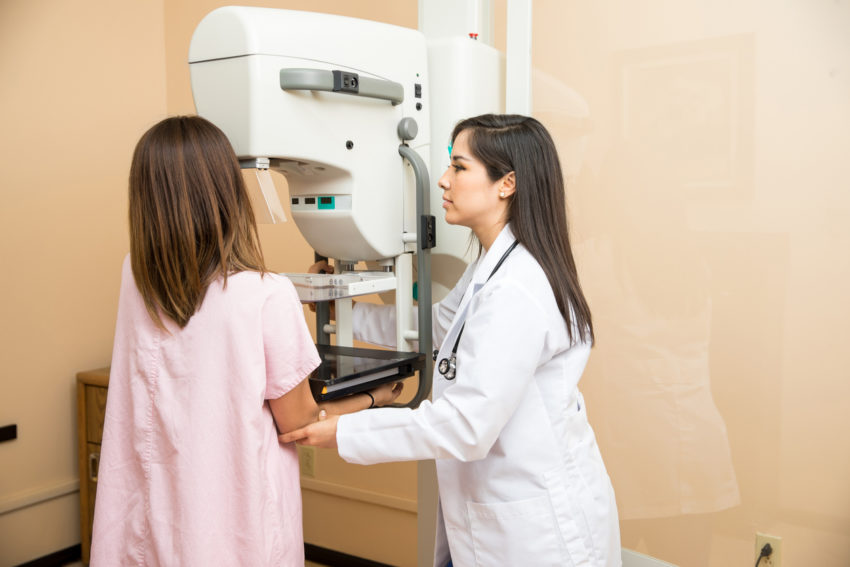
Latinos face some serious cancer health disparities. They are so serious that many health experts recommend cancer screening, a type of test that looks for signs of different cancers early, before the illness can cause serious harm. “Screening tests can help find cancer at an early stage, before symptoms appear,” experts at the National Cancer Institute (NCI). “Early detection is important because when abnormal tissue or cancer is found early, it may be easier to treat. By the time symptoms appear, cancer may have begun to spread and be harder to treat.”
What is Cancer Screening?
Cancer screening is a series of exams, most of the time recommended by a physician or begun at a certain age, to explore the body for any signs of cancer. According to NCI, types of screening ...
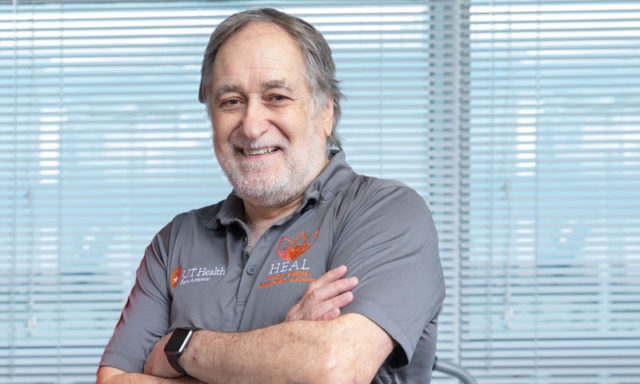
Daniel Carlos Hughes thought he wanted to be a chemical engineer. He worked at Dow Chemical for 23 years, moving up to a middle management position. But then he had a midlife crisis. Now he works as a kinesiologist focuses on sport and exercise psychology. He researches holistic interventions for cancer prevention and with an emphasis on exercise and stress in Latina breast cancer survivors as a faculty member of the Institute for Health Promotion Research (IHPR) at UT Health San Antonio. While the career switch was risky and required many years of schooling, Hughes is glad to have found a calling where he can help cancer survivors live longer, fitter, better lives.
Hughes, a First Generation Mexican American in His Second Career
Hughes was born in Mexico City. His family ...
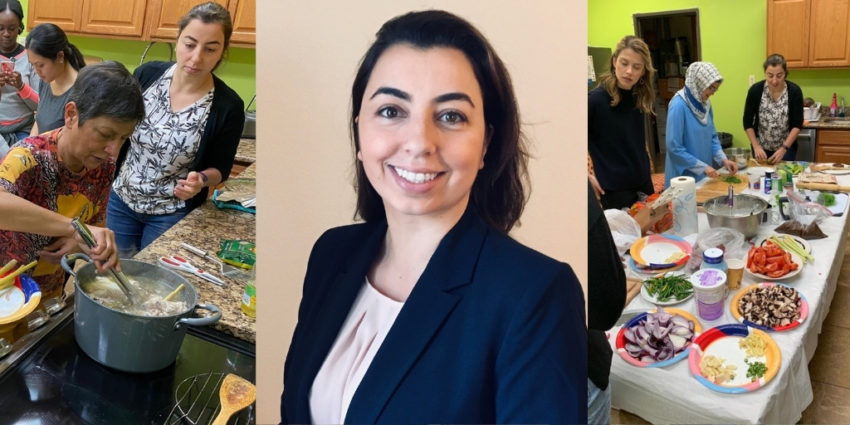
From a young age, Flávia Fernandes wanted to practice medicine. Thanks to years of resiliency and dedication, she is now working toward a medical degree as a medical humanities student at UT San Antonio. But she’s already working hard to improve the health of her community. Fernandes, who is originally from Brazil, is part of the El Bari UT Health Healthy Choices Team — a group of San Antonio doctors, students, and community members who are creating and sharing healthy recipes online along with health education resources. For Fernandes, this is a life-long goal realized. “The work I’m doing now is better than what I dreamed for,” she said. “I wanted to learn about the ways doctors engage with the community and promote positive changes in people’s lives. ...
What we engineer and build impacts public health, safety, and welfare. However, transportation engineering prioritizes convenience for people driving over safety for people walking or biking. This makes streets more dangerous for everyone, including drivers. Now is our opportunity to change all that. Public comments are wanted on revisions to one of transportation engineering’s “bibles,” the 700-page Manual on Uniform Traffic Control Devices for Streets and Highways (MUTCD). The MUTCD, which was last rewritten 50 years ago from the point of view of expediting vehicle movement, is full of assumptions, restrictions, and contradictions that hinder efforts to improve safety and create vibrant, welcoming streets. Submit one of three Salud America! model comments to tell ...
Financial literacy can help us understand wealth and the economic opportunities available to us. Latinos face many barriers to economic opportunity, like systemic and historic discrimination, generations of inequity and wealth gaps, and a lack of access to resources on financial literacy. One business is stepping up to help teach younger Latinos about financial literacy. SUMA Wealth, a financial services company focused on Latinos, announced a multi-platform financial education initiative called SUMA Academy to empower Latino youth to break generations of wealth inequity. “Empowering young Latinos with financial knowledge is the key to reducing the wealth gap,” said Beatríz Acevedo, CEO and co-founder of SUMA Wealth, according to a press release. “They share their learning with ...