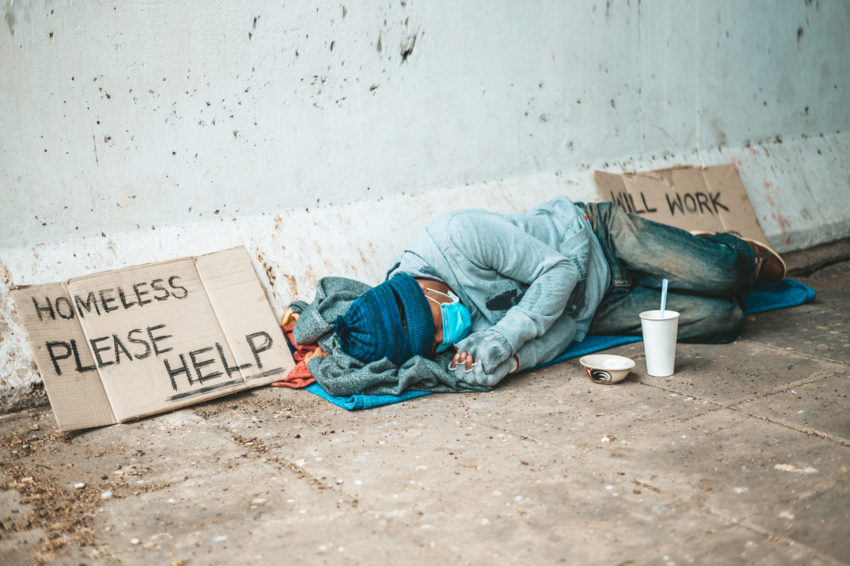
Latino and Black people will suffer significant financial problems that could lead to an increase in homelessness if U.S. leaders fail to pass a COVID-19 relief bill this week, experts say. The spring 2020 stimulus package is set to expire at the end of the week, prompting Congress to debate over a $900 Billion pandemic relief bill that will give stimulus checks, pause evictions and student loans, and provide further unemployment insurance. Leaders hope to find a solution by the end of the week. If they don’t, Latinos and Black people could suffer the most, including a rise in homelessness. “The pandemic has hit communities of color harder than white Americans, and the population of homeless Black Americans and Latinos will only increase if there is no emergency federal ...
Are you making a New Year's resolution for 2021? It might be spending more time outside. It might be quitting smoking. Or you could be trying to eat healthier. What we eat and drink affects our body’s ability to prevent, fight, and recover from infections, like COVID-19. Let’s use #SaludTues on Tuesday, Jan. 5, 2021, to tweet about how we can keep our New Year's goals of eating healthier, getting more physical activity inside and outside, and quitting smoking! WHAT: #SaludTues: How to Start 2021 with a Healthier Lifestyle!
TIME/DATE: 1-2 p.m. EST (Noon-1 p.m. CST), Tuesday, Jan. 5, 2021
WHERE: On Twitter with hashtag #SaludTues
HOST: @SaludAmerica
CO-HOSTS: @UsA2_Latinos, @VocesenSalud, @SAresearch, @Wellmedgives, @PublicHealthMap, @MotherToBaby, @Ashorg
...
COVID-19 has been a force in our lives for the last 10 months. At this point, we know the standard procedures for safety precautions, like wearing a mask, keeping physical distance, and avoiding crowded public spaces. We’ve even started administering a vaccine to healthcare workers and the elderly, with the FDA emergency-use authorization of the Pfizer-BioNTech vaccine this past weekend. But despite all this, the pandemic still isn’t over. COVID-19 cases are spiking in many areas across the country as people move events indoors due to colder weather and are travelling more for the holidays. Not to mention pandemic fatigue. Another big safety concern is using “system justification” to ignore safety precautions. This happens when people rationalize unsafe behaviors ...
Dr. Amelie G. Ramirez, director of Salud America! and the Institute for Health Promotion Research at UT Health San Antonio, discussed breast cancer in a livestream interview for the Alamo Breast Cancer Foundation at the San Antonio Breast Cancer Symposium on Dec. 7, 2020. Watch the full interview (in Spanish). Ramirez has led breast cancer research among people of different backgrounds for over 20 years. She has studied patient navigation, genetic testing, clinical trials, quality of life, and survivorship issues. "Cancer prevention is a critical way to save people’s lives today," said Ramirez, who also hosts the biannual ASCL conference. "If we applied what we know works through prevention, we could reduce cancer by half."
Dr. Ramirez & Her Health Promotion ...
COVID-19 isn't only disproportionately infecting and killing Latinos and causing job loss and stress. The pandemic is also hurting Latino-owned businesses. These businesses, which already face bias and racism when it comes to securing financing, have fewer resources to weather the ongoing storm of the pandemic, according to a report by the Stanford Latino Entrepreneurship Initiative. In fact, 41% of Black-owned businesses, 32% of Latino-owned businesses, and 17% of White-owned businesses across the country shut down between February and April, according to a recent study by the Federal Reserve Bank of New York, the CT Mirror reports. Thankfully, some new programs and initiatives aim to help businesses owned by Latinos and other people of color.
A $5 Billion Program to Support ...
Does someone smoke in your apartment complex? You might be inhaling your neighbor's secondhand smoke. Inside multifamily dwellings, secondhand smoke can travel through doorways, halls, windows, ventilation systems, electrical outlets, and gaps around fixtures and pipes. Secondhand smoke, already a cancer-causing killer of millions, also might contribute to the spread of coronavirus. While there is no definitive link as of yet, there is enough scientific understanding of how particles travel to cause concern that smoke from cigarettes, cigars, and other tobacco products could be transferring COVID-19, said Dr. Loren Wold, a researcher at The Ohio State University. “We know that the virus can attach to particles and can travel three, four, or five times farther than they ...
As the end of 2020 draws near and the holiday season continues, it's important to take some time to think about how Latinos and all families over can practice safety this holiday season. Should we travel or join our loved ones via video chat instead? How can we practice safety measures if we live in a multigenerational household? These are questions many of us are asking. It's important to have a plan and be ready to have these important conversations with family members. Let's use #SaludTues be tweet how juntos (together) we can work to stop the spread of the COVID-19 this holiday season! WHAT: #SaludTues Juntos Let's Stop the Spread of COVID-19 This Holiday Season
DATE: Tuesday, Dec 15, 2020
TIME: 1:00-2:00 p.m. ET (12 pm CT)
WHERE: On Twitter with hashtag ...
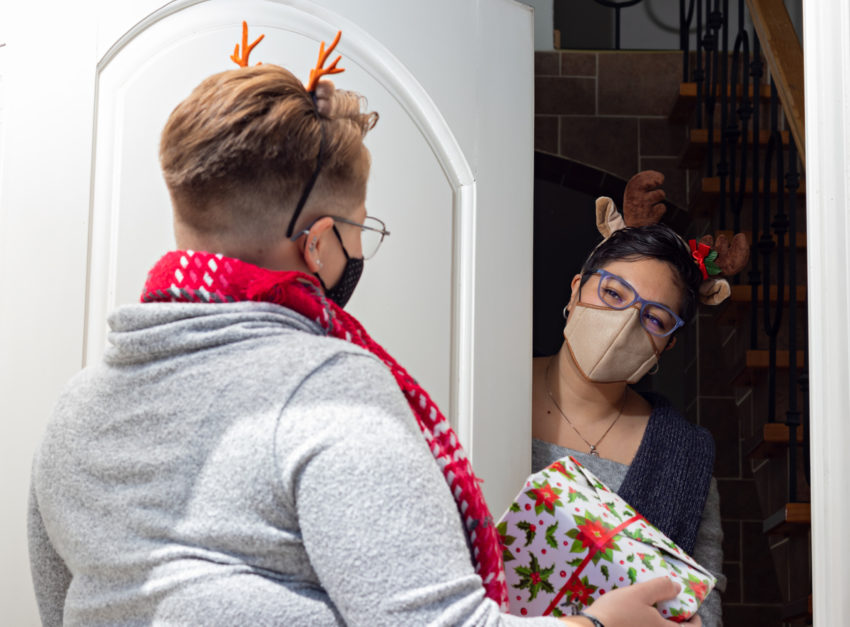
Volunteering for Christmas and New Year’s helps other people and is proven to give the volunteer an emotional boost, too. So why not volunteer your “voice”? Speak up with these seven actions to promote health equity for Latino and all families this holiday season!
1. Share Messages to Slow the Spread of COVID-19
COVID-19 continues to disproportionately impact Latinos. As Latinos, we are resilient. But part of our resiliency requires action to slow the spread of COVID-19! That’s why Salud America! at UT Health San Antonio launched the “Juntos, We Can Stop COVID-19” digital communication campaign in English and Spanish to help Latino families and workers take action to slow the spread of coronavirus. The #JuntosStopCovid campaign features culturally relevant and ...
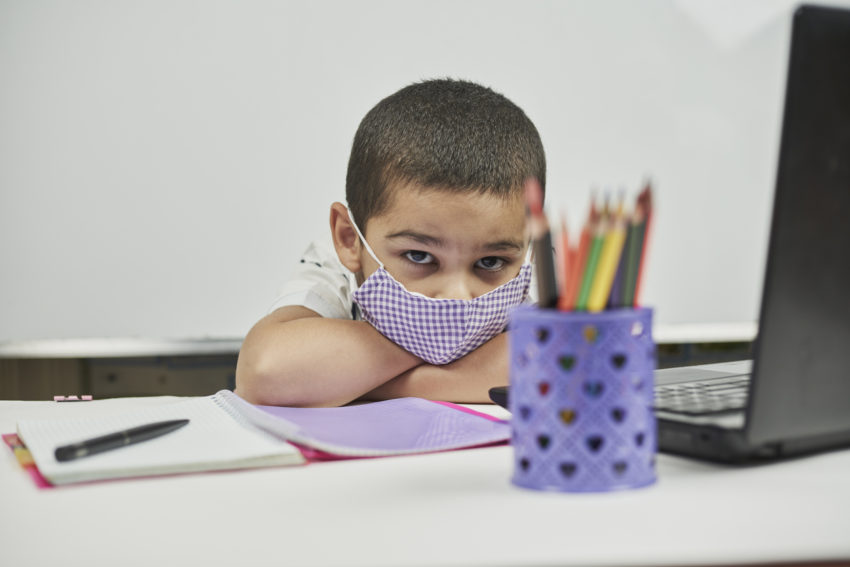
When schools closed down and switched to online learning at the start of the COVID-19 pandemic, some students began falling behind in class. The students most affected? Latino and Black children. Several studies measured testing scores in math and reading for elementary school students in Fall 2020 compared to Fall 2019. A report by the Northwest Evaluation Association (NWEA) found that while some students are improving, Latino and Black students are falling behind their white peers. “While a majority of students did better than expected in reading — scoring at levels similar to typical nonpandemic years — this wasn’t true for Black and Hispanic students and those who attend high-poverty schools,” according to NBC News. The trend is concerning as it highlights the ...