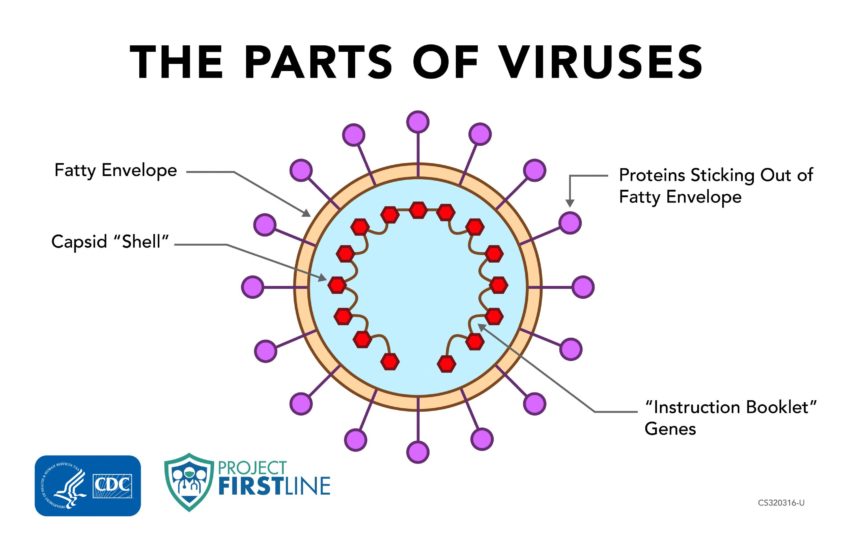
Viruses are a type of germ that can infect a host body and cause illness, like a cold or COVID-19. A virus uses living things, like animals and people, to make copies of themselves. Then they keep spreading from one living thing to another. Viruses can lead to numerous illnesses, including: bronchitis, the flu, the common cold, and COVID-19. Fortunately, if you know a little bit about viruses, then it’s easier to understand why the things we do for infection control work to stop them from spreading and making people sick. CDC’s Project Firstline, an initiative to inform and train healthcare workers about infection prevention and control, helps us explore the three main parts of viruses:
1. The Genes of Viruses
Genes are the first main part of a ...
Next year in New Orleans, kids won’t be able to order a Coke off the kids menu in restaurants. On Jan. 6, the New Orleans City Council unanimously passed an ordinance that will require restaurants to serve water, milk, or fruit juice with kids meals, according to New Orleans Public Radio. While the ordinance faced some pushback from the soft drink beverage industry, supporters believe this new rule will make a difference in preventing childhood obesity.
What Does the Ordinance Say about Soft Drinks on Kids Menus?
The city health department pitched the ordinance to remove soft drinks and make healthier options as the default beverages on kids menus. New Orleans City Councilmember Cyndi Nguyen put it to a vote. “This is really about helping our young people to stay ...
Latino students take out more student loans to pay for their education than their White peers, adding to a wage gap and harming upward mobility. In fact, even 12 years after graduation, Latino students still maintained over 83% of their loan debt, compared to only 65% for White borrowers, according to a recent report from the nonprofit Student Borrower Protection Center. “Borrowers in majority-Black and majority-Latino neighborhoods shoulder greater debt burdens and struggle when repaying their loans,” according to the Borrower report. “The more segregated a neighborhood grows, the larger the student loan [differences] become, with borrowers in the most segregated areas being up to five times more likely to fall behind on their loans than those in the whitest ...
Many cancer patients in South Texas and beyond experience challenges in access to health care, insurance, immigration, affordable housing, transportation, education, as well as background and linguistic barriers. This can dramatically impact their cancer outcomes. To address this issue, you’re invited to join us for “Targeting Needs in Efforts to Prevent and Reduce Cancer” at 1 p.m. CST on Feb. 10, 2022. This is the second webinar of a new series, “Let’s Improve Health in South Texas and Beyond.” This Zoom webinar will show how health care leaders can participate in speaking up for policy and other changes that address these health differences, beyond providing more sensitive care and/or research. “This webinar will help doctors, nurses, researchers and other ...
Free school meals have been a staple for kids from low-income households for decades, especially Latino kids. When the COVID-19 pandemic hit, unions and support organizations successfully fought to bring universal free school meals to students learning from home, with federal support from the U.S. Department of Agriculture (USDA). Then after several extensions, USDA funded school meals through June 30, 2022. But what happens after that? Let’s explore the current state of free school meals, the impact they have on Latino kids, and what the future holds. UPDATE 2/4/22: The Biden administration announced the USDA will change its school nutrition standards for the 2022-2023 school year, reinstating health goals that were rolled back throughout the Trump administration on ...
COVID-19 worsened the many health differences already facing people from impacted communities. The pandemic revealed long-standing gaps in infection control knowledge and understanding among the frontline healthcare workforce. This is why CDC launched Project Firstline, a training and education collaborative designed to ensure all healthcare workers, no matter their role or educational background, have the infection control knowledge and understanding they need and deserve to protect themselves, their patients, and their coworkers. Salud America! at UT Health San Antonio is now working with the National Hispanic Medical Association to bring Project Firstline content to frontline healthcare workers to protect themselves, their facilities, and their patients (from Latino and all ...
As COVID-19 cases from the recent Omicron variant surge across the country, health professionals are also detecting a rise in “Flurona,” which is a combination of the common flu and coronavirus. What really is Flurona and how can you avoid it? Let’s explore the facts.
What is Flurona?
Technically, Flurona isn’t a new disease. It occurs when someone contracts both COVID-19 and the flu simultaneously or one after the other. “Health experts have been warning about the possibility of a ‘twindemic,’ a scenario in which spikes in cases of COVID-19 and a simultaneous rough flu season overwhelm the country’s hospital systems, since early on in the pandemic,” according to Fortune Magazine.
Why is Flurona Happening Now?
Flurona has been happening throughout the ...
In November 2021, Congress passed the $1.2 trillion bipartisan Infrastructure Investment and Jobs Act to rebuild roads, expand access to clean drinking water and high-speed internet, and tackle climate change — with priority investments in Latino and other often left-behind communities. Although this bill adds new money to fix some transportation problems, it pours hundreds of billions into the same old highway programs that perpetuate those problems, like auto-dependence and dangerous roads. “Today’s transportation system works extraordinarily well for its original intended purpose, to build a national highway system, but fails to meet the climate, economic recovery, fairness, and safety challenges of the present day,” according to the National Association of City ...
A healthy diet is critical for the wellness of Latinos and all people. Yet we know that fast-food options outnumber healthier options like supermarkets and farmers’ markets in many Latino neighborhoods. This lack of healthy food access results in overconsumption of unhealthy foods and higher obesity risk. Now the lack of variety among registered dieticians is making it harder for Latinos to get knowledge and resources for a healthy diet, according to The New York Times. In fact, Latinos make up only 12.7% of registered dieticians, according to Zippia. That is less than the 18.5% Latino share of the U.S. population. “It’s really a no-brainer that we need to consider the communities we serve,” said Doug Greenaway, president of the National WIC Association, according to ...