Bullying is defined by stopbullying.gov as “unwanted, aggressive behavior among school aged children that involves a real or perceived power imbalance”. In grades 6-12, 28% of students experienced bullying and approximately 30% of kids admit to bullying others. Most bullying occurs in school, although this can also happen on the internet and through cell phones. This is called cyberbullying. Rates of cyberbullying have nearly doubled over the past ten years from 18% in 2007 to 34% in 2016 as more kids have access to cell phones and social media. Kids who are bullied can experience physical, mental, and educational problems. Physical problems such as headaches, muscle pain, upset stomach, changes in weight, and decreased ability to fight infections are associated with the ...
Need healthy recipes that can help your health? Cook For Your Life started in 2007 by Ann Ogden, helps cancer patients and others looking for healthy recipes to find advice on how to make healthy recipes that are designed specifically for different stages of cancer treatment. After being in treatment for the second time for triple negative breast cancer, Ogden began to find that many of her fellow chemotherapy buddies knew little about healthy food, and with her background of a family of chefs, she began teaching tips and cooking advice for healthy hands-on cooking classes. This led to her Cook For Your Life hands-on cooking programs that have served over 7,000 patients in the New York City Area, and have long-term collaboration with researchers from Columbia University and ...
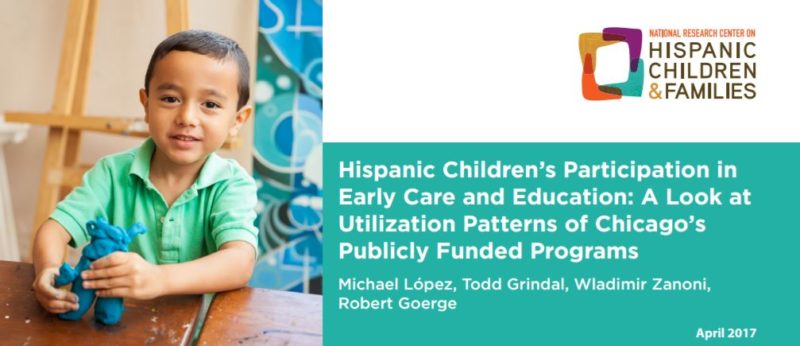
Latinos are the largest ethnic and racial minority group in the country and their numbers are rapidly growing. They are expected to grow from 1 in 6 people today to 1 in 4 by 2035 and 1 in 3 by 2060. Despite their prevalence in the country, Latinos suffer vast differences in health conditions compared to whites. These health disparities are often rooted in social disadvantage. Health inequities are found in several often unavoidable areas, including housing segregation, access to care, income, and educational attainment. Latino children currently make up roughly 25% of all children in the United States. Given this substantial number, how they fare academically will have a massive impact on the social and economic well-being of the country as a whole for generations to ...
A new study could tell why kids who are unhealthy weights respond to food differently than kids who are healthy weights. According to a study published in the Endocrine Society, the brain signals of children who are considered "obese" or fall under the unhealthy weight zone respond differently to pictures of foods than brain signals of kids who are at healthy weights, or are considered "lean". Trying to understand why kids with unhealthy weights still fell hungry after eating a meal, researchers from the study worked with Seattle Children's Research Institute and the University of Washington and used BASIC fMRI technology to understand brain signals that cause overeating. The trail included 54 obese kids and 22 lean kids ages 9 to 11, with the proportion of boy and girls the ...
How many people do you think are killed or severely injured in traffic crashes each year? What do you think is a good goal for your state? What should the goal be for your family? Should that be the goal for everyone? Oregon's regional Metropolitan Planning Organization, Metro, asked residents these questions at the KidFest! Family Expo in February 2017. See video. The goals was to frame traffic fatalities as preventable and raise awareness about Vision Zero. Vision Zero is an innovative road safety policy to make streets safer and eliminate traffic fatalities Skeptics claim that car crashes are an inevitable outcome in our vehicle-dominated society. Vision Zero draws a hard line between crashes and fatalities. Fatalities and serious injuries are not inevitable and ...
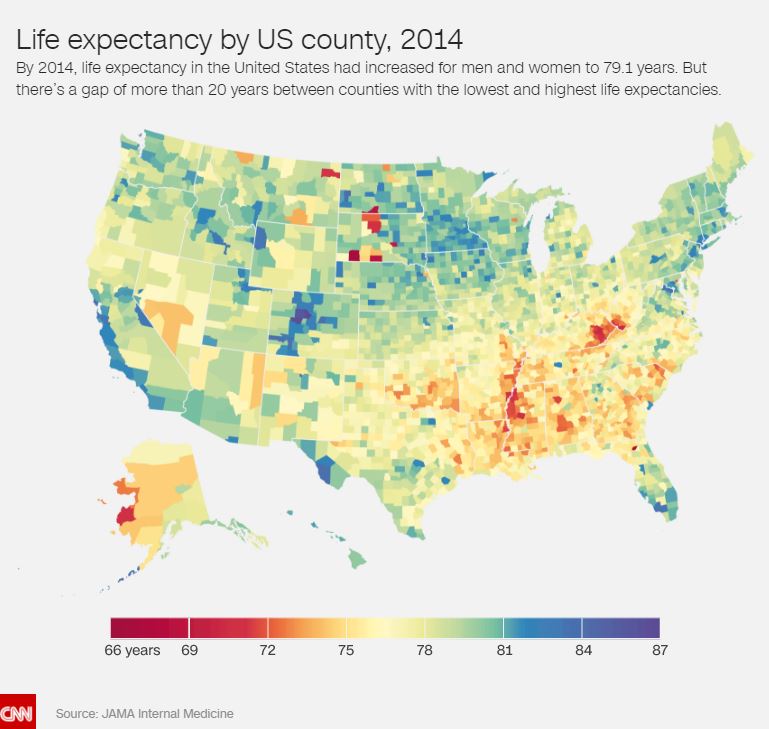
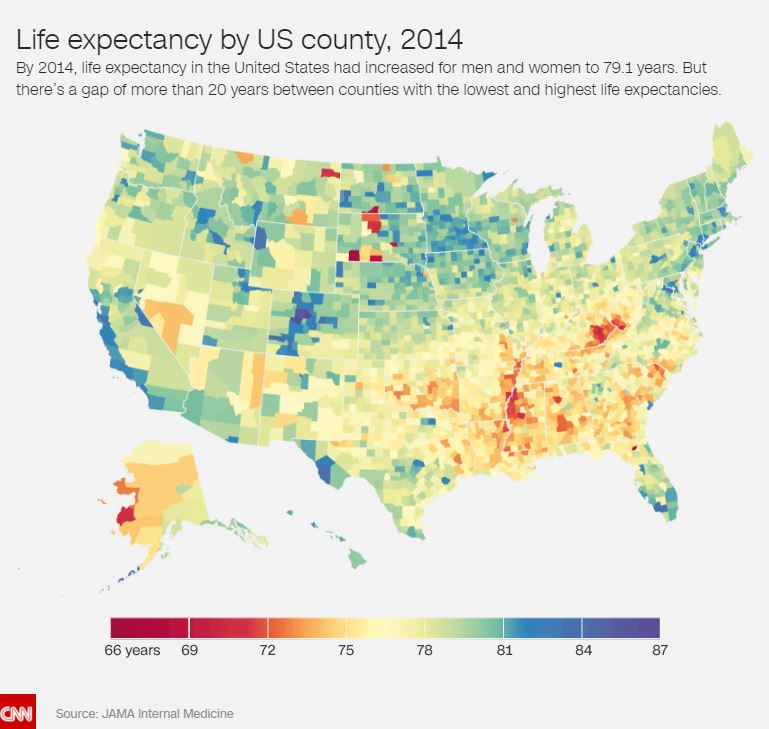
Fact: Where you live greatly impacts how healthy you will be. Lifespans differs by as much as 20 years at birth between the longest- and shortest-rated counties United States, revealing massive health inequities in different parts of the country, especially Latino-centric area, according to a new study, CNN reports. For the study, researchers from the Institute for Health Metrics and Evaluation (IHME) at the University of Washington in Seattle examined county data for life expectancy from 1980-2014. They then applied mathematical models to estimate the average lifespan. Findings showed life expectancy at birth increased by 5.3 years for adults (going from age 73.8 to 79.1) between 1980 and 2014. Over that time, men gained 6.7 years (going from age 70 to 76.7) while women ...
Fact – where you greatly determines how healthy you will be. A recent study by the Institute for Health Metrics and Evaluation at the University of Washington determined that the life expectancy at birth differs by as much as 20 years between the lowest rated and highest rated counties surveyed in the United States. Dr. Christopher J.L. Murray and his team studied the life expectancy of each U.S. county from 1980-2014 analyzing county-level data and applied mathematical models to estimate the average length of lives. According to the findings, life expectancy at birth increased by 5.3 years for both men and women (from 73.8 years to 79.1 years) between 1980 and 2014. Over that time, men gained 6.7 years (going from 70 years on average to 76.7 years) while women gained four ...
A study conducted in London from 2010 to 2011 in a secondary girls-only state school found that the SPARK Resilience Program helped prevent depression and increase self-reported resilience in girls 11-12 years old. The study led by Queen Mary University of London (QMUL) looked at over 400 girls reports on their resilience and depression symptoms throughout the study. The SPARK Resilence Program gave students the tools to identify stressful situations and learn how to control negative behavior reactions. SPARK, the acronym behind the program stands for how children can break down their responses to stressful situations and be taught by teachers to their students using the five components: Situation, Perception, Autopilot, Reaction, and Knowledge. School interventions are a ...
Researchers from the University of Maryland College of Education have recently completed a study where they examined the development and early home experiences of young Latino boys in comparison to the development of white boys and Latina girls. “Our research focused on the early childhood experiences of Latino boys because that is such a crucial time for the development of skills needed for school and life success,” said Dr. Natasha Cabrera, lead researcher on the study. “A better understanding of the strengths as well as the difficulties of the home environment and development could help in crafting interventions that improve academic performance for Latino boys.” Cabrera and her research team determined that, similar to their white peers, Latino boys tend to grow up in ...