Colorado moms in the Special Supplemental Nutrition Program for Women, Infants and Children (WIC) can text peer counselors any time of day for breastfeeding advice, thanks to a new program being expanded across the state. WIC is a federal program that boosts healthcare and nutrition for vulnerable women and children. Latinos comprise nearly half of the 8.8 million WIC participants. WIC aims to improve breastfeeding rates, curb obesity, and boost early childhood development. Could texting help WIC moms get breastfeeding support they need? “We know breastfeeding is the healthiest way to feed babies, but sometimes new moms need extra support,” Heidi Hoffman, director of WIC in Colorado, said in a news release. “Using technology, we can help more moms in more places for less ...
Emma Sanchez-Vaznaugh, a former Salud America! grantee, has received a $3.2 million federal grant to study how federal and state nutrition policies and community environments affect the health of different racial/ethnic populations. Sanchez-Vaznaugh is an associate professor of health education at San Francisco State University. Over the next five years, Sanchez-Vaznaugh and her team will investigate whether the policies—which attempt to improve school nutrition standards and reduce childhood obesity—are effective across different racial/ethnic populations, according to a news release. The study will also evaluate whether the policies are more effective when children attend school in neighborhoods with healthier food options. “We hypothesize that the [federal and state ...
Most early childcare providers deal with children who have experienced or will experience neglect, poverty, or other traumatic events that can harm long-term health. But not all providers know how to best help these children. Fortunately, a new report from Child Trends and the National Center for Children in Poverty, is giving childcare providers guidance in dealing with children of trauma.
How Early Childhood Trauma Affects Kids
Trauma is a sad fact of life for many children. Whether its child abuse or witnessing domestic violence, trauma can impair a child's body and brain development. It also can hinder learning and the ability to develop healthy relationships across the lifespan. Latino kids exposed to many traumatic events are at higher risk for obesity, asthma, heart ...
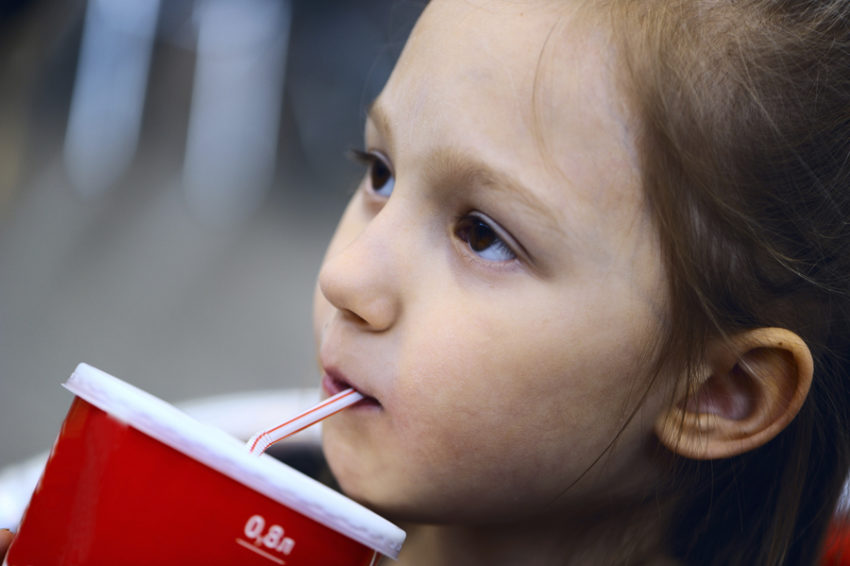
U.S. children's sugary drink consumption has declined over the past 15 years, but rates remain higher than federal dietary guidelines and among Latinos and other minorities, according to a new report by Healthy Eating Research. The new report cites "clear evidence" that sugary drink consumption increases a child's risk for overweight, obesity, and dental cavities. It also has insulin resistance and caffeine-related affects. These health consequences are especially worrisome for Latino kids, who consume more sugary drinks—soda, sports and energy drinks, sugary fruit juices, and flavored milk—than the average child at all ages, according to a Salud America! research review. "Reducing [sugary drink] consumption would help improve children’s health by decreasing the risk for ...
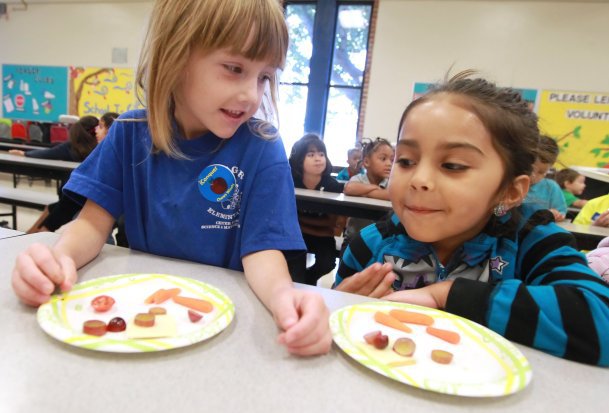
Childcare centers are serving healthier food and pushing more physical activity than they did five years ago. But it's less clear that these changes are promoting health equity for Latinos and other minority children, according to a new report. The report, Early Care and Education Policies and Programs to Support Healthy Eating and Physical Activity: Best Practices and Changes Over Time, reviews policy and system changes in food service, physical activity, and screen time in early care and education (ECE) settings from 2011 to 2016. ECE settings include childcare centers, day care homes, Head Start programs, and preschools. The report was led by Healthy Eating Research. "The early childhood years are critical to the prevention of obesity," according to the report. "The role of ...
In the midst of the national opioid crisis are children. These children are dealing with traumatic events and often placed in foster care or with relative caregivers. Traumatic events hinder early childhood development and negatively impact school performance, lifelong physical and mental health, and professional success. Sadly, many Latino children do not get the services they need to heal and overcome the harmful effects of trauma. High rates of opioid and illegal substance abuse in Texas in 2015 sparked a small trauma-informed committee in San Antonio (67% Latino) to plan a trauma-informed conference to build a network of trauma-informed care in South Texas. They believe it is critical for counselors, teachers, caregivers, mental health professionals, and medical personal, ...
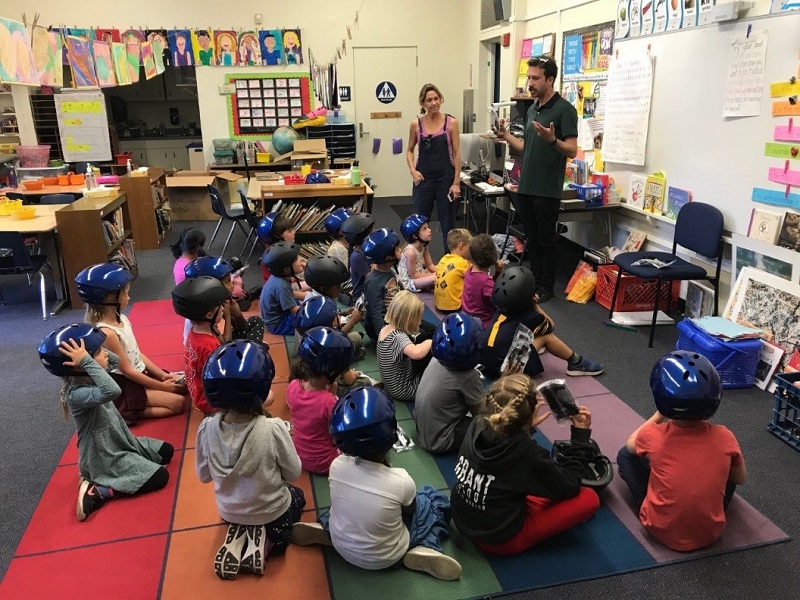
Math often gets a bad rap in schools. But what if students could count bikes and buses, and solve word problems about local bike lanes and bus routes? That is what's happening in Santa Monica, Calif. (18.1% Latino)—elementary students get "Math in My World" booklets with problems involving how people stay active and move around their community, like walking, biking, skating, scootering, and public transit. The booklets launched December 2017 by the city's Safe Routes to School program. "So instead of showing a six-year-old the somewhat-abstract idea that 2+1=3, they learn that Grace has 2 scooters and Sam has 1 scooter and together they have 3," wrote Jack Moreau, a transit official for the City of Santa Monica. All kids benefit of course, but this could help students ...
An initiative by the First Lady of Wisconsin to prevent and reduce childhood trauma has grown to become a dynamic collaboration, putting Wisconsin in the lead to be the first trauma-informed state. Trauma during childhood negatively affects development and physical and mental health into adolescence and adulthood. Traumatic events include: physical and emotional neglect; physical, emotional and sexual abuse; parental divorce, separation, incarceration, and substance abuse; and poverty. These are also called adverse childhood experiences (ACEs) and were first studied in the 1990s. The more ACEs a child experiences, the higher their risk of chronic disease, mental illness, substance abuse, violence, teen pregnancy, incarceration, and dropping out of high school. Since the ...
Latinos are significantly more likely than whites to say that the government should do more to make sure that Americans are healthier, even if it costs the taxpayers more (63% v. 53%), according to the 2017 Healthy Americas Survey. It makes sense. Here's why: Latinos suffer worse rates of obesity and other health issues because of lack of investment in safe streets, sidewalks, and parks, as well as lack of access to healthy food, early care and education, and family support. So what exactly do Latinos want?
2017 Healthy Americas Survey
You've heard that your ZIP code is a better predictor of your health than your genetic code, right? Past policies dictated the location and quality of affordable housing, public transportation, schools, sidewalks, parks, healthy food options, ...