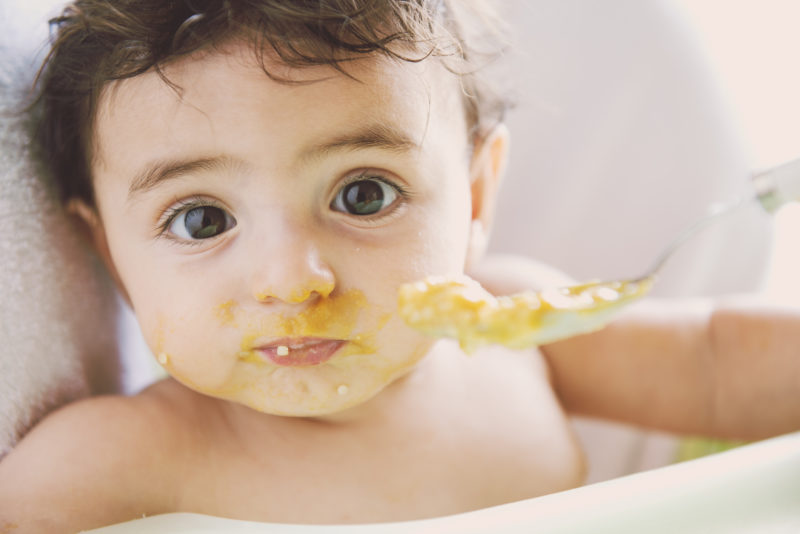
New guidelines are out from Healthy Eating Research (HER) for Health Professionals on infant and toddler feeding. Evidence shows that the first 1,000 days or the period from conception to age two for children are critical in obesity prevention. Many Latino children often deal with unhealthy weights due to more consumption of sugary drinks, less access to healthy foods and limited breastfeeding opportunities. With the new evidence-based guidelines from HER parents can find out what and how to feed infants and toddlers as well as how to address screen time, media use, sleep and other topics that impact childhood weight outcomes. Some of the main recommendations of the review include: Encouraging breastfeeding from birth until 6 months and after adding complimentary foods, ...
Today, February 8th, 2017, the City Business and Quality of Life Committee which includes two persons, Mike Harris and Signe Lindell, is scheduled to meet at 11 a.m. to consider the 2-cents-per ounce tax proposed by Mayor Javier Gonzalez. The meeting today will not be a public meeting but the full council is purposed to meet for a public hearing and vote on March 8th. The soda tax is purposed to increase health and ensure funding education for pre-k in the city. The proposal has support, according to Santa Fe New Mexican Local News, but Rio Grande Foundation is opposing the tax, accusing the proposal is a creating a way for political lifestyle police. "The resolution doesn’t lay the groundwork for anything but a healthier community, and that’s something I absolutely ...
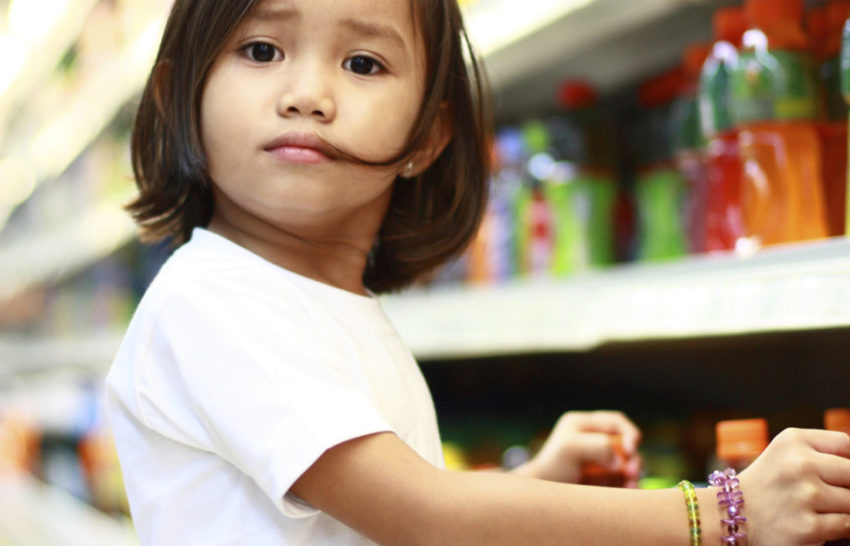
Doctor Jamie Jeffrey now stands for a sugary beverage tax within her patient's diets, stating that after her extensive research and scientific findings, she encourages West Virginia to take a "bold action" for kids by implementing a sugary drink tax. "Over the past 5 years, my patients have suffered more from the insulin resistance disease spectrum presenting as rapid weight gain, high triglycerides and a dark rash around their neck and on their knuckles known as acanthosis nigrican," Jeffrey told Charleston Gazette-Mail. West Virginia has had an increase in obesity rates from 14.4 percent to 16.4 percent in their younger population, where nearly 40% of West Virginians consume sugary sweetened beverages daily and 60% of 18-24-year-olds consume sweet drinks daily. Now West ...
In addition to reducing your risk for heart disease, diabetes, 13 types of cancer, and numerous other lifelong health complications, physical activity, like walking, also boosts your mood, and improves academic performance, creativity, and your memory. Physical activity plays a critical role in reducing health disparities among Latinos because they face disproportionately more barriers to access safe places to walk and play. Forbes shares six reasons why you should make walking part of your day: Walking boosts your mood, even when you're not expecting it.
Walking enhances creativity, especially when you're seeking a solution.
Walking sparks connections between brain cells.
Walking improves working memory.
Walking yields the right rhythm for thinking.
Walking is ...
After Nikki Van Strien delivered her first son in Mesa, Ariz. (30.5% Latino), she realized the discharge package given to all new moms by the hospital could undermine a woman’s breastfeeding goals by pushing formula. She wanted to do something to support breastfeeding moms immediately after delivery. In 2011, Van Strien and some other moms developed the AZ Breastfeeding Bag Project to provide all new breastfeeding mothers with a bag filled with educational material and breastfeeding supply samples. They became a non-profit and recruited volunteers and donations to reach new mothers birthing in the hospital, birth center, or home.
Breastfeeding Rates Low in Arizona
Nikki Van Strien, a new mom in Mesa, Ariz., wanted to connect with other moms for support. She joined a local group she ...
The average Latino infant has 3.8 hours of TV exposure a day, and TV and other media usage remains high as Latino kids get older. Sugary drink marketers are taking full advantage. Latino preschoolers saw 23% more #SugaryDrink ads on Spanish TV in 2013 than in years prior, according to new Sugary Drinks and Latino Kids research from Salud America!, an obesity prevention network under Dr. Amelie Ramirez at UT Health San Antonio. Ads for sugary beverages were more commonly found on Spanish-language than English-language TV. Ad spending on sugary drinks on Spanish-language TV rose 44% from 2010 to 2013, a study found.
How can this change?
The Children’s Food and Beverage Advertising Initiative (CFBAI) is a voluntary self-regulation program for food and drink companies to create ...
Our nation is facing high rates of Latino childhood obesity, unsustainable dependence on carbon-based energy, and high unemployment. Beyond the known health and environmental benefits of sidewalks and bike lanes, what are the employment impacts of bicycle and pedestrian infrastructure? A 2011 study compares 58 projects from transportation and public works departments from 11 cities and found that bike projects create 46% more jobs than road projects without bike or pedestrian components. Projects included, road construction and rehabilitation, building new multi-use trails, and widening roads to include bikes lanes and sidewalks. According to this study by the Political Research Institute (PERI) at the University of Massachusetts, Amherst, the “road-only” projects ...
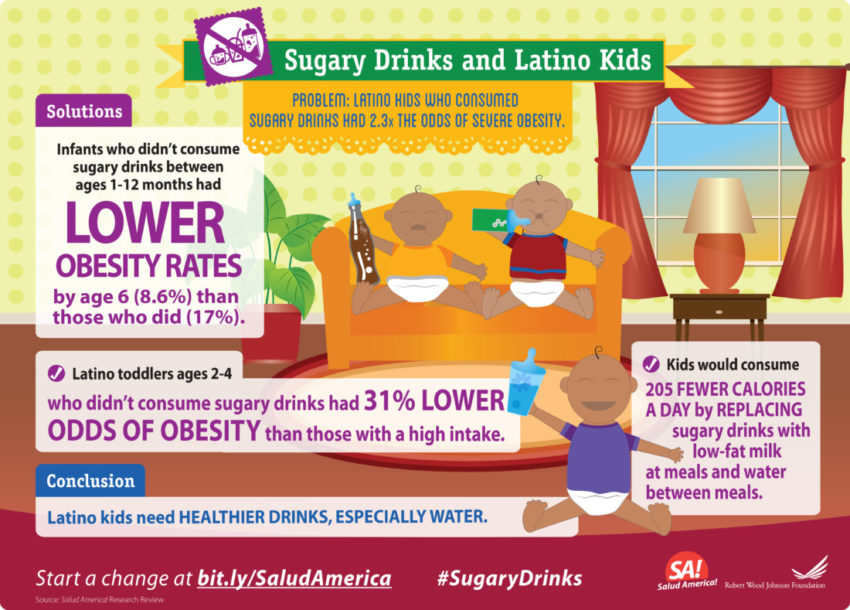
This is part of our Sugary Drinks & Latino Kids: A Research Review »
Latino children consume less water than their peers
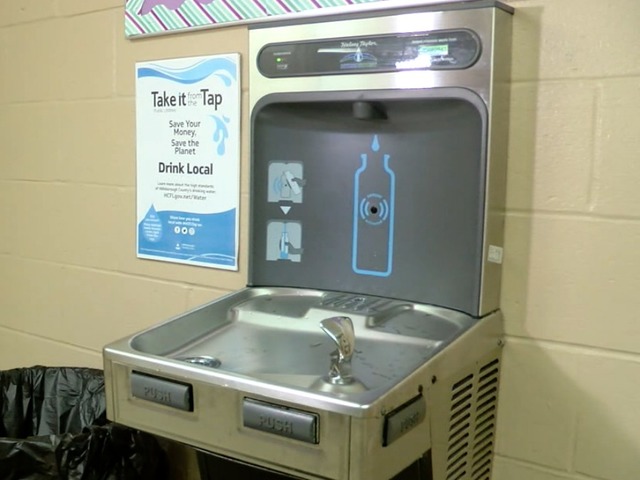
Research based on national NHANES data (2005-06, 2007-08, and 2009-10) has shown that water intakes among U.S. children ages 4-13 are below recommended levels. Mexican-American children consumed less plain water than Non-Hispanic white children, on average, and children living in lower-income households were less likely to consume water as a beverage than those in high-income households.105 Studies have found that Hispanics are more likely to perceive tap water as unsafe and are less likely to drink tap water compared to Non-Hispanic whites.38,106–108 Recent NHANES data showed that over half (56%) of Mexican-American children consumed water from ...
This is part of our Sugary Drinks & Latino Kids: A Research Review »
Sugary drink consumption among infants, toddlers
In the largest longitudinal study of infant feeding practices in the U.S., the Infant Feeding Practices Study II (IFPS II), prevalence of any SSB intake during infancy (between ages 1-12 months) was 25.9 percent in 2005-2007.5 Research from the 2008 Feeding Infants and Toddlers Study (FITS), a cross-sectional survey describing infant feeding practices, nutrient intake, and food consumption patterns of U.S. infants and young children, showed that: 0.6 percent of infants ages 4-5.9 months
5 percent of infants 6-8.9 months
and 10.7 percent of infants 9-11.9 months consumed SSBs at least once in a day.6 Prevalence of SSB consumption in a given day ...