To celebrate Hispanic Heritage Month and National Breast Cancer Awareness Month, we are pulling back the curtain on the highs and lows of navigating the breast cancer experience with a special Instagram Live event. Dr. Amelie Ramirez, the director of UT Health San Antonio’s Institute for Health Promotion Research and leader of Salud America!, is leading a discussion between Susan G. Komen patient navigator Marcela Orozco and Deborah Blake-Ontiveros, a two-time breast cancer survivor and Latina patient advocate. In partnership with Susan G. Komen, “Navigating the Trials & Triumphs of Breast Cancer,” covers topics such as the importance of patient navigation, clinical trials, advocacy, and finding bilingual resources. Watch on Instagram on the Salud ...
As a child in Arecibo, Puerto Rico, Dr. Eneida Nemecek learned the effort it takes to earn an education by literally going to college with her parents as they sought their degrees. “My parents are very young. I kind of went to college with both of them in the back of the classroom,” Nemecek said. “My dad ended up going to graduate school, also when I was still a little kid. We went to law school with him, too.” Nemecek followed her parents’ footsteps and eventually got her doctoral degree. Today she’s helping improve Latino health through clinical trial participation as associate director for clinical research at the Oregon Health & Science University (OHSU) Knight Cancer Institute and professor of pediatrics and medical oncology at OHSU.
Developing a Passion for ...
When Sandi Stanford was diagnosed with breast cancer in 1993, everything was vastly different from how we view, treat, measure, and research the disease today.
Much of that has to do with innovations in medicine, science, and technology.
However, there were far more powerful players steering the ship — survivors.
This new breed of survivors weren’t standing on the sidelines; they were educating themselves, inserting themselves in research, and having conversations that would benefit future generations of survivors.
They called themselves cancer patient advocates.
One such advocate, Sandi Stanford of San Antonio, Texas, helped pioneer programs and initiatives that transformed a cancer diagnosis into action.
Unfortunately, Sandi passed away on Aug. 29, 2026, at age 82.
While the ...
Breast cancer is the second-leading cause of cancer-related death in U.S. women and the leading cause of cancer-related death in Latina women. Despite advancements in preventative care and early detection, Latinas and all women continue to be diagnosed at later stages when treatment is more taxing and outcomes aren’t as optimistic. This situation is a result of issues with non-medical drivers of health, such as low access to health insurance, preventive screenings, transportation, healthy food, and more. More resources, better education, and research can help make a difference! It’s National Breast Cancer Awareness Month, and whether you’re a survivor, currently in treatment, health professional, caregiver, family member, or at risk for breast cancer, here are ...
Breast cancer is the leading cause of cancer-related deaths in Latinas. Despite advances in prevention and treatment, Latina breast cancer continues to be detected at advanced stages when the prognosis isn’t optimistic. There are several contributing factors to why Latinas face worse outcomes when it comes to breast cancer. October is Breast Cancer Awareness Month, and to honor all who have been impacted by the disease, we are discussing the top eight things to know about Latina breast cancer.
1. Latina Breast Cancer Diagnosis
Breast cancer is the most common cancer among Latinas, impacting U.S. Latinas at a rate of 106.6 per 100,000 people, according to the American Cancer Society’s 2026 Cancer Facts & Figures report. This equates to roughly 1 out ...
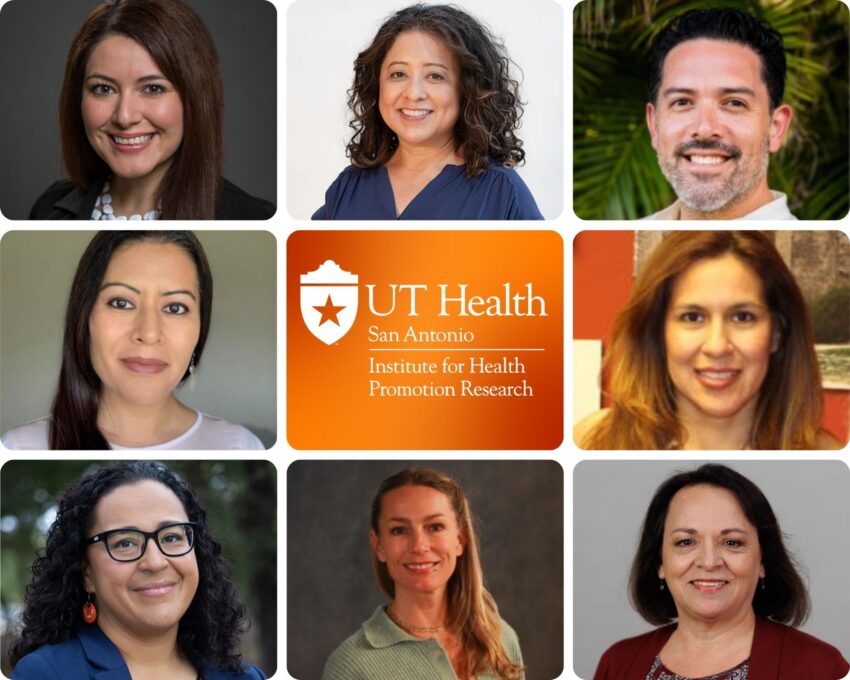
When Dr. Amelie G. Ramirez founded the Institute for Health Promotion Research (IHPR) at UT Health San Antonio in 2006, she envisioned it as a place to cultivate innovative health research and the next generation of population health leaders. 20 years later, past members of the IHPR’s team have gone on to achieve ground-breaking research, training, and other big accomplishments. Here are just a few folks we are so proud of!
Dr. Deborah Parra-Medina: From Cancer Researcher to Research Leader
Dr. Deborah Parra-Medina served as a professor at the IHPR at UT Health San Antonio from 2008 to 2016. At the IHPR, Parra-Medina led several theory-based, culturally competent research projects to increase uptake of the HPV vaccine to prevent cervical cancer and encourage healthy habits in ...
Become a politician? Work in a health ministry? As a young girl growing up in Colombia, Dr. Marcela Mazo Canola wasn’t sure exactly what she wanted to be — but she dreamed of making a difference for people. Today, Mazo Canola is helping others as a breast medical oncologist at Mays Cancer Center at UT Health San Antonio and contributing to research to improve cancer and health outcomes for Latinos and all populations. “Although I’m in a different career that I love very much, I guess I still ended up doing something similar to what I was dreaming of when I was a little girl,” she said. During Hispanic Heritage Month, Salud America! is highlighting heroes in healthcare and throughout the community who strive to make a difference. Let’s take closer look into Dr. ...
On Oct. 1, 2006, the Institute for Health Promotion Research (IHPR) was launched. This week, on Oct. 1, 2026, the IHPR will celebrate its 20th anniversary as part of the Department of Population Health Sciences in the School of Medicine at UT Health San Antonio, under the leadership of Dr. Amelie G. Ramirez. In the past two decades, the IHPR team has worked tirelessly to achieve its mission to improve the health of Latinos and all people through research, outreach, and action in South Texas and across the United States. But how did it start? Who started it? Why was it needed? Let’s answer those questions and more!
The Need for the Institute for Health Promotion Research (IHPR)
On April 17, 2006, the Task Force on Access to Health Care in Texas released a report, Code ...
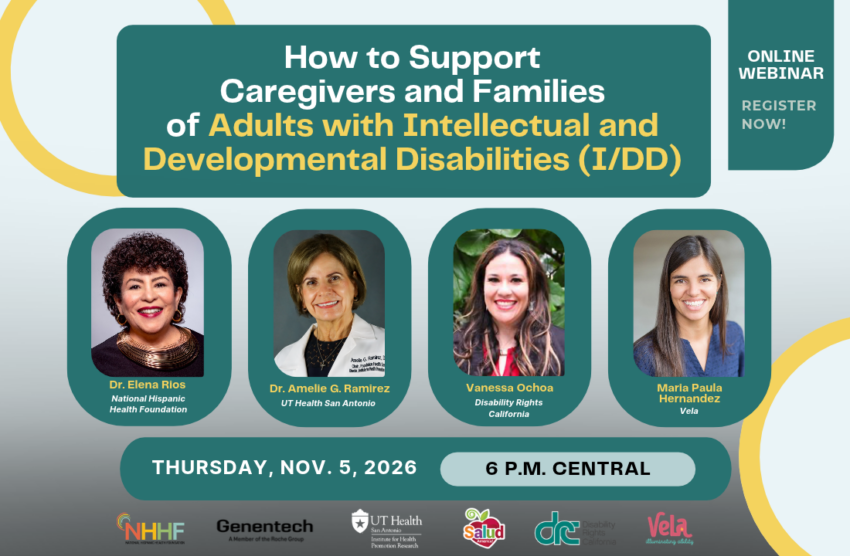
Less than half of the 2.25 million adults in the US who live with intellectual and developmental disabilities (I/DD) were part of government programs that helped people receive assistance, such as Medicaid and Medicare. To make sure caregivers and families can connect to much-needed services, join UT Health San Antonio’s webinar, “How to Support Caregivers and Families of Adults with Intellectual and Developmental Disabilities (I/DD),” at 6 p.m. Central on Thursday, Nov. 5, 2026. Webinar host Dr. Amelie Ramirez, leader of Salud America! and the Institute for Health Promotion Research at UT Health San Antonio, will join experts from the National Hispanic Health Foundation (NHHF), a representative from Genentech, and organizations working to improve quality of life for ...